Pennsylvania Reports Fourth Measles-Related Death as State Outbreak Reaches Three-Decade High

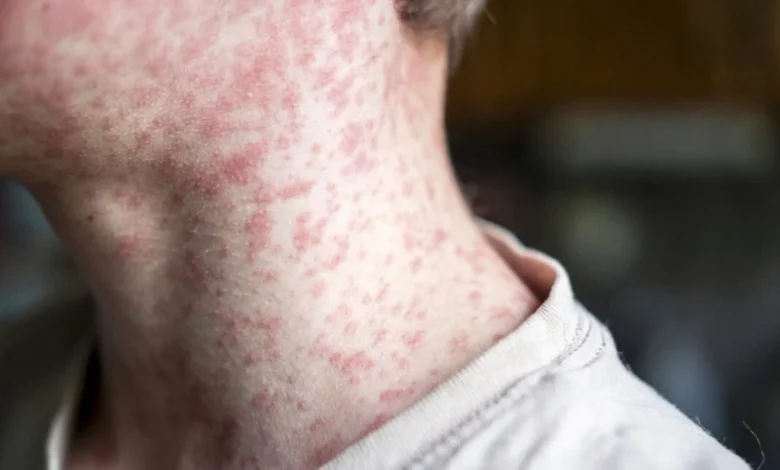
The Pennsylvania Department of Health confirmed on Tuesday that an 18-year-old resident of Mifflin County has died from complications associated with measles, marking the fourth fatality in a worsening outbreak that has gripped the commonwealth for months. This latest tragedy follows the weekend announcement by a Jefferson County coroner confirming the death of an unvaccinated 40-year-old woman, further underscoring the severity of a public health crisis that has now claimed lives across multiple age demographics, from newborns to adults.
As Pennsylvania grapples with its most significant measles resurgence in over 30 years, health officials are sounding the alarm regarding the necessity of immunization. With 693 confirmed cases spread across 38 counties, the state is navigating a complex landscape of medical challenges, misinformation, and the logistical burden of managing a highly contagious respiratory virus that was once considered eliminated in the United States.
A Fatal Complication: Understanding ADEM
The death of the 18-year-old in Mifflin County has brought renewed attention to the severe neurological risks associated with measles. According to Mifflin County Coroner Andrea L. Alcalde, the teenager’s cause of death was acute disseminated encephalomyelitis (ADEM). This rare but devastating autoimmune condition occurs when the immune system, triggered by an initial viral infection—in this case, measles—erroneously attacks the myelin sheath, the protective covering of nerve fibers in the brain and spinal cord.
ADEM often presents rapidly, with symptoms including fever, fatigue, headache, and confusion, eventually escalating to seizures or coma. Historically, before the widespread adoption of the measles, mumps, and rubella (MMR) vaccine, ADEM was a recognized, albeit infrequent, sequela of measles infection. Medical experts note that while ADEM can be triggered by other viruses, its appearance in this case serves as a stark reminder that measles is not merely a transient childhood illness but a systemic pathogen capable of inflicting permanent neurological damage or death.
Coroner Alcalde stated in a public release that the determination was reached following a rigorous review of medical records and clinical history. The office has maintained a policy of privacy, declining to provide further details regarding the individual’s medical background or circumstances leading to the infection, yet the case stands as a grim marker of the lethality inherent in the current outbreak.
Chronology of a Mounting Crisis
The current outbreak has evolved from isolated clusters into a statewide emergency. The trajectory of the crisis can be traced through a series of increasingly concerning reports throughout the year:
- Early Outbreak Phase: The state began tracking a steady uptick in cases, initially concentrated in smaller clusters. As the spring progressed, the virus gained momentum, moving beyond localized hotspots.
- The Loss of the Most Vulnerable: The first two reported fatalities involved infants in Lancaster County—a newborn boy and a six-week-old girl. Because these infants were too young to receive the first dose of the MMR vaccine (typically administered at 12 to 15 months), they relied entirely on herd immunity—the protection afforded by a high percentage of vaccinated individuals in their community—which failed to shield them.
- Expansion of Fatalities: In September, the death of a 40-year-old woman in Jefferson County signaled that the virus was not only circulating among the unvaccinated youth but was also finding susceptible hosts among the adult population.
- Current Status: As of this week, the total case count has reached 693, with 99 of those cases occurring within the last seven days alone. The state reports that 133 individuals have required hospitalization, a metric that places significant strain on regional healthcare facilities.
Data and Public Health Metrics
The state’s data dashboard, which is updated regularly, illustrates a clear correlation between the surge in cases and the decline in immunization coverage in specific regions. While Pennsylvania has historically maintained high vaccination rates, pockets of vaccine hesitancy have created "blind spots" in the state’s immunity armor.
The 693 cases reported this year represent a significant deviation from the norm. For context, the United States officially declared measles eliminated in 2000, meaning the disease is no longer constantly present. Occasional outbreaks are typically tied to international travel, but the scale of the Pennsylvania crisis suggests sustained community transmission that is no longer dependent on imported cases.
Public health analysts emphasize that the MMR vaccine is 97% effective against measles after two doses. However, when vaccination rates drop below the 95% threshold required to maintain herd immunity, the virus can spread with exponential speed. The current hospitalization rate of roughly 19%—calculated from the 133 hospitalizations among 693 cases—indicates that a substantial portion of the infected population is suffering from severe complications, such as pneumonia, encephalitis, or, in the cases recently reported, secondary neurological trauma.
Official Responses and the Challenge of Misinformation
Pennsylvania Secretary of Health Debra Bogen issued a sobering statement following the confirmation of the latest deaths. "My thoughts are with the two families who lost loved ones to this highly contagious virus," Bogen said. "We remain committed to working with our partners across Pennsylvania to stem this outbreak and prevent more deaths. That means ensuring people have the facts about measles and access to the MMR vaccine—which kept measles outbreaks at bay for decades."
The administration is currently tasked with a two-front battle: the clinical management of patients and the communication battle against anti-vaccine sentiment. Throughout the summer, high-profile figures and influencers have contributed to a discourse that often obscures established medical science, leading to skepticism among parents and adults regarding the safety and necessity of the MMR vaccine.
Health officials have been working to counter this narrative by emphasizing the overwhelming body of peer-reviewed data confirming the vaccine’s safety profile. The Department of Health has mobilized mobile clinics and increased outreach in counties where vaccination rates have dipped, aiming to provide "catch-up" doses to children and adults who may have missed their scheduled appointments due to pandemic-related disruptions or personal hesitancy.
Broader Implications for Public Health Policy
The Pennsylvania outbreak is serving as a nationwide case study for the dangers of declining vaccination rates. As the state prepares to update its data dashboard on Wednesday, public health experts are questioning whether more aggressive policy measures—such as stricter school entry requirements or the removal of non-medical exemptions—may be necessary to curb the spread.
The economic and social costs of the outbreak are also mounting. Beyond the tragic loss of life, the financial burden on the healthcare system for managing nearly 700 cases, including the high cost of intensive care for patients with ADEM or pneumonia, is substantial. Furthermore, the disruption to schools, workplaces, and community events caused by contact tracing and quarantine protocols has had a tangible impact on the state’s daily operations.
As winter approaches, health officials are concerned that indoor gatherings could further exacerbate the spread. The message from the Pennsylvania Department of Health remains resolute: the measles virus is unforgiving, and the only reliable defense is the widespread administration of the MMR vaccine. Until vaccination rates return to levels that restore community-wide immunity, the state remains in a precarious position, vulnerable to further preventable tragedies.
For now, the families of the four deceased individuals, and the hundreds of patients currently recovering from the illness, serve as the human faces of a public health struggle that experts warn will not resolve until the barriers to immunization—whether they be logistical, educational, or ideological—are effectively dismantled. The state’s focus for the remainder of the year will be on identifying remaining pockets of susceptibility and ensuring that the public understands the risks of living in an environment where a highly preventable, highly contagious, and potentially fatal disease is actively circulating.