Cadillac Racing shows signs of competitive growth despite reliability struggles in maiden Formula 1 season

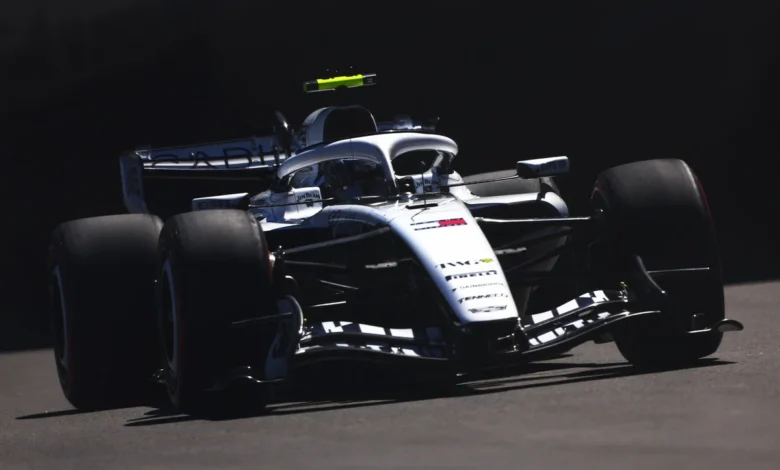
The 2026 Formula 1 season has been a rigorous trial by fire for Cadillac Racing, the sport’s newest entrant. As the team navigates its maiden year in the pinnacle of motorsport, the transition from successful endurance programs to the high-stakes world of Grand Prix racing has proven to be as challenging as anticipated. While the team has spent much of the opening half of the season firmly positioned as a backmarker, the recent Spanish Grand Prix served as a critical data point, highlighting both a promising surge in raw pace and the persistent technical fragility of the MAC-26 challenger.
A Weekend of Mixed Fortunes in Madrid
The Spanish Grand Prix offered a microcosm of Cadillac’s current trajectory. While the team left the circuit without championship points, the performance of Sergio Perez provided the technical staff with significant encouragement. Perez, who has been instrumental in the team’s developmental feedback loop, demonstrated a level of competitiveness that had previously been absent.
Starting from 18th on the grid, Perez executed a clinical start, immediately vaulting past Yuki Tsunoda and Carlos Sainz. Throughout the first stint, he maintained a consistent pace, shadowing the Williams of Alexander Albon with striking proximity. For a team that has struggled to stay within the DRS window of the midfield pack, this was a milestone performance.
However, the race eventually succumbed to the mechanical realities that have plagued the team all year. A terminal water leak forced Perez to retire his car while running in 17th position, cutting short what could have been the team’s most representative finish of the season. Despite the DNF, the post-race analysis of the telemetry data suggested that the car’s performance was not merely a result of track-specific conditions, but a tangible step forward in aero-efficiency and tire management.

Data-Driven Performance Analysis
The comparison between Perez and Albon is particularly revealing. Both drivers operated under identical strategic parameters, utilizing a medium-to-hard tire compound strategy, with both pit stops triggered by the deployment of the Virtual Safety Car.
In the initial stint on medium tires, telemetry indicated that Perez was trailing Albon by an average of 0.403 seconds per lap. This gap was largely attributed to the Cadillac’s struggles with high-speed cornering balance. However, the narrative shifted dramatically once the field transitioned to the hard compound. During the second stint, Perez actually outpaced Albon by an average of 0.351 seconds per lap before the onset of his mechanical failure and the interference of blue flags caused by the lead-lap traffic.
While the sample size—comprising 11 laps in the first stint and eight in the second—is statistically modest, the consistency of the data provides a clear indicator that the MAC-26 has a functional operating window. For the team’s engineers, the goal is now to expand that window to cover the entirety of a race distance rather than isolated stints.
The Reliability Conundrum
While the pace is trending upward, the team’s reliability record remains the primary obstacle to progress. Cadillac has recorded 11 retirements or non-starts in the 2026 season thus far. While this figure is technically lower than the 15 recorded by Aston Martin, it remains significantly higher than the seven recorded by Williams, the team currently serving as Cadillac’s direct benchmark for midfield advancement.
Valtteri Bottas, the team’s experienced Finnish campaigner, has been vocal about the limitations of the current chassis. During the Madrid event, Bottas spent the majority of the race managing extreme brake temperatures, a process that necessitated significant "lift-and-coast" driving. This style of energy management inherently compromises raw speed, effectively capping the team’s ceiling.
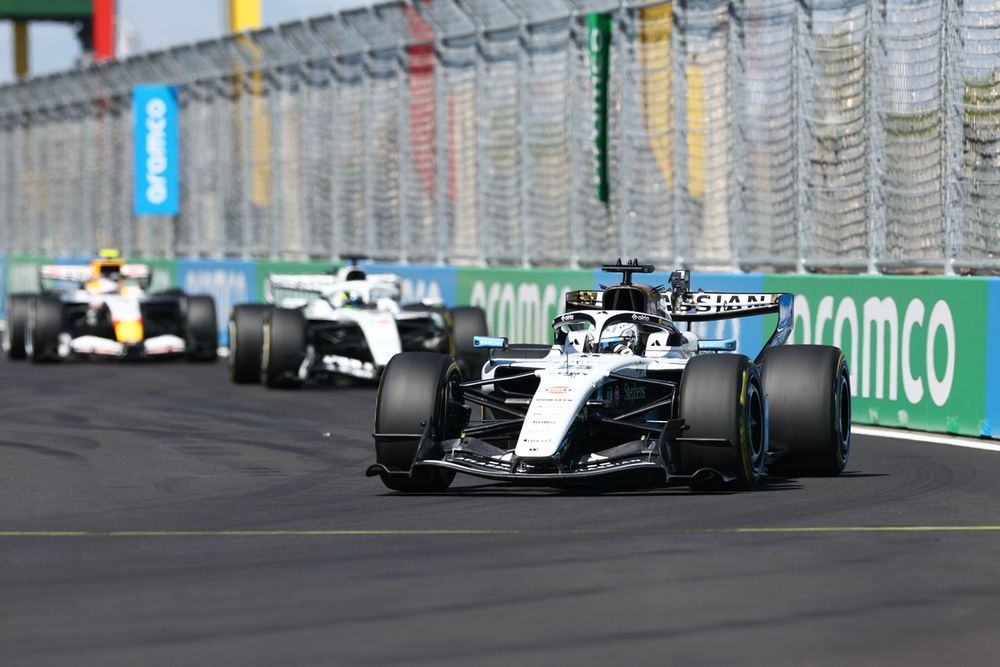
"We know we need to improve," Bottas noted during the post-race debrief. "The car is still not robust enough, and we need to make it a lot faster. The degradation today highlights how much we are lacking compared to the competition. We were managing brake temps throughout the race, which is a major compromise, but finishing the race was, in itself, a positive step for us."
Strategic Outlook: From Madrid to Baku
As the team prepares for the upcoming Azerbaijan Grand Prix, the focus shifts toward optimizing the car for a different profile of circuit. The Madrid event served as a high-downforce, technical test; Baku, by contrast, presents a unique challenge dominated by long straights and 90-degree corners.
The engineering team at Cadillac believes that the MAC-26’s current deficit in total downforce will be less penalizing on the streets of Baku. Because the track features fewer high-speed, sustained-load corners, the team’s relative lack of aerodynamic grip may be masked by the efficiency of their power unit and straight-line stability.
"In the beginning, we can be there," Bottas explained, reflecting on the team’s prospects. "But as the race progresses, the degradation gets worse. However, for the next event, I am more hopeful. Baku is different—the only high-speed corners are flat-out; otherwise, it is mostly slow- or medium-speed. That suits us better."
Broader Implications for the 2026 Grid
The arrival of Cadillac to the Formula 1 grid has been subject to intense scrutiny, particularly regarding how a new manufacturer can bridge the gap to established teams that have been refining their aerodynamic concepts for years. The current standings reflect this challenge, with the team currently struggling to break into the top 15 in qualifying and the top 14 on race days.

The team’s internal philosophy remains one of incremental progress. By prioritizing mechanical reliability, Cadillac hopes to allow its drivers to push the car to its limit for longer durations, which in turn will provide the team with the necessary data to iterate on the chassis design for the 2027 season.
From an industry perspective, the team’s ability to remain "within a second" of midfield stalwarts like Williams is a significant validation of their development path. While the transition has been fraught with frustration—particularly regarding the frequency of retirement—the team’s ability to maintain a positive trajectory is being watched closely by competitors.
Conclusion: A Foundation for Growth
As the 2026 season crosses its midway point, the narrative surrounding Cadillac Racing is evolving from one of "new team struggles" to "targeted development." The team has moved past the phase of merely participating and is now entering a phase of technical refinement.
The upcoming rounds will be pivotal. If the team can stabilize its reliability, the raw speed improvements seen in Spain suggest that they could challenge for the lower points-paying positions in the second half of the season. For a program as ambitious as Cadillac’s, the climb is steep, but the recent performance of the MAC-26 provides the first tangible evidence that their technical roadmap is beginning to bear fruit.
Whether this momentum can be sustained through the rigors of a full calendar will depend on the team’s ability to solve its ongoing cooling and brake management issues, which remain the single largest bottleneck to competitive performance. For now, the team returns to the factory with a clear mandate: improve the reliability, maintain the newfound pace, and ensure that the next time their cars take to the track, they do so with the intent of finishing—and scoring points.
Related posts: