In chaotic news conference, Trump refers to barring CNN, Politico and MS Now as his ‘ban on the free press’

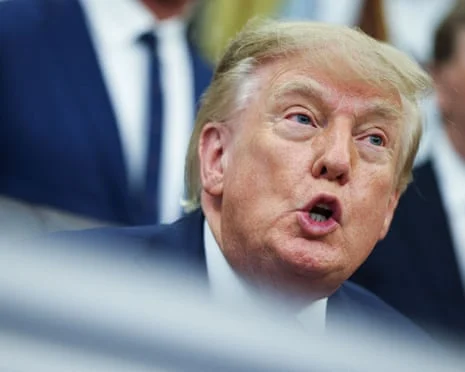
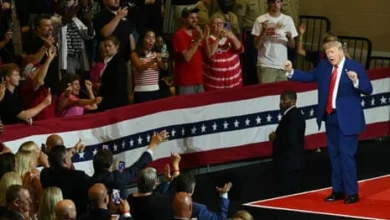
The political landscape in Washington D.C. faced a sharp escalation in tensions on Friday as President Donald Trump utilized a high-profile Oval Office event to reiterate his intention to ban three major media outlets—CNN, Politico, and MS Now—from White House access. The announcement, which initially broke via the President’s personal social media platform, Truth Social, was framed by the administration as a necessary measure against what the President termed "FICTION and LIES." However, the remarks, delivered during a press conference intended to focus on healthcare and pharmaceutical pricing, quickly veered into a constitutional confrontation, with the President seemingly acknowledging the magnitude of his actions by explicitly labeling his policy as a "ban on the free press."
The President’s comments follow a pattern of combative rhetoric toward the press, yet this latest move represents a significant departure in its specificity and reach. During the conference, when pressed by reporters on the practical implementation of these bans—specifically whether it involved the revocation of press credentials or exclusion from the White House pool—the President appeared momentarily disoriented before clarifying his stance. "I don’t want them in my office. I don’t want them here," Trump stated, adding that the ban would extend "as far as you can." He further indicated that the list of excluded outlets might expand, explicitly suggesting that the New York Times and the Washington Post could be the next targets of his administration’s retaliatory measures.
A Chronology of Escalation
The move to ban these specific news organizations marks the latest chapter in a long-standing antagonistic relationship between the current administration and the press. This approach, however, has historical precedents within the Trump administration. In 2018, the President attempted to revoke the press pass of CNN correspondent Jim Acosta. That effort was short-lived; a federal judge ruled that the exclusion violated due process, forcing the White House to restore access. At the time, the administration quickly complied.
Furthermore, early in his second term, the President signaled a willingness to restrict access based on editorial disagreements when he excluded the Associated Press from certain White House briefings. That action was taken in retaliation for the AP’s refusal to adopt the administration’s preferred nomenclature, "the Gulf of America," in place of the internationally recognized "Gulf of Mexico."
Friday’s announcement, therefore, is viewed by legal scholars and media watchdogs as a culmination of a strategy designed to bypass critical oversight by delegitimizing the outlets performing that oversight. The President’s assertion that he is "involved in more bans than any human being" underscored a rhetorical strategy that treats media exclusion as a legitimate tool of governance rather than a violation of established democratic norms.
Constitutional and Legal Implications
The reaction from legal experts was immediate and severe. Jameel Jaffer, executive director of the Knight First Amendment Institute at Columbia University, issued a pointed statement following the President’s remarks. Jaffer emphasized that the First Amendment exists precisely to prevent the executive branch from penalizing journalists based on the content or tone of their reporting. "The First Amendment prohibits the president from punishing journalists because he doesn’t like their coverage," Jaffer noted, adding that the White House press pool constitutes a "public forum," meaning the government is constitutionally barred from excluding participants based on their viewpoints.
Legislative leaders have also weighed in, with Senate Democratic Leader Chuck Schumer characterizing the President’s actions as authoritarian. "Donald Trump just did what dictators throughout history have done," Schumer wrote on social media, emphasizing that such maneuvers would not succeed in shielding the administration from public accountability.

Broader Context: A Week of Turmoil
The timing of the ban is notable, occurring as the administration faces a confluence of domestic and international crises. The White House, in a bid to maintain a positive narrative, has been attempting to shift public attention toward healthcare reforms, including efforts to reduce pharmaceutical costs and adjust vaccine policies for children. However, these efforts have been consistently overshadowed by deeper structural issues.
Chief among these is the ongoing military conflict with Iran. Reports from the Washington Post this week indicated that the Pentagon’s official casualty count—publicly stated at 18—may be a significant undercount. According to anonymous officials, the actual number of American service members killed in the escalating regional conflict is at least 22. This discrepancy, combined with the instability of global shipping routes through the Strait of Hormuz and the Red Sea, has placed the administration in a precarious position regarding both its foreign policy and domestic energy prices.
Economic anxiety is also mounting. New data shows that mortgage rates are hovering near 7%, and consumer prices increased by 3.4% in the year leading up to August. In Michigan, a critical swing state, a new poll by the Washington Post and the Schar School reveals that over 60% of voters oppose the administration’s current tariff strategy regarding Canada. The resulting trade war has disrupted vital supply chains, particularly in border states, complicating the Republican party’s efforts to maintain control of Congress in the upcoming November 3rd midterm elections.
The Intersection of Tech and Governance
The administration’s approach to control extends beyond the press. Recent developments have seen an increased focus on the regulation of artificial intelligence. Governors such as Josh Shapiro of Pennsylvania and Gavin Newsom of California have taken independent executive action to implement guardrails on AI, citing public concern over the potential for "runaway" technology. This move highlights a growing divide between state-level attempts to regulate emerging tech and the federal government’s more permissive, and at times inconsistent, oversight.
Simultaneously, the administration’s international relationships remain volatile. The recent decision by the FBI, under Director Kash Patel, to halt cooperation with the Royal Canadian Mounted Police (RCMP) over the Canadian Broadcasting Corporation’s (CBC) internal language policies regarding 9/11 is seen by analysts as an unprecedented retaliatory measure. That the administration would jeopardize intelligence and law enforcement cooperation over a broadcaster’s editorial guidelines underscores the extent to which the current executive branch is willing to utilize state power to enforce its standards of political and historical discourse.
Future Outlook and Implications
As the midterm elections approach in less than two months, the atmosphere in Washington remains highly polarized. The President’s decision to ban media outlets—and his stated desire to see a "fair and honest press," defined by him as outlets that are favorable to his administration—suggests that the coming weeks will likely see further efforts to restrict access to information.
The potential for further legal challenges is high. Given the previous judicial rebukes the administration has faced, including the Supreme Court’s recent rejection of his plan to centralize authority over mail-in voting, the President’s attempt to enforce a media "ban" will likely face swift judicial scrutiny. However, the political strategy behind these actions—aimed at mobilizing a base that is increasingly skeptical of traditional media—appears set to continue regardless of the legal outcomes.
For now, the White House remains a site of significant friction. With the President explicitly calling for a "simple ban" on organizations he deems dishonest, and with his administration actively engaging in disputes ranging from the naming of geographic features to the management of international law enforcement partnerships, the upcoming election cycle promises to be defined by these fundamental clashes over the role of the press, the boundaries of executive authority, and the stability of American democratic institutions. The President’s assertion that "we’ll be suing these people too" suggests that the conflict is far from over, and that the intersection of law, politics, and the press will remain the primary battleground in the lead-up to November.