The Evolution of Emergency Preparedness: How Portable Power Stations Are Redefining Resilience for Modern Consumers and Outdoor Enthusiasts


As extreme weather events become increasingly frequent and infrastructure strains under the weight of surging electricity demands, power outages are no longer isolated inconveniences; they are systemic challenges that disrupt daily life, major events, and critical communications. Whether a community is facing a severe seasonal storm, a localized grid failure, or venturing off-grid for recreational pursuits, the traditional reliance on the central power grid leaves millions vulnerable to sudden disruptions. Historically, mitigating these interruptions meant turning to loud, combustion-driven gas generators. However, a significant paradigm shift is underway. Driven by advancements in lithium-ion technology, plummeting solar costs, and an escalating demand for silent, emission-free energy, portable power stations have emerged as the modern gold standard for emergency preparedness and mobile lifestyle support.
The Vulnerability of the Modern Grid and the Cost of Interruptions
The contemporary household and consumer lifestyle are inextricably linked to a continuous supply of electricity. Beyond basic lighting and climate control, modern life depends on uninterrupted internet connectivity, refrigeration, digital security systems, and mobile device charging. When the electrical grid fails during a critical moment—such as a major sporting event, a remote camping trip, or an unexpected winter storm—the immediate consequence is a cascading loss of convenience and safety.
Recent data from energy regulatory bodies indicates that the frequency of major power outages in North America has more than doubled over the past two decades. Aging infrastructure, combined with extreme weather phenomena driven by climate change, has placed unprecedented pressure on regional power grids. When an outage occurs, the immediate aftermath is characterized by a scramble for information and a race to preserve perishable goods. For households, a multi-day blackout can result in hundreds of dollars in spoiled groceries, severed communication lines with emergency services, and the inability to power essential medical devices.
In commercial and recreational sectors, the stakes are equally high. Tailgating culture, outdoor recreational tourism, and mobile remote work setups require dependable, decentralized energy sources. Traditional fossil-fuel generators, while capable of producing high wattage, present notable logistical hurdles. They require the storage of volatile and expensive fuels, demand constant mechanical maintenance, emit toxic carbon monoxide, and generate noise pollution that violates local ordinances at campsites and residential neighborhoods alike. Consequently, consumers are increasingly seeking sophisticated alternatives that bridge the gap between heavy industrial power and household safety.
The Technological Shift: Transitioning from Combustion to Clean Energy
The technological evolution of portable power stations represents a convergence of battery chemistry improvements and renewable energy integration. Unlike traditional gas generators that rely on internal combustion engines, modern portable power stations utilize advanced lithium iron phosphate (LiFePO4) or lithium-ion battery cells. These energy storage units are housed in rugged, compact chassis equipped with multiple output ports, including AC household outlets, USB-C Power Delivery, DC car ports, and inductive wireless charging pads.
The operational benefits of battery-based power stations are manifold. Foremost among them is safety. Because they produce no emissions, portable power stations can be operated indoors, inside tents, or within recreational vehicles without the lethal risk of carbon monoxide poisoning associated with gas engines. Furthermore, their silent operation ensures that they do not disrupt the acoustic environment of a residential neighborhood, a quiet campsite, or a social gathering.
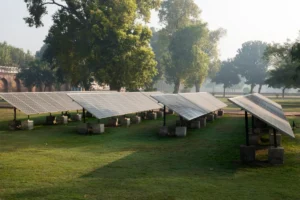
Industry analysts note that the global portable power station market has experienced exponential growth, projected to expand at a compound annual growth rate (CAGR) of over 10 percent through the end of the decade. This surge is heavily supported by declining manufacturing costs for high-capacity battery cells and the increasing accessibility of modular solar panels. Consumers can now harness solar energy to passively recharge their power stations during daylight hours, creating a closed-loop, self-sustaining energy ecosystem that remains entirely independent of the central grid.
Tailgating, Recreation, and the Demand for Mobile Electricity
While emergency home backup remains a primary market driver, the demand for versatile power solutions is equally robust in the recreational sector. Tailgating traditions, RV expeditions, and backcountry camping trips have evolved significantly from rudimentary setups to high-tech excursions. Modern outdoor enthusiasts frequently transport a suite of electronic devices, including portable refrigerators, high-output sound systems, digital projectors, Wi-Fi hotspots, and electronic cooking appliances.
This lifestyle shift requires a nuanced approach to power management. For instance, powering a sensitive electronic device like a laptop or a medical CPAP machine requires a pure sine wave inverter, a feature standard in quality portable power stations but frequently absent in older, modified square-wave generators. A pure sine wave ensures that electrical current flows in a smooth, continuous wave, mirroring utility-grade power and protecting delicate microprocessors from voltage spikes or degradation.

Moreover, the integration of solar charging capabilities has transformed extended wilderness trips. Portable, foldable monocrystalline solar panels can be deployed in minutes, capturing ambient sunlight and funneling regulated direct current into the power station’s internal management system. Even in remote locations devoid of infrastructure, users can maintain a continuous supply of energy for illumination, communication gear, and climate-control fans.
Strategic Energy Management: Matching Capacity to Real-World Needs
A common pitfall in emergency preparedness and recreational planning is the tendency to purchase equipment based on generalized fear or impulse rather than calculated utility. Industry experts emphasize that effective energy planning begins with an accurate inventory of power requirements, often measured in watt-hours (Wh) and running watts.
Different appliances impose vastly different loads on an energy storage system. For example, high-wattage heating and cooling appliances—such as space heaters, window air conditioners, and traditional coffee makers—consume electricity at rates that can deplete a standard portable power station in a matter of minutes. Conversely, communication devices, LED lighting arrays, medical equipment, and Wi-Fi routers operate on low wattage, allowing a mid-capacity power station to sustain them for hours or even days.
To optimize performance, consumers are advised to categorize their energy needs into operational tiers:
- Critical Lifelines: Mobile phones, medical devices, emergency radios, and wireless routers.
- Preservation: Portable refrigerators, chest freezers, and minimalist lighting.
- Comfort and Recreation: Large-screen displays, entertainment systems, and auxiliary fans.
By understanding these consumption tiers, users can select appropriate power station capacities—ranging from compact 300Wh units designed for personal electronics to robust 2000Wh+ modular systems capable of backing up essential home circuits or sustaining a multi-day RV excursion.
Economic and Environmental Implications of Decentralized Power
The widespread adoption of portable power stations and personal solar generators carries broader macroeconomic and environmental implications. As consumers increasingly invest in localized energy storage, aggregate peak demand on municipal utility grids experiences a subtle yet meaningful reduction. During extreme weather events or heatwaves, households utilizing stored solar energy draw less power from public utilities, thereby mitigating the risk of rolling brownouts or catastrophic grid failure.
From an environmental perspective, the transition away from small-engine gas generators offers measurable carbon reduction benefits. Small gasoline engines are notoriously inefficient and lack the sophisticated catalytic converters found in modern automobiles, resulting in disproportionately high emissions of unburned hydrocarbons, nitrogen oxides, and particulate matter. By replacing these combustion engines with solar-recharged battery banks, consumers directly eliminate localized air pollution and reduce their reliance on fossil fuels.
Furthermore, the durability and modularity of contemporary power stations contribute to a circular economy model. High-grade LiFePO4 batteries frequently boast lifecycles exceeding 3,000 charge cycles while retaining upwards of 80 percent of their original capacity. This longevity translates to years of reliable service, significantly reducing electronic waste compared to older battery chemistries that degraded rapidly after a few hundred cycles.
Conclusion: Proactive Readiness in an Unpredictable Climate
As infrastructure pressures mount and consumer expectations for connectivity and comfort remain unabated, the philosophy of emergency preparedness has undergone a permanent transformation. Waiting for a crisis to strike before formulating an energy strategy is no longer a viable approach for households, event organizers, or outdoor enthusiasts.
The integration of portable power stations and renewable solar charging into everyday planning provides a reliable, safe, and environmentally conscious safeguard against the unpredictability of the modern grid. By thoroughly assessing individual power requirements, investing in scalable technology, and embracing emission-free alternatives to traditional combustion generators, consumers can ensure resilience, continuity, and peace of mind regardless of external environmental conditions. Proactive readiness is no longer the exclusive domain of survivalists; it is a fundamental component of modern, intelligent living.
Related posts: