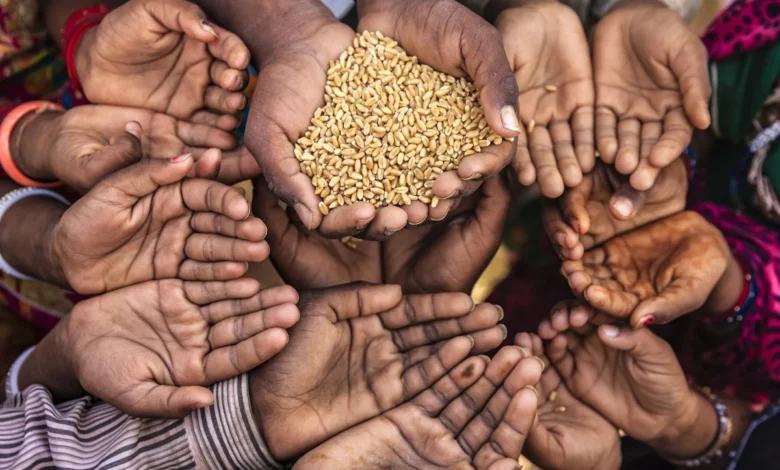
The latest edition of The State of Food Security and Nutrition in the World (SOFI) report, published jointly by five major United Nations agencies, reveals a nuanced global landscape regarding food security. While aggregate figures show a slight improvement in the global fight against hunger, the data underscores a dangerous divergence in regional outcomes. According to the 2025 assessment, approximately 673 million people—roughly 8.2 percent of the global population—experienced hunger in 2024. While this represents a measurable decline from the 8.7 percent recorded in 2022 and 8.5 percent in 2023, the progress is far from uniform, with profound crises escalating in specific geographic corridors.
The report, compiled by the Food and Agriculture Organization (FAO), the International Fund for Agricultural Development (IFAD), the World Food Programme (WFP), UNICEF, and the World Health Organization (WHO), offers a sobering reminder of the hurdles remaining to achieve the UN’s Sustainable Development Goal (SDG) of Zero Hunger by 2030. Despite the global dip in the absolute number of undernourished people—dropping by approximately 15 million since 2023—the world remains far off track from its humanitarian commitments.
A Chronology of Crisis and Recovery
To understand the current state of food insecurity, one must look back to the onset of the COVID-19 pandemic in 2020. The pandemic acted as a massive catalyst for economic instability, causing supply chain disruptions that inflated food prices globally. This was compounded by the subsequent geopolitical fallout from the war in Ukraine, which destabilized grain and fertilizer markets, and an increasing frequency of extreme weather events linked to climate change.
Between 2020 and 2022, the world witnessed a sharp increase in food price inflation, which hit its zenith in early 2023. During this period, low-income nations suffered disproportionately, with food price inflation in these regions peaking at a staggering 30 percent in May 2023. While the global median inflation rate has since stabilized from its peak of 13.6 percent in early 2023, the residual economic damage continues to prevent low-income households from recovering their purchasing power.
Regional Disparities: A Tale of Two Realities
The aggregate decline in global hunger masks a deepening crisis in specific regions. While Asia saw a significant reduction in undernourishment, with rates falling to 6.7 percent from 7.9 percent over the last two years, and Latin America and the Caribbean experienced a recovery to 5.1 percent following a 2020 peak, Africa and western Asia are moving in the opposite direction.
In Africa, the proportion of the population facing hunger has now surpassed 20 percent, affecting 307 million people. This trend is largely driven by prolonged food crises, conflict, and economic fragility. Similarly, in western Asia, an estimated 12.7 percent of the population, or more than 39 million individuals, struggled to access adequate nutrition in 2024. The SOFI report projects that by 2030, if current trajectories persist, nearly 512 million people could remain in a state of chronic undernourishment, with Africa accounting for approximately 60 percent of that total.
Economic Barriers and the Healthy Diet Deficit
The report emphasizes that hunger is not merely a matter of caloric intake but a crisis of affordability. A healthy diet remains inaccessible to billions of people, though the global trend shows slight improvement. The number of people unable to afford a nutritious diet fell to 2.6 billion last year, down from 2.76 billion in 2019. However, this recovery is not universal.
In low-income countries, the number of individuals unable to afford a healthy diet rose to 545 million in 2024, up from 464 million five years prior. This suggests that while middle-income nations have begun to stabilize their internal food markets, the world’s poorest populations are being left behind by inflationary pressures and stagnant wages. In lower-middle-income nations—excluding India—the number of people priced out of healthy food grew from 791 million to 869 million over the same period.

Official Responses and Institutional Perspectives
The leadership of the UN agencies involved in the study has called for a radical shift in how governments approach food policy. FAO Director-General QU Dongyu noted that while the overall decrease in the hunger rate is a sign of resilience, it is insufficient. He stressed the need for "collaborative and innovative" efforts to address the specific systemic challenges in vulnerable regions.
Dr. Tedros Adhanom Ghebreyesus, Director-General of the World Health Organization, highlighted the progress made in reducing child stunting and promoting exclusive breastfeeding, but warned that these gains are precarious. "There is still much to be done to relieve millions of people from the burdens of food insecurity and malnutrition," he stated.
IFAD President Alvaro Lario emphasized the link between agricultural investment and global stability. "In times of rising food prices and disrupted global value chains, we must step up our investments in rural and agricultural transformation," Lario said. He advocated for monetary policies that contain inflation alongside targeted fiscal social protection programs.
UNICEF Executive Director Catherine Russell focused on the long-term impact on the next generation, noting that over 190 million children under the age of five are currently suffering from undernutrition. This early-life deprivation carries lifelong consequences for physical and cognitive development, effectively robbing children of their future potential.
Policy Implications and Structural Solutions
The SOFI 2025 report suggests a tripartite approach to tackling these issues. First, it calls for transparent and credible monetary policies to dampen inflationary pressures that disproportionately affect food prices. Second, it urges governments to implement time-bound, targeted fiscal measures—such as social safety nets—to protect the most vulnerable households during periods of price volatility. Finally, the report highlights the necessity of long-term investment in agrifood research, development, and infrastructure.
The failure to bridge the gap in food affordability has broader implications for global security. Food insecurity acts as a threat multiplier, often leading to civil unrest, mass migration, and political instability. The divergence in progress between the Global North and the most vulnerable regions of Africa and western Asia suggests that the current global food system is not equipped to handle the shocks of a changing climate and a volatile geopolitical environment.
Analysis: The Path to 2030
As the world nears the 2030 deadline for the Sustainable Development Goals, the data from the 2025 SOFI report serves as a diagnostic tool for a failing system. The reliance on centralized supply chains and the vulnerability of low-income nations to currency devaluation and food price spikes remain the most significant barriers to progress.
Without a substantial increase in climate-resilient agricultural infrastructure and a democratization of access to nutritional inputs, the goal of "Zero Hunger" will likely remain aspirational. The data indicates that the world has the resources to feed its population, but the distribution of those resources is increasingly hampered by regional economic isolation and an inability to shield the poor from the shocks of the global market.
Moving forward, the focus must shift from emergency aid—which is often subject to donor fatigue and logistical failures—to local capacity building. Empowering smallholder farmers, promoting localized crop production, and reducing post-harvest losses through better storage and transport infrastructure are the critical steps required to transform the current trajectory. The 2025 report makes it clear: the world is recovering, but it is recovering at a speed that leaves the most vulnerable in a state of permanent crisis. The cost of inaction will not only be measured in hunger statistics but in the loss of human potential across generations.
Related posts: