Accelerated Biological Aging Is Driving a Surge in Early-Onset Cancer Among Younger Generations

For decades, the medical community has operated under the fundamental understanding that cancer is a disease of aging. The biological logic has long been consistent: as organisms survive longer, their cells have more opportunities to accumulate the genetic mutations and physiological damage that ultimately trigger tumor growth. However, this foundational paradigm is currently being challenged by a statistically significant and concerning trend: a global rise in cancer diagnoses among individuals under the age of 55. As clinicians and researchers grapple with this shift, a new study led by Washington University School of Medicine in St. Louis suggests that the answer may lie in a fundamental mismatch between our chronological age and our biological reality.
The Disconnect Between Time and Physiology
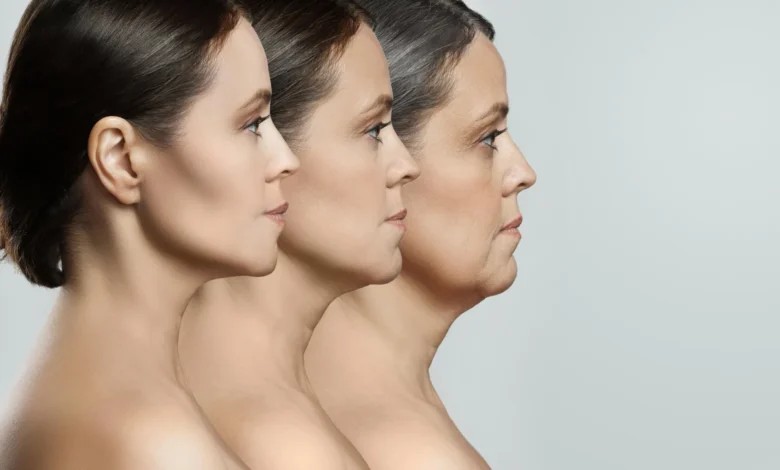
The core of this investigation rests on the distinction between chronological age—the simple passage of years since birth—and biological age, which encompasses the cumulative wear and tear on an individual’s cells, tissues, and metabolic systems. Recent findings published in the journal Nature Medicine provide evidence that younger generations are, in effect, aging faster than their predecessors did at similar stages in their lives.
Researchers analyzed data from more than 154,000 individuals in the UK Biobank and over 10,000 participants in the U.S.-based "All of Us" Research Program. By applying complex algorithms—specifically the PhenoAge and Klemera-Doubal methods, alongside metabolomic age scores—the team was able to measure systemic biological aging. The results were striking: younger cohorts exhibited biological profiles that were significantly "older" than their chronological age when compared to older generations at the same life stage. This accelerated aging process is not merely a curiosity; it appears to be a primary driver for the increased incidence of early-onset cancers.
A Chronology of the Rising Trend
The observation of rising early-onset cancer rates is not new, but it has intensified over the last two decades. Historically, medical screening guidelines were heavily weighted toward patients aged 50 or 60 and older. However, clinical registries began flagging a deviation in the early 2000s, showing a steady uptick in gastrointestinal, breast, and reproductive cancers among adults in their 30s and 40s.
- 2010s: Epidemiological data began to suggest that the "cancer-as-an-aging-disease" model was failing to account for the increasing number of patients presenting with solid tumors well before their mid-50s.
- 2020–2023: Global research initiatives, including the Cancer Grand Challenges—a collaborative effort funded by the National Cancer Institute and Cancer Research UK—prioritized the study of early-onset malignancies.
- 2024: The publication of the Washington University study marked a significant milestone, shifting the focus from individual risk factors (such as diet or sedentary behavior) to the holistic measurement of biological aging as a predictive tool for cancer risk.
Quantitative Evidence of Generational Shifts
The data underscores a clear generational acceleration. Among the participants in the UK Biobank, those born between 1965 and 1974 exhibited systemic aging that was 23% of one standard deviation higher than those born between 1950 and 1954, even after correcting for chronological age. The trend was even more pronounced in the United States. Participants born between 1990 and 1999 showed systemic aging that was 92% of one standard deviation higher than those born between 1965 and 1969.
This data suggests that the biological "mileage" on the human body is increasing at a faster rate for each successive generation. When the researchers cross-referenced this accelerated aging with cancer outcomes, the correlation became clear: higher levels of systemic biological aging were associated with an 8% increased risk of early-onset solid cancers. For those in the highest tier of biological aging, the risk surged to 15% compared to those with the most favorable biological profiles.
Organ-Specific Vulnerabilities
One of the most innovative aspects of the study was the move beyond "whole-body" aging to organ-specific aging. Using blood proteomic data—which tracks protein levels linked to specific biological systems—the researchers were able to pinpoint which systems were deteriorating fastest.
The findings revealed that the body does not age uniformly. Accelerated aging of the immune system was specifically linked to a higher incidence of early-onset lung cancer. Similarly, older-appearing adipose tissue (fat tissue) was significantly associated with early-onset colorectal cancer. This suggests that future clinical screening might eventually move toward "personalized biological monitoring," where doctors evaluate the age of specific systems to determine an individual’s susceptibility to particular types of cancer.
Implications for Clinical Practice and Public Health
The potential to transition from population-wide screening recommendations to personalized, biology-based prevention is the primary long-term goal of the researchers. Currently, screening for cancers like colorectal or lung cancer is triggered almost exclusively by chronological age. If a 35-year-old displays the biological profile of a 50-year-old, the current system misses a critical window for early intervention.
Yin Cao, ScD, a molecular epidemiologist and associate professor at WashU Medicine, emphasizes that the ultimate objective is to "decode how modern environments become biologically embedded." The environment—encompassing everything from the quality of our food supply and metabolic health to stress levels and chemical exposures—likely leaves a cumulative mark on our biology. By identifying these marks early, clinicians could theoretically intervene with screening or lifestyle modifications long before a tumor reaches a detectable size.
Perspectives from the Research Community
The implications of these findings have resonated throughout the oncology and public health sectors. David Scott, PhD, director of Cancer Grand Challenges, noted that while the medical community does not yet have a definitive "smoking gun" for why early-onset cancer is rising, the research provided by the PROSPECT team is essential for mapping the "bigger picture."
"Cancer is increasingly viewed as a disease influenced not just by isolated mutations within a single cell, but by the systemic environment of the entire body," says one independent expert reviewing the study. "If the body’s overall biological health is deteriorating faster than its chronological age, we are effectively shortening the duration of human health and opening the door to diseases that we previously associated with the elderly."
A Call for Future Research
While the association between accelerated aging and cancer is robust, the scientific community recognizes that much work remains. Researchers are now looking to untangle the "why" behind this accelerated aging. Is it the ubiquity of processed foods? The rise of sedentary lifestyles? Or perhaps the cumulative impact of environmental toxins that the human body has not yet evolved to process?
Furthermore, the study confirms that these associations hold true even when researchers account for inherited genetic predispositions. This suggests that the environment and lifestyle factors are playing a larger role than genetics alone in shaping the "biological age" of younger generations.
Conclusion: A New Frontier in Oncology
The research conducted by the PROSPECT team represents a pivotal shift in how we understand human longevity and disease. As we continue to move toward a model of precision medicine, the ability to measure biological age offers a promising, albeit complex, path forward. If healthcare providers can successfully integrate biological aging metrics into standard physicals, they may eventually be able to identify "at-risk" patients years earlier than current protocols allow.
For now, the study serves as a stark reminder that time is not just a measurement on a calendar. For the younger generations, the ticking of the biological clock appears to be accelerating, and addressing the root causes of this phenomenon may be the most significant challenge in modern oncology. By focusing on the biological embeddedness of our environment, the medical community is moving toward a future where cancer prevention is not a one-size-fits-all approach, but a tailored strategy built on the unique physiological reality of the individual.