While early reports suggested that the energy crisis might trigger a regressive return to carbon-intensive fuels, detailed analysis from organizations such as the International Energy Agency (IEA) and Carbon Brief indicates a more nuanced reality. Although coal demand is witnessing a temporary 1.2% uptick, this increase is being significantly eclipsed by a sharp, sustained contraction in oil and gas consumption, leading to an overall reduction in carbon dioxide (CO2) emissions.
The Anatomy of the Hormuz Crisis
The crisis, which escalated throughout the first half of 2026, has fundamentally altered the calculus of global energy security. The Strait of Hormuz, through which approximately 20% of the world’s total petroleum liquids pass, has become a primary flashpoint. The closure of shipping lanes and the subsequent imposition of naval blockades have created a "price shock" that has rippled through every sector of the global economy.

The conflict has not only halted transit but has also fostered geopolitical instability in adjacent regions, including renewed violence in Yemen. Each successive incident serves as a grim catalyst, compelling nations to reconsider their reliance on volatile, imported fossil fuels. For many emerging economies, the exorbitant cost of Liquefied Natural Gas (LNG) has made the transition to domestic clean energy or, in some cases, a desperate reliance on local coal reserves, a matter of economic survival rather than environmental policy.
Chronology of a Shifting Energy Landscape
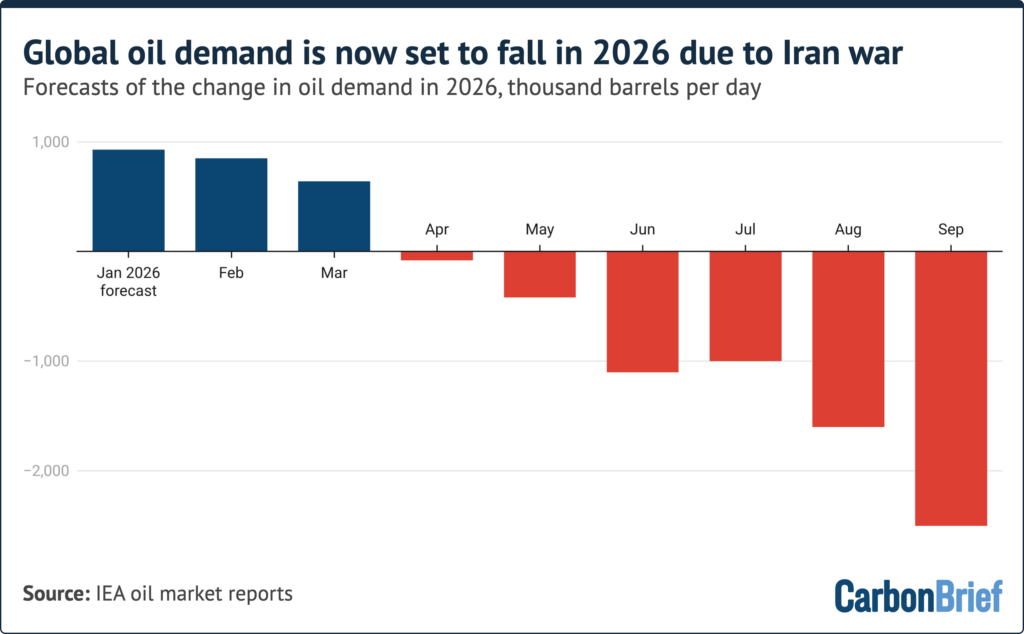
The evolution of the 2026 energy forecast has been rapid and dramatic. At the start of the year, the prevailing narrative was one of growth. In January 2026, the IEA anticipated a rise in global oil demand of approximately 930,000 barrels per day (bpd). However, as the Hormuz crisis deepened, these projections were systematically revised downward.
- Q1 2026: Initial optimism in energy markets persists; global gas demand is forecast to rise by 2.0% as recovery efforts from previous years continue.
- Q2 2026: The conflict in the Persian Gulf intensifies, leading to significant disruption in shipping. Markets react with sharp price spikes.
- July 2026: The IEA shifts its outlook, now predicting a 0.6% drop in gas demand. Oil demand forecasts begin a steep downward revision.
- September 2026: The IEA reports a drastic reversal, projecting a 2,500,000bpd drop in oil demand—a 2.4% contraction from 2025 levels. Simultaneously, global coal demand projections are updated to reflect a 1.2% rise, driven by the inability of some regions to pivot immediately to renewables.
Data-Driven Analysis of Fuel Consumption
The headline figure of a 0.5% reduction in CO2 emissions is supported by the uneven performance of different energy sectors. Fossil fuels currently account for roughly two-thirds of global greenhouse gas emissions, meaning that shifts in these sectors have an outsized impact on the climate.
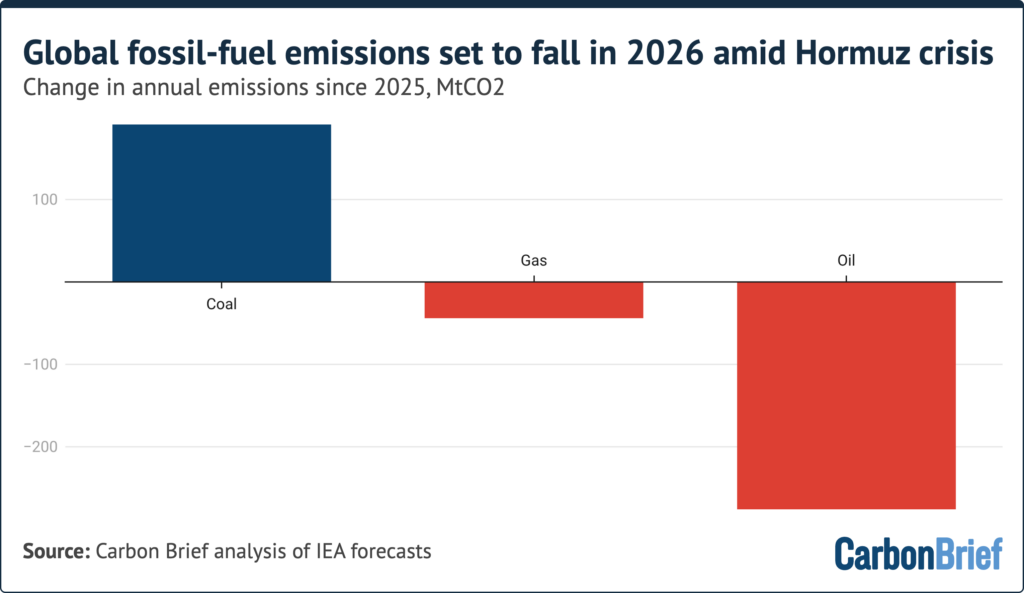
The "return to coal" narrative, often cited by media outlets to describe the 1.2% rise in demand, requires context. The IEA notes that while higher gas prices have forced some utilities to burn coal, there are physical and infrastructural limits to this pivot. Many power plants are not designed for rapid fuel-switching, and the logistical challenges of shifting coal supply chains are immense.
Furthermore, the rise in coal is partially attributed to external factors unrelated to the Hormuz crisis. These include the impact of a severe El Niño event, which has simultaneously increased cooling demand and curtailed hydroelectric output in key markets like China. Additionally, operational inefficiencies, such as the curtailment of wind and solar capacity in China, have forced a greater reliance on thermal power.
Economic and Strategic Responses
The impact on the oil sector has been the most severe. Analysts at major financial institutions, including Morgan Stanley, have corroborated the IEA’s findings, noting a consensus forecast of a decline exceeding 2.4 million barrels per day. The permanence of this decline is the subject of intense debate among energy economists.
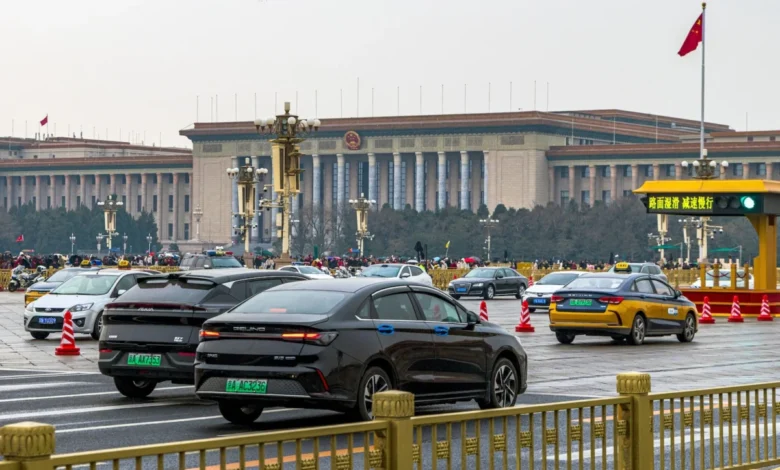
Sverre Alvik, vice president at DNV, has argued that for every month the conflict persists, the probability of "permanent demand destruction" increases. This is evidenced by the accelerated adoption of Electric Vehicles (EVs). In markets ranging from China and Europe to Thailand and Indonesia, high fuel prices have served as an involuntary subsidy for the transition to EVs. By July 2026, EV sales in "new markets"—those outside the traditional hubs of North America and Europe—nearly doubled year-on-year.
Governments in developing nations that had previously anchored their energy strategy on the expansion of LNG infrastructure are now signaling a retreat. The $9.4 billion cost of a single major LNG import bill for some Asian nations has forced a re-evaluation of energy sovereignty. Many are now pivoting toward domestic renewables or, in the short term, extending the life of existing coal infrastructure to mitigate the risks associated with global supply chain dependency.
Broader Implications for Global Climate Policy
The long-term impact of the 2026 crisis remains an open question. Initially, the IEA expected oil demand to rebound in 2027 to levels surpassing 2025; however, current assessments suggest that oil usage may remain effectively stagnant for the next two years. This shift challenges the "peak oil" timelines established as recently as October 2025, which suggested that global demand would not peak until 2030.

The crisis has essentially fast-tracked the energy transition in ways that policy alone had failed to achieve. By removing the economic viability of oil-dependent transport and forcing a diversification of power generation, the geopolitical instability of the Hormuz region is acting as a brutal, yet effective, instrument of decarbonization.
However, this transition is not without risk. The reliance on coal in the face of natural disasters or economic hardship highlights the fragility of the global energy mix. If gas prices were to stabilize suddenly, there is a risk that coal demand could drop, yet if the conflict continues to escalate, the lack of robust renewable infrastructure in many nations could lead to energy poverty.
Conclusion
As the world moves toward the final quarter of 2026, the data suggests that the global community is experiencing a rare moment where a major geopolitical crisis is resulting in a net reduction in carbon emissions. While the causes of this decline—warfare, price volatility, and supply chain collapse—are undesirable, the resulting shift in energy usage patterns provides a template for what an accelerated transition might look like.

The lessons of 2026 are clear: the global economy is highly sensitive to the stability of energy transit routes. The enduring legacy of the current crisis will likely be a heightened focus on energy independence through electrification and renewable energy, as nations recognize that the cost of fossil fuel volatility has become too high to bear. Whether this 0.5% reduction in emissions represents a permanent inflection point or a temporary deviation remains to be seen, but the structural changes occurring in the automotive and power sectors suggest that the path toward a lower-carbon future has been irrevocably altered.
Related posts: