Canadian Space Agency Astronaut Joshua Kutryk and NASA Astronaut Anil Menon Power Up the International Space Station with Critical Spacewalk

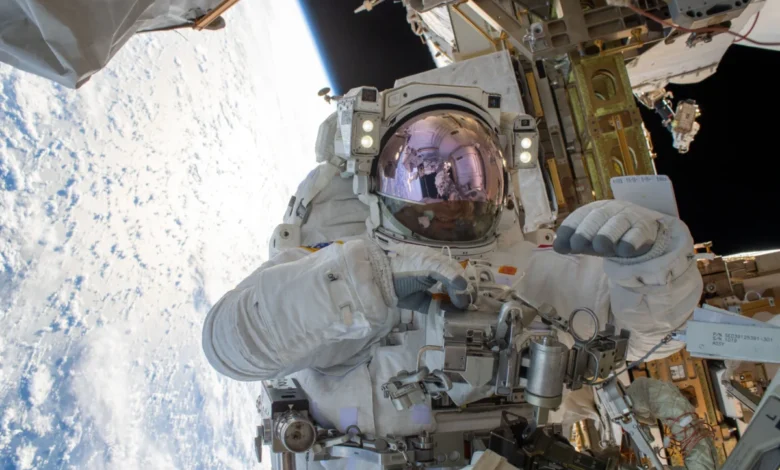
Orbital mechanics aligned on October 29, 2026, as Canadian Space Agency (CSA) astronaut Joshua Kutryk and NASA astronaut Anil Menon floated 267 miles above the South Atlantic Ocean, tethered to the exterior of the International Space Station (ISS). During an extravehicular activity (EVA) that lasted nearly seven hours, the duo successfully installed a sophisticated new roll-out solar array designed to bolster the aging laboratory’s electrical generation capacity. This mission represents a critical milestone in a multi-year, station-wide power upgrade initiative orchestrated by NASA and its international partners to ensure the orbiting outpost remains fully operational and capable of supporting advanced scientific research through the remainder of its lifespan.
The successful installation of the solar array not only fulfills the immediate objectives of the October 29 spacewalk but also sets the stage for a rapid-fire continuation of the upgrade sequence. With the primary hardware securely mounted and deployed, Kutryk and Menon turned their attention to preliminary maintenance tasks—commonly referred to in mission control terminology as get-ahead work—to streamline preparations for their next scheduled excursion. That upcoming spacewalk, slated for November 5, 2026, will mark the culmination of a massive hardware replacement campaign as the astronauts venture back into the vacuum of space to install the eighth and final International Space Station Roll-Out Solar Array (iROSA).
The Evolution of Station Power: Background and Context
To fully appreciate the significance of the October 29 spacewalk, one must examine the historical power architecture of the International Space Station. Since the launch of the first components in late 1998, the ISS has relied on eight original, large-scale photovoltaic solar arrays to convert sunlight into usable electricity. These rigid, wing-like structures, deployed across successive shuttle missions, were designed with a standard 15-year operational lifespan. Over decades of relentless exposure to the harsh space environment—enduring atomic oxygen, micrometeoroid impacts, thermal cycling, and ultraviolet radiation—the original arrays have naturally degraded, resulting in a gradual decrease in total power output.
Recognizing that future scientific endeavors, commercial utilization, and sustained human habitation would require robust and reliable energy supplies, NASA, in coordination with Boeing and deployable structures manufacturer Deployable Space Systems, conceived the iROSA project. Rather than replacing the massive original arrays entirely—a task deemed structurally impractical and prohibitively expensive—engineers designed the smaller, highly efficient roll-out arrays to be mounted directly in front of the existing wings.
These advanced solar arrays utilize high-efficiency solar cells manufactured by Spectrolab, coupled with an innovative carbon-composite deployable boom system. Stored compactly in launch configurations, the arrays unroll autonomously using stored strain energy in the composite booms, much like a carpenter’s tape measure unfurls. Once fully extended and locked into place, the iROSAs integrate seamlessly with the station’s existing power channels, supplementing the degraded output of the legacy systems and revitalizing the station’s electrical grid.
Chronology of the October 29 Spacewalk
The execution of a modern ISS spacewalk is a masterclass in international cooperation, engineering precision, and rigorous time management. Preparations for the October 29 excursion began months in advance at the Johnson Space Center in Houston, the Neutral Buoyancy Laboratory, and the Canadian Space Agency headquarters in Longueuil, Quebec, where Kutryk and Menon underwent exhaustive virtual reality and underwater simulations.
On the morning of October 29, the timeline commenced hours before the hatch opening as the astronauts transitioned their Extravehicular Mobility Units (EMUs) to internal battery power and initiated the crucial airlock depressurization sequence. Once outside the Quest airlock, Kutryk and Menon moved systematically along the station’s truss structure, utilizing the Mobile Servicing System—the Canadarm2 robotic arm operated by flight controllers on the ground—to transport the bulky iROSA hardware from the Japanese External Facility storage location to the designated worksite on the starboard-side truss.
Working in microgravity while anchored to foot restraints on the end of the robotic arm or the station’s structure, the astronauts carefully aligned the heavy mounting brackets. Maneuvering around the complex cabling and thermal blankets of the truss required immense physical dexterity and coordination. By mid-shift, the structural attachment was confirmed, and the command was given to deploy the roll-out array. The composite booms unspooled smoothly, extending the blanket of photovoltaic cells outward into the sunlight.

With the primary installation completed ahead of schedule, mission managers in Houston and Montreal approved the crew to proceed with get-ahead tasks. Kutryk and Menon spent the final hours of the spacewalk routing cables, clearing clearance zones, and staging tools for the November 5 deployment. After approximately six hours and forty-five minutes of intense labor in the thermosphere, the astronauts safely re-entered the Quest airlock, concluding a flawless EVA.
Supporting Data and Technical Specifications
The iROSA deployment initiative is quantified by several notable metrics that highlight the scale of engineering required to maintain humanity’s premier orbital laboratory:
- Orbital Altitude: Approximately 267 miles (429 kilometers) above the South Atlantic Ocean at the time of peak operations during the October 29 spacewalk.
- Power Augmentation: Each iROSA unit generates more than 20 kilowatts of electricity. When all eight arrays are fully operational, they will increase the station’s total available power from 160 kilowatts to approximately 215 kilowatts—representing a substantial 30 percent boost in electrical capacity.
- Dimensions: When unrolled, each iROSA blanket measures approximately 63 feet (19 meters) long by 20 feet (6 feet) wide, yet it rolls up into a compact cylinder just over 20 inches in diameter for transport.
- Mission Timeline: The comprehensive upgrade plan spans multiple years, beginning with precursor pathfinder launches in June 2021 and culminating with the final installation scheduled for November 5, 2026.
Official Responses and International Partnership
The success of the October 29 spacewalk drew praise from leadership across the participating space agencies, underscoring the deep collaborative ties that sustain the orbital outpost.
Canadian Space Agency officials expressed immense pride in astronaut Joshua Kutryk’s performance during his inaugural long-duration flight mission. In a statement released following the spacewalk, CSA leadership emphasized that Kutryk’s seamless execution of complex extravehicular robotics and construction tasks demonstrates Canada’s continued leadership in space robotics and human spaceflight engineering. The involvement of Canadian astronauts in critical infrastructure missions reinforces the nation’s steadfast commitment to the ISS partnership and future deep-space exploration frameworks, including the lunar Gateway.
Similarly, NASA leadership commended the combined efforts of the flight control teams, engineering departments, and the space-walking crew. Program managers noted that the integration of international flight crews on complex operational tasks remains the cornerstone of orbital operations. By sharing responsibilities—ranging from robotic arm manipulation to structural assembly—NASA, the CSA, and international partners continue to validate the interoperability and resilience of the station’s systems.
Broader Impact and Implications for the Future
The completion of the iROSA upgrade carries profound implications for the final operational decade of the International Space Station and the broader future of commercial low-Earth orbit (LEO) economies.
First and foremost, the 30 percent increase in electrical power ensures that the laboratory can continue hosting high-power scientific payloads, advanced biological experiments, and technological demonstrations without energy rationing. As commercial entities increasingly utilize the ISS for microgravity manufacturing, pharmaceutical development, and materials science, reliable and abundant power is the single most critical commodity on board.
Furthermore, the methodologies, hardware designs, and operational protocols developed and tested during the iROSA project will serve as foundational templates for future space infrastructure. As international space agencies and commercial spaceflight providers look toward building permanent outposts on the Moon, crewed orbital stations around Mars, and commercial free-flying space stations to succeed the ISS, the deployment mechanisms utilized by Kutryk and Menon will be studied and adapted by the next generation of aerospace engineers.
As the crew prepares for the final installation phase on November 5, the global aerospace community watches with anticipation. The successful conclusion of this multi-year electrical overhaul will not only secure the legacy of the International Space Station as a triumph of international engineering but also illuminate the path forward for humanity’s permanent expansion into low-Earth orbit and beyond.