
China Yuans Trade Weighted Value Falls Near Two Year Low
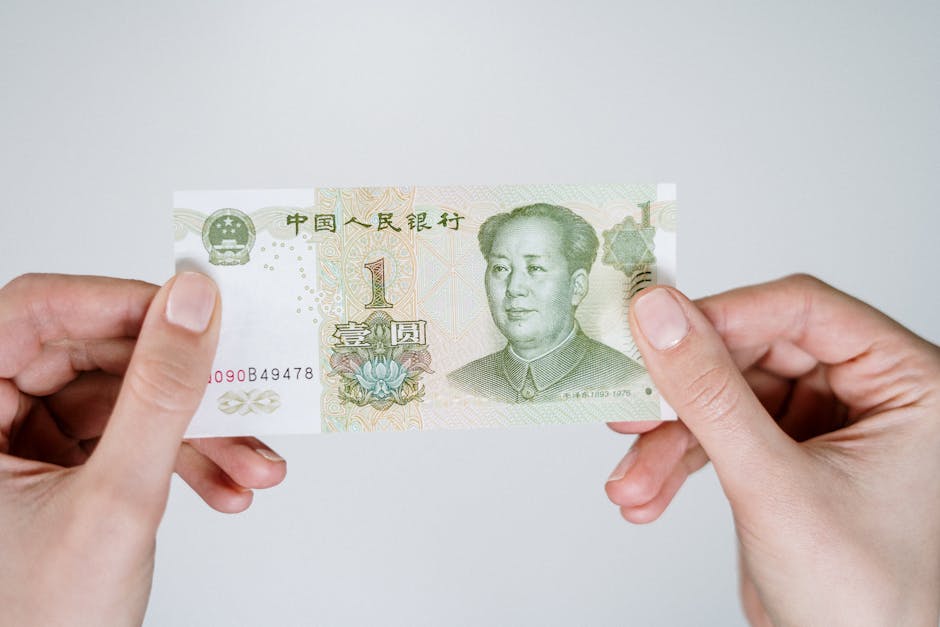
China’s Yuan Faces Steepest Trade-Weighted Decline in Nearly Two Years as Economic Headwinds Mount
The Chinese yuan’s trade-weighted value has plummeted to its lowest point in almost two years, signaling significant economic pressure and a shifting global economic landscape. This depreciation is not a singular event but a culmination of several interconnected factors, including a sluggish domestic economy, persistent global inflation, and a widening interest rate differential with major developed economies. The People’s Bank of China (PBOC) is navigating a complex balancing act, attempting to stimulate growth without triggering excessive capital outflows or a destabilizing currency collapse. Understanding the drivers and implications of this decline is crucial for investors, policymakers, and businesses operating within or interacting with the Chinese economy.
Deconstructing the Trade-Weighted Yuan Index and its Significance
The trade-weighted yuan index is a vital metric for assessing the currency’s strength not against a single major currency like the US dollar, but against a basket of currencies of China’s trading partners. This basket reflects the relative importance of each trading partner in China’s overall trade volume. A higher index value indicates a stronger yuan, meaning it can buy more of the basket of currencies, while a lower value signifies a weaker yuan. The current decline to a near two-year low means that, on average, the yuan’s purchasing power against its key trading partners has diminished considerably. This metric is more comprehensive than bilateral exchange rates as it captures the broader impact of the yuan’s movement on China’s international competitiveness, import costs, and export revenues across its diverse trade relationships. A consistently falling trade-weighted index suggests a loss of competitive advantage for Chinese exporters and a potential increase in the cost of imported goods, which can fuel domestic inflation.
Domestic Economic Challenges: The Root of the Yuan’s Weakness
Several deep-seated domestic economic challenges are directly contributing to the yuan’s depreciation. The most prominent is the protracted property sector crisis, which has cast a long shadow over China’s economic outlook. Major developers have defaulted, property sales have plummeted, and a significant portion of household wealth, traditionally tied to real estate, has been eroded. This has led to a sharp contraction in consumer confidence and spending, a critical engine for economic growth. Furthermore, the services sector, while showing some signs of recovery, has not been able to fully compensate for the weakness in manufacturing and real estate. Weak domestic demand is directly impacting corporate earnings and investment decisions, leading to reduced foreign direct investment inflows and increased capital outflows as investors seek more stable and higher-yielding opportunities elsewhere.
Global Economic Dynamics: Inflation and Interest Rate Differentials
Beyond domestic issues, global economic forces are exerting considerable pressure on the yuan. Persistent inflation in developed economies, particularly in the United States and Europe, has prompted their central banks to aggressively hike interest rates. This widening interest rate differential between China, where monetary policy remains accommodative to stimulate growth, and these developed nations creates an incentive for capital to flow out of China in search of higher returns. Investors are drawn to the attractive yields offered by US Treasury bonds or European government debt, leading to a weakening of the yuan as demand for foreign currencies increases. This phenomenon, often referred to as "carry trade," can exacerbate currency depreciation. Moreover, a global economic slowdown, fueled by geopolitical tensions and supply chain disruptions, further dampens demand for Chinese exports, indirectly affecting the yuan’s valuation.
The People’s Bank of China’s Policy Tightrope Walk
The PBOC finds itself in a delicate balancing act. On one hand, the weakening yuan could offer some relief to exporters by making their goods cheaper on international markets. This could provide a much-needed boost to manufacturing and potentially help offset some of the domestic economic headwinds. However, a rapidly depreciating yuan also carries significant risks. It can fuel imported inflation, as the cost of goods denominated in foreign currencies rises. This could undermine the PBOC’s efforts to control price stability and negatively impact household purchasing power. Furthermore, excessive depreciation can trigger fears of capital flight, leading to a vicious cycle of currency weakness and economic instability. The PBOC’s tools include adjusting benchmark lending rates, managing the onshore yuan’s trading band against the dollar, and potentially intervening directly in the foreign exchange market. Their current approach appears to be a measured easing, aiming to support growth while trying to prevent a disorderly depreciation.
Impact on Global Trade and Investment
The depreciation of the yuan has multifaceted implications for global trade and investment. For countries that are major trading partners with China, a weaker yuan makes Chinese goods cheaper, potentially increasing their imports from China. This could benefit consumers in those countries but might also put pressure on domestic industries that compete with Chinese imports. Conversely, for China, a weaker yuan makes imported raw materials and intermediate goods more expensive, which can increase production costs for its manufacturing sector.
From an investment perspective, a depreciating yuan can make Chinese assets appear less attractive to foreign investors, particularly if they anticipate further declines or are seeking currency stability. This can lead to reduced foreign direct investment and portfolio investment flows into China. However, for some global companies that generate revenue in yuan, a weaker currency means that those earnings translate into fewer dollars or euros when repatriated. This can impact profitability and dividend payouts. Conversely, Chinese companies with significant foreign currency-denominated debt may find it harder to service their obligations as the yuan weakens.
Investor Sentiment and Capital Flows
Investor sentiment towards China has become increasingly cautious, a sentiment mirrored in the yuan’s performance. Global investors are scrutinizing China’s economic data, regulatory environment, and geopolitical risks more closely than ever. The property sector’s woes, coupled with concerns about potential regulatory crackdowns on other sectors, have contributed to an outflow of capital. This capital flight is not just about seeking higher interest rates; it also reflects a reassessment of the risk premium associated with investing in China. The PBOC’s efforts to stabilize the yuan and signal its commitment to growth are crucial for restoring investor confidence. However, any perceived missteps or a lack of decisive action could further erode sentiment and exacerbate capital outflows.
Navigating the Future: Policy Responses and Outlook
The future trajectory of the yuan’s trade-weighted value will heavily depend on the effectiveness of China’s domestic economic policies and the evolving global economic environment. A sustained and robust recovery in China’s domestic demand, particularly in consumption and private investment, is essential for stabilizing the currency. This will likely require further targeted fiscal and monetary stimulus measures, as well as concrete steps to address the property sector crisis and boost business confidence.
Externally, the yuan’s path will be influenced by the monetary policy decisions of other major central banks. If inflation in the US and Europe subsides and their central banks begin to ease monetary policy, the interest rate differential with China will narrow, potentially reducing pressure on the yuan. Geopolitical developments also remain a significant wildcard, with potential impacts on global trade flows and investor sentiment.
The PBOC’s communication and intervention strategy will be critical in managing market expectations and preventing excessive volatility. Transparency and a clear communication of policy objectives are paramount. The current depreciation, while concerning, also presents an opportunity for China to rebalance its economy and foster more sustainable growth drivers. However, navigating this transition will require astute policymaking and a careful consideration of the delicate interplay between domestic economic imperatives and global financial dynamics. The near two-year low in the trade-weighted yuan is a stark indicator of the challenges China faces and the complex global economic environment in which it operates.
