Democrats secure majority in the House and Senate as voters deliver a seismic rebuke to the Trump administration

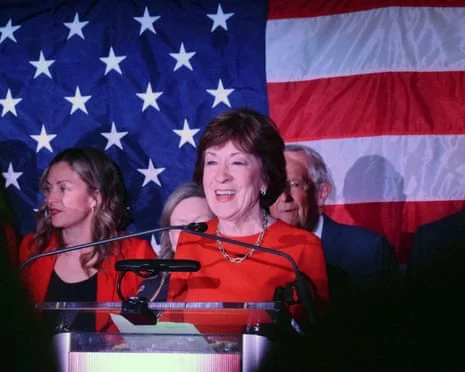
The 2026 midterm elections have concluded in what political analysts are describing as an electoral earthquake, fundamentally altering the trajectory of American governance. In a night of unprecedented shifts, the Democratic Party has successfully secured control of both the United States House of Representatives and the Senate, effectively neutralizing the legislative power of the Trump administration for the remainder of its term. This outcome represents not only a stinging repudiation of President Donald Trump’s political brand but also a profound realignment of the American electorate, with Democratic candidates flipping seats in states previously considered insurmountable strongholds.
As of Wednesday, the scale of the victory has become clear. Democrats have achieved a comfortable majority in the House, securing at least 228 seats, with the potential to reach or exceed 240 as final tallies from remaining competitive districts are finalized. In the Senate, the party has reached 54 seats, a gain that effectively ends the era of a Trump-aligned upper chamber. This "blue tsunami," as it has been dubbed by party leadership, has manifested in victories across diverse geographies, from the industrial heartlands of Michigan to the traditionally red terrains of Texas, Iowa, Kansas, and South Carolina.
A Chronicle of the Night: From Anxiety to Unprecedented Gains

The evening began with a sense of guarded uncertainty. Initial exit polling suggested a tightening race, but as the hours progressed, the momentum shifted decisively. By late Tuesday evening, the reality of the Republican collapse began to take hold.
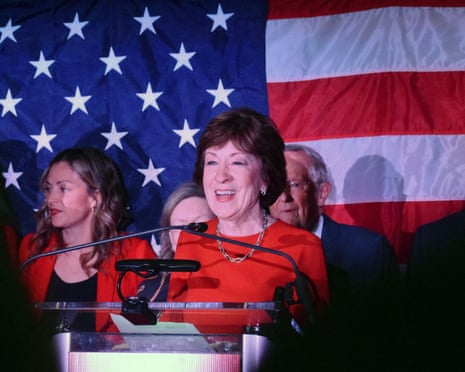
The first major signal of the night was the defeat of Senator Susan Collins in Maine. A fixture of the state’s political landscape for three decades, Collins’s loss to Democratic challenger Troy Jackson served as a harbinger for the rest of the country. Jackson, running on a platform of working-class advocacy, successfully capitalized on widespread frustration with the current administration. His victory was not merely a local success but a symbolic turning point, suggesting that even the most established Republican incumbents were no longer safe from the rising tide of voter discontent.
As the night deepened, the focus shifted to the Texas delegation. For 32 years, Democrats had viewed the Lone Star State as a tantalizing but ultimately elusive prize. That drought ended on Tuesday night. The election of James Talarico to the US Senate and Gina Hinojosa as the state’s first Latina governor represented the most significant Democratic breakthrough in the nation. The atmosphere in Austin, particularly at the long-anticipated victory rallies, was one of profound relief and jubilation. This was followed by a series of high-profile flips, including the victory of Leticia Gutierrez in Texas’s ninth congressional district, a seat previously gerrymandered to favor Republicans.
The Legislative Landscape and the Road Ahead

The shift in legislative power brings immediate implications for the federal agenda. Senate Minority Leader Chuck Schumer, now poised to become the Majority Leader, has framed the results as a "generational re-make of the Senate map" that carries massive historical consequences. In his first remarks following the shift in power, Schumer identified three primary priorities for the incoming Democratic majority: reducing the cost of living, addressing systemic corruption in government, and providing a robust check on the "chaos" of the Trump administration.
"The American people have tasked us with a relentless effort to make life more affordable," Schumer stated. His agenda includes plans to reverse Medicaid cuts, extend Affordable Care Act tax credits, and roll back the current administration’s tariff regime. Perhaps most critically, Schumer signaled an intent to end what he termed a "reckless and costly war of choice" with Iran, indicating that the new Congress will likely pursue rigorous investigations and legislative actions to constrain the administration’s foreign policy initiatives.
Republican Disarray and the Search for New Leadership
For the Republican Party, the results have triggered a period of profound introspection and, for many, a state of shock. The defeat has left the party’s future uncertain, with high-ranking members already beginning to distance themselves from the Trump-led status quo.
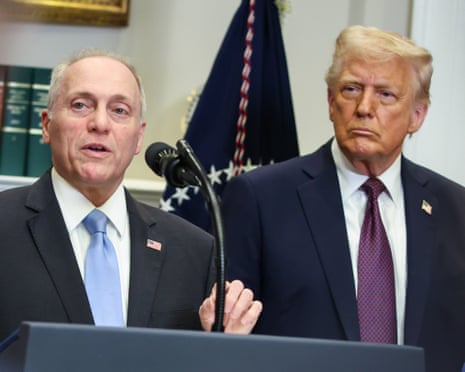
The most immediate consequence of the loss has been a leadership vacuum in the House. Speaker Mike Johnson, recognizing the gravity of the electoral rebuke, has confirmed he will not seek the minority leadership position in the next Congress. This has sparked an immediate scramble among party members to determine the path forward. Louisiana representative Steve Scalise and Ohio’s Jim Jordan have both emerged as leading candidates for the minority leader role.
Scalise, emphasizing his decade of leadership experience, has called for "substantive changes" to the way the Republican conference operates, demanding more accountability and a clearer vision. Conversely, Jordan, a hard-line conservative, has argued that the party must shift from a defensive posture to an offensive one. "Offense, not defense, wins elections," Jordan stated in a letter to his colleagues. These competing visions for the party’s future highlight a fundamental split within the GOP regarding whether to double down on the populist rhetoric that defined the last four years or to pivot toward more traditional conservative principles.
The International and Media Repercussions
The scale of the Republican defeat has reverberated far beyond Washington. World leaders have offered varied reactions, many of whom have expressed hope that the change in US leadership could lead to a more stable international environment. British Prime Minister Andy Burnham noted that the results provide the world with an "opportunity" to focus on de-escalation, particularly regarding the ongoing conflict with Iran and global cost-of-living pressures.

Meanwhile, the media landscape—specifically conservative-leaning networks—has faced a significant reckoning. Fox News, traditionally the dominant voice on election nights, saw a marked decline in viewership, with early ratings placing it behind several broadcast and cable competitors. This trend reflects a broader pattern of "viewer fatigue" that even top-level executives, such as Lachlan Murdoch, have begun to acknowledge. President Trump, for his part, has attributed the decline to the network’s decision to cover Democratic candidates, asserting that his own popularity remains undiminished despite his party’s performance.
Analysis: The Factors Behind the "Blue Tsunami"
Several factors contributed to the scale of the Democratic victory. Exit polling suggests that the war in Iran, which many voters perceived as a "war of choice," played a pivotal role in the collapse of Republican support. The economic climate, characterized by rising gas prices and persistent inflation, also served as a primary driver of voter sentiment.
Furthermore, the 2026 election saw a notable shift in the demographics of the electorate. Pro-Palestinian and progressive candidates, particularly those who ran on platforms emphasizing healthcare and social justice, achieved significant downballot wins. The successful election of figures like Abdul El-Sayed in Michigan—the first Muslim elected to the US Senate—signals an increasing diversity in the Democratic coalition and a growing influence of younger, more progressive voices within the party.
The Republican reliance on the "Trump brand" appears to have reached a point of diminishing returns. As Mitt Romney observed in a public critique, the party’s association with "erratic tariffs, impulsive wars, and mountainous deficits" has alienated key voter segments. The combination of these policy failures and a perceived lack of transparency has created an environment where even traditionally conservative districts have become viable targets for Democratic challengers.
Conclusion: A New Era of Governance
As the dust settles on the 2026 midterms, the message from the American public is clear: a mandate for change. The Democrats now face the significant challenge of managing a fractured coalition and delivering on the promises that propelled them to victory. With the legislative branch now under their control, they have the tools to alter the federal landscape, but they must do so in a way that addresses the deep-seated anxieties of the American people.
The next two years will be defined by the tension between a resurgent Congress and an administration that has vowed to utilize its veto power to block any legislative encroachment. However, the sheer scale of the electoral rebuke suggests that the political environment has fundamentally shifted. Whether this represents a permanent realignment or a temporary swing remains to be seen, but for now, the 2026 midterm election stands as a defining moment in contemporary American political history, marking the potential end of a tumultuous decade and the beginning of a new, uncertain chapter.