Ed Sheeran removes B-stage from first live show since the Macklemore controversy over safety fears

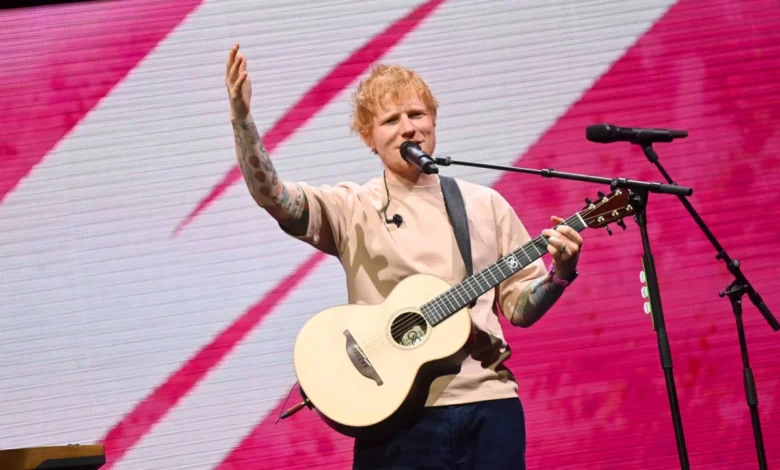
Ed Sheeran’s return to the stage at Philadelphia’s Lincoln Financial Field on September 19 marked a sobering departure from the high-energy, immersive production typical of his global tour. In a candid moment that underscored the volatility surrounding his current concert run, the British singer-songwriter revealed to an audience of 50,000 that he had intentionally dismantled the “B-stage”—a secondary performance platform located in the center of the stadium—out of a genuine fear for his personal safety.
The decision was the culmination of a turbulent week for the artist, triggered by a diplomatic and industry-wide firestorm involving former supporting act Macklemore. The controversy, which has seen support acts and backing musicians exit the tour in solidarity or protest, has thrust Sheeran into the center of a polarized debate regarding political expression on stage, the autonomy of performers, and the responsibilities of major concert venues.
A Chronology of the Controversy
The friction began at MetLife Stadium in New Jersey, where Macklemore used his platform to deliver a vocal “Free Palestine” speech. During the set, the rapper performed his protest track "Hind’s Hall," accompanied by graphic footage from Gaza. The performance drew immediate and intense backlash from various quarters, including prominent figures in the entertainment industry and political advocacy groups.
The situation escalated rapidly as venues began to express concerns over the political nature of the content. Robert Kraft, owner of Gillette Stadium, publicly characterized the speech as “deeply offensive and hurtful to the Jewish community.” Following pressure from venue management and stakeholders, the promoter, Messina Touring Group, made the decision to remove Macklemore from the tour.
In the immediate aftermath, the tour faced a domino effect of professional departures. FINNEAS, Lukas Graham, Aaron Rowe, and Beoga all withdrew their participation, citing varying reasons related to the fallout. Furthermore, Sheeran’s own backing band opted to step down, leaving the tour’s logistics in a state of unprecedented flux. The subsequent days saw a flurry of accusations and public statements, with artists such as Billy Bragg and Massive Attack entering the fray, critiquing both the silencing of the performers and the perceived inadequacy of Sheeran’s initial responses to the crisis.
Security Concerns and the B-Stage Removal
During his Philadelphia performance, Sheeran addressed the absence of his B-stage—a hallmark of his "Loop" tour that usually facilitates a closer connection with fans in the center of the arena. His admission was stark: “I didn’t know what this audience would be like tonight. I didn’t know if I’d have things thrown at me. I took the B-stage out because I was afraid of what might happen if I stood in the middle.”
This admission highlights a shift in the perceived safety of live performance spaces. The B-stage is designed for intimacy, placing the artist within an arm’s length of the crowd. By removing it, Sheeran signaled that the current political climate—and the specific vitriol surrounding his tour—had fundamentally altered the security protocols required to protect the performer. For a stadium-level artist, the necessity of retreating to the relative safety of the main stage underscores the gravity of the public divide.
Humanitarian Stance and Political Nuance
Despite his stated desire to remain a non-political figure, Sheeran found himself compelled to address the Israel-Gaza conflict directly. In his address to the Philadelphia audience, he navigated a precarious middle ground, attempting to denounce the violence while avoiding the inflammatory rhetoric that had led to the tour’s current instability.
“I’ve tried in my career to not be a political commentator of any kind because I want my music and shows to be about unity,” Sheeran told the crowd. However, he diverged from this silence by calling the Hamas-led attack on October 7, 2023, “horrific,” while simultaneously labeling the subsequent military action in Gaza as “catastrophic, unjustifiable, and disproportionate.” By highlighting the systemic injustice in the West Bank and the tragic loss of civilian lives, Sheeran attempted to frame his position as a humanitarian imperative rather than a political crusade.
This speech serves as a case study in the modern challenges facing global touring artists. As social media amplifies individual political expressions, venues and promoters are increasingly intervening to mitigate potential public relations disasters, leading to what Sheeran described as a dangerous precedent: the pre-approval of content by venues. “I am deeply worried about the idea that venues should pre-approve content for performers,” he stated. “This happens in so many places that I perform around the world, but it should never happen in the free world.”
Industry Implications and the Future of Touring
The fallout from the Sheeran-Macklemore incident carries significant implications for the live music industry. The conflict has pitted the principles of free speech against the contractual obligations between artists, promoters, and venue owners.
The financial repercussions have been substantial. Macklemore, following his removal, donated his $1 million earnings from the tour to various humanitarian organizations supporting Palestinians. In a retaliatory, albeit philanthropic, gesture, Robert Kraft matched this amount with a $2 million contribution. These figures highlight the massive financial stakes involved in the current conflict, as artists and donors attempt to steer public opinion through significant monetary commitments.
Critics like Billy Bragg have argued that Sheeran’s attempt to manage the fallout has been insufficient. Bragg noted that the situation risked “tarnishing” Sheeran’s career, suggesting that the singer’s attempts to frame himself as a bystander in the decision to drop Macklemore have only served to alienate both sides of the aisle. For many observers, the departure of the support acts suggests a growing movement of solidarity within the industry—a “conscience-led” exit that could force promoters to rethink their vetting processes for touring artists.
The Path Forward
As the tour continues, Sheeran faces the daunting task of rebuilding the atmosphere of unity that characterized his performances prior to the controversy. His emotional admission that he had questioned whether he wanted to continue as an artist highlights the mental toll of such high-profile public scrutiny.
“I look at the end of the week, and I see 50,000 people who haven’t abandoned me,” Sheeran said toward the end of his Philadelphia show. His commitment to continuing the tour serves as a testament to the resilience required in the modern entertainment landscape, where the line between private artist and public figure has become increasingly blurred.
The events in Philadelphia represent more than just a logistical change to a stage setup; they serve as a marker for a turning point in how artists engage with political issues in the 21st century. As the industry grapples with the fallout, the question remains whether the era of the “apolitical pop star” is effectively over, or if artists will be forced to develop more robust frameworks for handling the political pressures that come with global visibility. For Sheeran, the remainder of the tour will likely be defined by a delicate balancing act—trying to maintain the intimacy of his music while navigating a global landscape that is anything but unified.