Empowering the Front Lines: How BRAC Is Redefining Climate Adaptation Through Community-Led Innovation


As the global community confronts the escalating frequency and severity of extreme weather events, traditional approaches to climate adaptation are undergoing a radical reevaluation. For decades, international climate finance and developmental aid have prioritized top-down models—relying heavily on high-tech infrastructure, macroeconomic interventions, and imported engineering solutions designed far from the communities they intend to serve. However, a growing body of evidence suggests that the most resilient climate strategies are not merely delivered to vulnerable regions; they are forged within them. At the vanguard of this paradigm shift is BRAC, one of the world’s largest international development organizations. With a strategic focus grounded in over fifty years of grassroots experience, BRAC is championing an approach that pairs advanced climate science with the indigenous knowledge of local populations, signaling a fundamental transformation in how global development stakeholders address planetary warming.
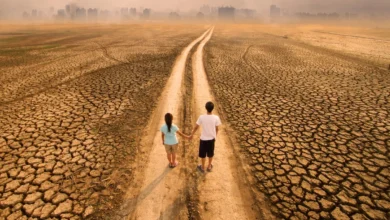
The imperative for localized adaptation arises from a stark reality: while climate change is a planetary crisis, its manifestations are intensely localized. A standardized policy response cannot simultaneously address the saltwater intrusion plaguing coastal agricultural zones in South Asia, the protracted droughts threatening sub-Saharan pastoralists, and the flash flooding submerging low-lying river basins. Consequently, effective climate adaptation demands granular, hyper-local precision. Recognizing this, BRAC has integrated community-led knowledge into the core of its resilience-building framework. According to Md Liakath Ali, Director of BRAC’s Climate Change Program, the fundamental objective is not to supersede indigenous farming techniques with metropolitan scientific models, but rather to synthesize the two into a complementary resource. By bridging empirical meteorological data with the generational insights of smallholder farmers, organizations can deploy interventions that are both technologically sound and culturally viable.
To understand the mechanics of this model, one must examine its historical trajectory and operational evolution. Founded in Bangladesh in 1972 in the wake of the country’s war of independence, BRAC—originally known as the Bangladesh Rural Advancement Committee—began as a modest relief and rehabilitation project. Over the ensuing five decades, it expanded into a multifaceted development powerhouse, pioneering microfinance, non-formal education, and targeted healthcare initiatives. As Bangladesh increasingly emerged as ground zero for climate vulnerability—frequently ranking among the nations most severely impacted by tropical cyclones, monsoon flooding, and rising sea levels—BRAC pivoted its institutional capacity toward environmental resilience. This historical progression culminated in the development of innovative community-level support structures, most notably BRAC’s adaptation clinics.
These adaptation clinics serve as decentralized hubs that bridge the persistent gap between macro-level meteorological forecasting and micro-level agricultural execution. In many developing economies, sophisticated climate models generated by international research centers fail to translate into actionable intelligence for the individual farmer. A smallholder managing a few acres of land requires immediate, context-specific guidance: Should seeds be planted today or deferred until next week? Are impending rainfall patterns projected to exceed soil absorption thresholds? Is a traditional crop variety becoming unviable due to shifting temperature baselines? BRAC’s clinics address these questions by translating complex climate projections into localized advisories. This direct-to-farmer dissemination model ensures that communities are equipped to make real-time decisions regarding irrigation schedules, crop diversification, and risk mitigation.

Beyond operational mechanics, this community-centric philosophy challenges prevailing developmental tropes that habitually frame vulnerable populations exclusively through the lens of deficit. International aid frameworks have historically characterized rural communities in the Global South as passive beneficiaries lacking capital, infrastructure, and technological literacy. This deficit-based paradigm frequently obscures the profound expertise embedded within agrarian societies. Farmers who have cultivated the same tract of land for decades possess an intuitive, empirical understanding of micro-climatic shifts long before those anomalies register in macroeconomic datasets. They recognize subtle degradations in soil composition, alterations in local pollinator behaviors, and shifting precipitation timelines that elude satellite observation. By acknowledging farmers as active climate experts, development agencies can bypass costly trial-and-error cycles and implement initiatives that align with local socio-economic realities.
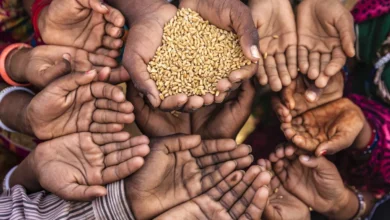
A cornerstone of BRAC’s current strategic expansion is its ambitious initiative to reach nearly two million women smallholder farmers residing in high-risk climate zones. This targeted focus on women is not merely a matter of equity; it is an economic and operational necessity. Across the developing world, women constitute a substantial portion of the agricultural labor force and shoulder primary responsibilities for household food security and water management. Yet, structural inequities frequently restrict their access to land tenure, institutional credit, agricultural extension services, and decision-making platforms. When female smallholders are equipped with tailored climate information, financial resources, and adaptive tools, the resulting dividends extend far beyond the productivity of an individual farm. Enhanced agricultural yields directly translate into improved household nutrition, stabilized family incomes, and heightened community resilience against subsequent climate shocks.
The broader implications of BRAC’s decentralized model offer critical lessons for the international climate finance architecture. As global leaders deliberate multi-billion-dollar adaptation funds at international fora such as the United Nations Climate Change Conferences (COP), a central point of contention remains the disbursement mechanism. Historically, a disproportionate share of climate finance remains locked within multilateral institutions and national governments, struggling to reach the local level where adaptation is actually executed. BRAC’s operational model demonstrates that scaling up climate resilience requires channeling resources directly into community-managed frameworks. When local actors are empowered to co-design and direct adaptation projects, the return on investment—measured in both human security and environmental sustainability—increases exponentially.
Furthermore, the integration of local knowledge with institutional science addresses a critical vulnerability in contemporary climate planning: the absence of a permanent, universal adaptation playbook. Because global climatic systems are continuously evolving, static engineering projects—such as sea walls or deep-tube wells—frequently risk obsolescence if they fail to adapt to dynamic ecological realities. In contrast, a populace trained in continuous risk assessment and equipped with real-time data is inherently more adaptable. By institutionalizing the practice of listening to those on the front lines, development organizations foster institutional resilience that can pivot alongside changing environmental baselines.
Ultimately, BRAC’s trajectory underscores a transformative truth for the future of global environmental policy. While capital investment, advanced engineering, and robust carbon mitigation frameworks remain indispensable to addressing climate change, they are incomplete without the foundational wisdom of those who experience its impacts most acutely. The trajectory of climate adaptation must transition from a top-down delivery mechanism to a collaborative enterprise where local communities are not merely the final recipients of assistance, but the primary architects of their own survival. As the international community seeks durable solutions to an escalating planetary crisis, the most effective blueprint may already exist within the lived experiences of the people standing on the front lines.