
Eu Warns Spains Government Not Hinder Bbvas Bid Sabadell
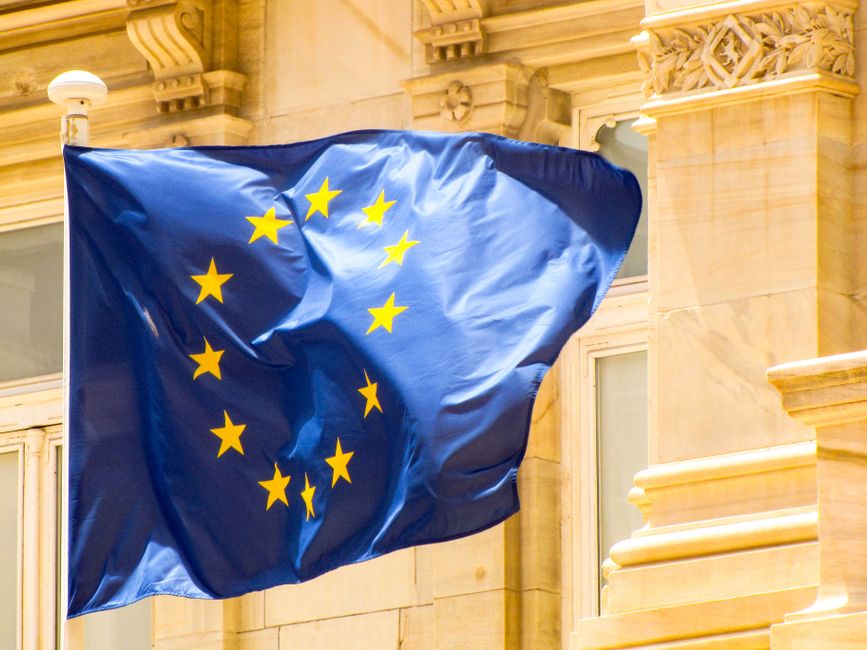
EU Warns Spain’s Government: Don’t Hinder BBVA’s Bid for Sabadell
The European Union has issued a stern warning to the Spanish government, urging it not to impede the proposed merger between BBVA and Banco Sabadell. This intervention underscores the significant implications of the potential consolidation for the Spanish and wider European banking sectors and signals a crucial juncture for financial regulation and competition policy within the bloc. The unsolicited bid, launched by BBVA in early April, aims to create a Spanish banking behemoth, a development that has naturally attracted the attention of both national and supranational authorities concerned with market concentration, financial stability, and fair competition. The EU’s involvement, particularly from competition watchdogs, signifies that the proposed merger will undergo rigorous scrutiny, with the primary concern being its potential impact on competition within the Spanish retail and corporate banking markets.
The Spanish government, through its Economy Minister Nadia Calviño, has previously expressed reservations about the merger, citing potential negative consequences for competition and for the economic development of regions where Sabadell has a strong presence. This has led to speculation that Madrid might seek to block or at least significantly delay the process. However, the EU’s intervention, framed as an advisory to respect the principles of free movement of capital and the single market, suggests that any unilateral national obstruction could be challenged. The European Commission, responsible for competition policy across member states, is equipped with the powers to review and ultimately approve or block mergers that have a significant cross-border dimension or impact. The scale of the proposed BBVA-Sabadell union, creating an entity with a substantial market share in Spain, places it squarely within the Commission’s purview, overshadowing any purely national objections.
The rationale behind BBVA’s pursuit of Sabadell is multifaceted. Primarily, it is driven by the persistent low-interest-rate environment and increased regulatory costs that have squeezed profitability across the European banking sector. Consolidation offers a pathway to achieving significant cost synergies, including branch network rationalization, IT integration, and workforce optimization. Furthermore, a larger entity would possess greater scale and resources to invest in digital transformation and compete more effectively against both domestic and international fintech challengers. The Spanish banking landscape, historically fragmented, has already seen consolidation in recent years, with Santander and CaixaBank also having undertaken significant mergers. BBVA’s move can be interpreted as a strategic imperative to maintain its competitive standing and to capitalize on perceived market opportunities.
However, the potential ramifications for competition in Spain are undeniable. A combined BBVA-Sabadell would significantly reduce the number of major players in the Spanish banking market, potentially leading to fewer choices for consumers and businesses. This could translate into higher lending rates, less favorable deposit terms, and a diminished incentive for innovation among the remaining institutions. The Spanish National Markets and Competition Commission (CNMC) will undoubtedly play a crucial role in assessing these domestic competition concerns. Its analysis will focus on specific market segments, such as mortgages, business loans, and SME financing, to determine whether the merger would create dominant positions or significantly restrict competition. The historical precedent of the CNMC scrutinizing bank mergers, often requiring divestments of branches or business lines to mitigate competition concerns, suggests that BBVA and Sabadell might face similar demands.
The EU’s intervention, while not a direct veto, serves as a powerful signal to the Spanish government. The principle of a single market within the EU emphasizes the free movement of capital, services, and businesses. Member states are generally expected to foster an environment conducive to cross-border investment and corporate activity. While national governments retain legitimate concerns regarding financial stability and market competition within their own borders, these must be balanced against EU-level principles. The European Commission’s Directorate-General for Competition (DG COMP) will be the ultimate arbiter of whether the merger poses a threat to competition across the EU, or at least across a significant part of it, such as Spain. Its review will be independent of national political considerations and will be based on detailed economic analysis.
The Spanish government’s stated concerns are not without merit from a domestic perspective. Sabadell holds a particularly strong position in certain regions, and its potential absorption by BBVA could lead to a reduction in local banking services, impacting small businesses and individuals who rely on its presence. The issue of financial inclusion and access to banking services in rural or less developed areas is a sensitive one for any government. Furthermore, the Spanish economy, while recovering, still faces challenges, and the government may be wary of any consolidation that could lead to job losses or a contraction of credit availability. The precedent of previous banking crises and government interventions in Spain means that any moves that could be perceived as destabilizing or harmful to the broader economic landscape will be met with caution.
However, the EU’s competition rules are designed to prevent national governments from using protectionist measures to shield domestic champions or to stifle mergers that are deemed beneficial for the broader European economy. The Commission has a well-established framework for assessing mergers, balancing the potential efficiencies and benefits of consolidation against the risks of reduced competition. This framework involves extensive data collection, economic modeling, and consultation with market participants. If the Commission were to find that the merger, even with potential divestments, would significantly harm competition, it would have the power to block it. Conversely, if the Commission believes that any national impediments are not justified by EU competition law, it could also intervene.
The political dimension of this proposed merger cannot be overlooked. The Spanish government, particularly at this juncture, may be keen to demonstrate its ability to protect national interests and to ensure that any significant financial consolidation benefits the Spanish economy broadly rather than solely the shareholders of the merging entities. The timing of the bid, amidst ongoing economic uncertainties, might also influence the government’s stance. However, the EU’s overarching commitment to a single market implies a degree of deference to market-driven consolidation, provided it does not violate fundamental competition principles. The Commission’s history shows a willingness to challenge member states that are perceived as acting in a protectionist manner.
The process will involve a detailed review by both the CNMC and the European Commission. The CNMC will likely conduct a Phase I investigation, followed by a potential Phase II if significant competition concerns are identified. Simultaneously, the European Commission will undertake its own merger review, which could also involve a Phase I and a more in-depth Phase II investigation. The two authorities will likely cooperate closely, sharing information and analysis. However, the European Commission has the final say on mergers that have an EU dimension, and its decision will supersede any national objections if they are deemed to be in conflict with EU law.
BBVA and Sabadell are likely to engage in extensive lobbying and negotiation with both national and EU authorities. They will seek to demonstrate the pro-competitive aspects of the merger, such as increased efficiency, enhanced innovation, and greater capacity to serve customers. They will also likely present a comprehensive package of remedies, such as divestments of specific business lines or branches, to address potential competition concerns identified by the regulators. The success of these remedies in satisfying both the CNMC and DG COMP will be critical to the merger’s approval.
The EU’s warning serves as a clear directive that any attempt by the Spanish government to arbitrarily obstruct the BBVA-Sabadell merger, based on purely national interests without a strong basis in EU competition law, will likely face resistance from Brussels. This reinforces the principle that in the European Union, financial markets are increasingly integrated, and national authorities must operate within the broader framework of EU regulations and principles. The outcome of this high-profile merger will have significant implications for the future landscape of banking in Spain and will serve as a test case for the balance between national sovereignty and the EU’s commitment to a competitive single market in the financial sector. The process will be closely watched by other European banks considering similar consolidation moves.
