White Hat Intervention: Magic Eden Suffers 3800 NFT Exploit as Yuga Labs Confirms Safe Recovery and Urgent Security Patching

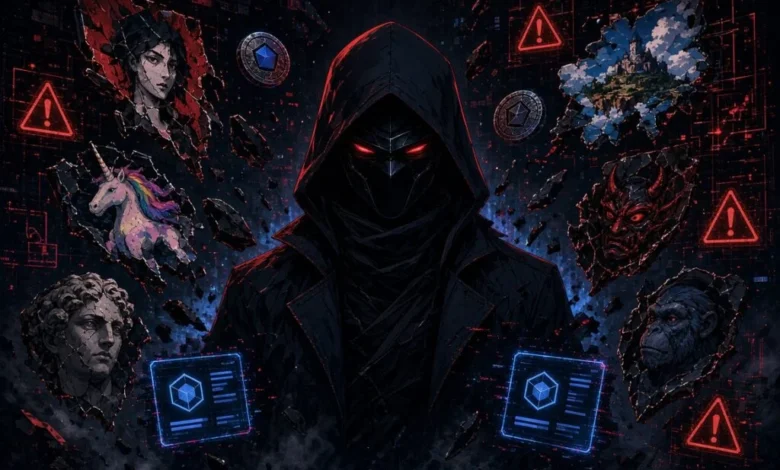
The non-fungible token (NFT) ecosystem experienced a major security scare when prominent marketplace Magic Eden became the target of a sophisticated exploit involving the unauthorized mass transfer of thousands of digital assets. On September 25, 2026, the marketplace suffered a massive security breach that saw roughly 3,800 high-value NFTs swept from user wallets. Unlike standard malicious cyberattacks orchestrated by threat actors for financial gain, the exploit was quickly identified as a white-hat operation conducted by independent security researcher 0xQuit, who intercepted the assets to protect them from a potentially far more damaging compromise.
The incident immediately sent shockwaves through the digital collectibles community, drawing intense scrutiny to marketplace smart contracts, royalty enforcement mechanisms, and user wallet approvals. As prominent NFT collections—including Bored Ape Yacht Club and Azuki—faced collective floor price drops totaling more than 140 ETH across the wider market, the rapid intervention by a trusted security researcher prevented what could have been a catastrophic systemic failure.
Anatomy of the Exploit and White-Hat Intervention
The security incident began unfolding during early morning hours on September 25, when on-chain monitoring tools and prominent NFT community members detected unusual transaction activity. An entity utilizing 0 ETH in gas fees managed to successfully transfer 3,832 NFTs from various user wallets without their direct authorization. The targeted collections included blue-chip assets such as Bored Ape Yacht Club and Azuki, creating immediate panic among collectors who feared their digital investments had been permanently stolen by malicious actors.
However, anxiety quickly turned to relief when security researcher 0xQuit publicly stepped forward to claim responsibility for the action, identifying themselves as a white-hat hacker. In a statement posted to social media platform X, 0xQuit clarified the nature of the operation: "Hey ya this is a whitehat and everything in 0x71cF3f5724bD2B72Ef6464992aCd26216DE7fe33 is safe and will be returned once they are no longer at risk."
According to the researcher, the sweep was executed to preemptively secure assets that were vulnerable due to flawed smart contract interactions. The compromised NFTs were safely deposited into a designated multi-sig holding address (0x71cF3f5724bD2B72Ef6464992aCd26216DE7fe33), where they remained under the researcher’s control pending return to their rightful owners.
Yuga Labs Response and Smart Contract Vulnerabilities
As the situation unfolded, prominent NFT figure Cirrus and other community analysts raised critical questions regarding the underlying infrastructure of the affected collections. Yuga Labs quickly mobilized its engineering and security teams to coordinate with 0xQuit, conducting a thorough investigation to determine whether the event was an isolated incident or part of a broader systemic flaw.
Yuga Labs confirmed that the vulnerability stemmed from outdated or overly broad smart contract approvals tied to marketplace payment processors. The company issued immediate warnings to its community, identifying specific vulnerable contract addresses that required urgent attention.
In a public advisory, 0xQuit urged users to revoke specific permissions immediately, highlighting the following vulnerable endpoints:
- Payment Processor V2 on Ethereum:
0x9A1D00bEd7CD04BCDA516d721A596eb22Aac6834 - Payment Processor V3 on ApeChain:
0x9a1D00000000fC540e2000560054812452eB5366
Collectors and traders were advised to use revocation tools such as revoke.cash to sever lingering permissions that could allow unauthorized actors to interact with their digital assets. Yuga Labs executives, including Michael Figge, joined the public advisory effort, confirming that the company was working closely with security researchers to ensure all swept assets would be returned safely once remediation steps were fully verified.
Magic Eden’s Marketplace Response and Systemic Review
As the dust began to settle, Magic Eden’s technical team initiated a comprehensive review of the platform’s high-severity bidding and collection offer mechanisms. Industry observers pointed out that the platform had faced scrutiny in the past regarding how collection-wide bids interacted with smart contracts, leading to calls for stricter validation protocols across all multichain marketplaces.
0xQuit provided technical recommendations, advising users who had active listings or unfulfilled bids on Magic Eden—particularly those involving collection-wide bids—to utilize revocation tools to protect any remaining assets. The researcher also commended the platform’s swift response in communicating with the community, noting that transparent coordination between protocols and security researchers is vital for maintaining ecosystem trust.
The incident highlights a persistent vulnerability within the Web3 space: the danger of lingering token and NFT approvals. Many users routinely grant broad permissions to decentralized applications (dApps) without realizing that these approvals can remain active indefinitely. When a protocol experiences a vulnerability or a deprecated contract is exploited, these dormant permissions can be leveraged by bad actors to drain user wallets in a matter of seconds.
Broader Implications for Web3 Security
The Magic Eden incident serves as a stark reminder of the fragile nature of smart contract security within the decentralized finance and NFT sectors. While white-hat interventions like the one executed by 0xQuit can avert catastrophic financial loss, the reliance on ethical hackers to secure user funds points to underlying structural weaknesses in how marketplace contracts are deployed and maintained.
Security experts emphasize that both protocols and end-users must adopt more rigorous security hygiene. Protocols are increasingly expected to implement time-bounded approvals, automated permission expiration, and more transparent upgrade paths for smart contracts. Meanwhile, users are continually urged to audit their wallet permissions regularly, revoking access for platforms they no longer actively use.
As the NFT market continues to mature, incidents of this scale force developers and marketplaces to re-evaluate their security frameworks. The successful containment and recovery of 3,800 NFTs without permanent loss demonstrate the resilience and vigilance of the Web3 security community, yet it also underscores the constant threat landscape that projects must navigate to protect digital asset ownership.