
Global Markets Flows Graphic
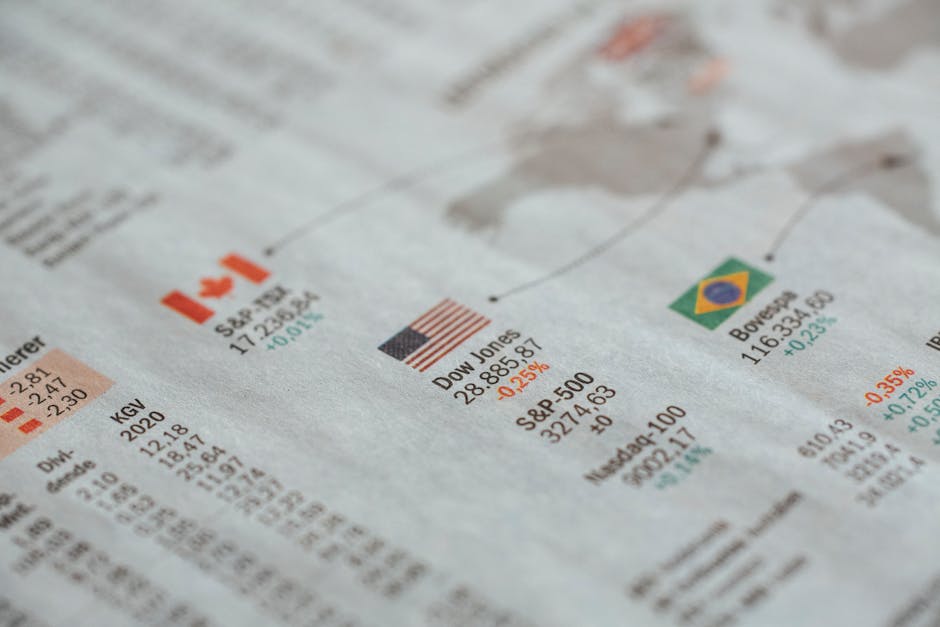
Global Market Flows: Visualizing Capital Movement and Economic Interdependence
Global market flows, visually represented through sophisticated graphics, offer an indispensable tool for understanding the intricate web of international finance and trade. These visualizations move beyond simple data points, illustrating the dynamic movement of capital, goods, and services across national borders. They highlight how economic activity in one region can ripple outward, impacting economies thousands of miles away. At their core, these graphics dissect the drivers of global capital: foreign direct investment (FDI), portfolio investment (stocks and bonds), remittances, and trade balances. By charting these flows, analysts, policymakers, and investors gain a clearer picture of economic relationships, potential risks, and emergent opportunities. Understanding these interconnectedness is paramount in an increasingly globalized world where supply chains are stretched thin and financial markets are deeply integrated. The complexity of these flows necessitates graphical representations to distill vast datasets into digestible and actionable insights. Whether it’s tracking the path of investment from a developed nation to an emerging market, or mapping the intricate trade routes of essential commodities, global market flow graphics are the eyes through which we can perceive the global economic organism.
The visualization of global market flows typically begins with the identification of key economic actors – nations, supranational organizations, and major corporations. These actors are then connected by lines or arrows, the thickness and color of which denote the volume and direction of the flow. For instance, a thick, blue arrow from Country A to Country B might represent a substantial outflow of FDI from A to B, signifying a significant investment in B’s productive capacity by companies headquartered in A. Conversely, a thinner, red arrow might depict a smaller repatriation of profits back to Country A. These graphics can be static, presenting a snapshot of flows at a specific point in time, or dynamic, illustrating changes over a period, revealing trends and shifts in economic power. The most sophisticated graphics are interactive, allowing users to drill down into specific data points, filter by sector, or compare flows between different years. This granularity is crucial for nuanced analysis, moving beyond broad strokes to identify specific industries benefiting from or contributing to global capital movements.
Foreign Direct Investment (FDI) forms a significant pillar in global market flow graphics. FDI involves a direct investment by a company or individual in a foreign enterprise with the intention of establishing a lasting interest and exercising a significant degree of influence over its management. These flows are often depicted as direct pathways between countries, indicating where capital is being deployed to build factories, acquire companies, or establish subsidiaries. Graphics showcasing FDI often highlight trends such as the increasing dominance of emerging economies as both recipients and sources of FDI, a departure from the historical concentration in developed nations. The data points for FDI flows are typically sourced from national statistical agencies, central banks, and international organizations like the United Nations Conference on Trade and Development (UNCTAD). Analyzing FDI flows through graphic representation allows for an understanding of long-term economic strategies, the globalization of production, and the geographical distribution of industrial capacity. For example, a graphic might show a surge in FDI into Southeast Asia, linked to the expansion of manufacturing hubs for electronics and automotive industries, and simultaneously highlight the substantial outflows from China as it diversifies its investments globally.
Portfolio investment, encompassing the purchase of stocks, bonds, and other financial instruments in foreign markets, represents another critical component of global market flows. Unlike FDI, portfolio investments are generally more liquid and do not necessarily imply a desire for managerial control. Graphics illustrating portfolio flows often show a more fluid and interconnected network, with capital moving rapidly between countries in response to interest rate differentials, economic growth prospects, and perceived risk. These flows can be visualized as a dynamic exchange, where investors in one country are buying assets in another, and vice-versa. The impact of these flows can be profound, influencing currency valuations, asset prices, and domestic monetary policy. For instance, a sudden outflow of portfolio investment from a developing country, often triggered by negative economic news or a rise in interest rates in developed markets, can lead to currency depreciation and financial instability. Visualizing these movements helps economists and policymakers anticipate and mitigate such risks. Data for portfolio investment is often gathered from central bank reports, stock exchange data, and international financial institutions.
Trade flows, while distinct from financial flows, are inextricably linked and are often incorporated into comprehensive global market flow graphics. The exchange of goods and services across borders creates significant financial transactions, driving demand for currencies and influencing balance of payments. Graphics depicting trade flows typically use Sankey diagrams or network maps to illustrate the volume and direction of exports and imports between countries. These visuals can highlight global supply chains, the importance of certain trade routes, and the impact of trade policies on economic relationships. For example, a graphic might reveal the intricate web of trade in raw materials, intermediate goods, and finished products that constitute the global automotive industry, showing how components sourced from multiple countries converge to produce a final vehicle in another. The analysis of trade flow graphics can inform discussions on trade agreements, tariffs, and the economic implications of geopolitical events that disrupt supply chains. Data for trade flows is meticulously collected by customs agencies, national statistical offices, and international trade organizations like the World Trade Organization (WTO).
Remittances, the money sent by migrants back to their home countries, constitute a vital source of income for many developing economies and represent a significant, albeit often less discussed, component of global market flows. While not always captured in mainstream financial flow graphics, specialized visualizations can illuminate the scale and impact of these cross-border transfers. These graphics might show the concentration of remittance flows from countries with large migrant populations to specific countries of origin. The economic significance of remittances is substantial, providing households with capital for consumption, investment in education and healthcare, and even entrepreneurial ventures. Understanding these flows through graphical representation highlights the human element of globalization and the vital role of migrant labor in supporting economies worldwide. Data on remittances is often compiled by central banks, the World Bank, and international organizations focused on migration.
The underlying data for these global market flow graphics is derived from a complex and often disparate array of sources. National statistical agencies are foundational, collecting data on FDI, trade, and balance of payments. Central banks provide crucial information on monetary flows, interest rates, and foreign exchange reserves, which heavily influence capital movements. International organizations like the International Monetary Fund (IMF), the World Bank, and UNCTAD play a pivotal role in harmonizing data collection methodologies and providing aggregate global statistics. Furthermore, private financial data providers, such as Bloomberg and Refinitiv, aggregate and disseminate real-time and historical financial market data, including portfolio flows and currency movements. The challenge for creating accurate and comprehensive graphics lies in the consistency and comparability of data across different national reporting standards and the timely incorporation of evolving financial instruments and economic activities.
The interpretation of global market flow graphics is crucial for informed decision-making. For policymakers, these visuals can inform the development of trade policies, investment incentives, and strategies for managing capital inflows and outflows. For investors, understanding these flows can reveal opportunities for diversification, identify emerging markets with strong growth potential, and assess the risks associated with particular regions or sectors. For businesses, these graphics offer insights into global supply chains, potential markets for expansion, and the competitive landscape. For example, a graphic showing a significant and sustained inflow of venture capital into a particular technology sector in a specific country could signal an imminent boom in that industry, attracting further investment and talent. Conversely, a persistent outflow of investment from a sector might suggest underlying economic weaknesses or a lack of investor confidence.
The evolution of global market flow graphics is driven by advancements in data visualization technology and the increasing availability of granular data. Interactive dashboards, powered by big data analytics, allow users to explore complex datasets in real-time, customize their views, and perform sophisticated scenario analysis. Artificial intelligence (AI) and machine learning are also beginning to play a role, not only in processing and cleaning vast datasets but also in identifying patterns and predicting future flow trends that might not be immediately apparent through traditional visual inspection. This technological evolution is making global market flow graphics increasingly powerful tools for understanding the complex and ever-changing global economic landscape.
Furthermore, the interconnectedness highlighted by these graphics underscores the fragility of the global economic system. A shock in one part of the world, be it a financial crisis, a natural disaster, or a geopolitical conflict, can propagate rapidly through these interconnected flows, impacting economies far removed from the initial event. For instance, the COVID-19 pandemic demonstrated how disruptions to global supply chains, visualized through trade flow graphics, could lead to widespread shortages and price increases across multiple continents. Similarly, sovereign debt crises in one nation can trigger capital flight from other emerging markets perceived to have similar vulnerabilities, as shown in portfolio flow graphics. Therefore, understanding these flows is not just about identifying opportunities but also about recognizing and mitigating systemic risks.
The visual representation of global market flows also aids in understanding the impact of global economic integration. As borders become more permeable to capital and goods, the interdependence between economies intensifies. Graphics can illustrate how policies enacted in one country, such as changes in interest rates or trade tariffs, can have ripple effects on other nations through these intricate flow networks. This understanding is vital for international cooperation and for designing policies that promote stability and shared prosperity. The ability to visualize these complex interactions is a testament to the progress in economic modeling and data science, transforming raw economic data into comprehensible and actionable insights.
In conclusion, global market flow graphics are essential tools for navigating the complexities of the modern global economy. They provide a visual language to understand the movement of capital, goods, and services, revealing the intricate interdependencies that define international economic relations. From FDI and portfolio investment to trade and remittances, these visualizations illuminate the forces shaping global economic growth, stability, and risk. As technology advances and data becomes more accessible, the power and sophistication of these graphical representations will undoubtedly continue to grow, offering ever-clearer insights into the dynamic and interconnected world of global markets. The ongoing development and refinement of these visualizations are not merely academic exercises; they are critical for informed policymaking, strategic investment, and a deeper understanding of the forces that drive global prosperity and influence our collective future.
