Historic Milestone Achieved as Africa is Certified Wild Polio-Free by the World Health Organization

In a landmark moment for global public health, the Africa Regional Certification Commission officially certified the World Health Organization (WHO) African Region as free of the wild poliovirus today, following four consecutive years without a single reported case. This momentous achievement means that five of the six WHO regions—representing more than 90 percent of the global population—have now successfully eradicated the wild virus, leaving only two endemic countries remaining worldwide: Pakistan and Afghanistan.
The historic declaration marks the culmination of decades of tireless public health campaigning, cross-border cooperation, and international funding. Health officials, international leaders, and community organizers gathered virtually and locally to celebrate a victory that many once thought impossible, particularly given the continent’s vast geographical expanse, logistical hurdles, and sociopolitical complexities.
The Global Polio Eradication Initiative (GPEI)—a public-private partnership comprising national governments, the WHO, Rotary International, the US Centers for Disease Control and Prevention (CDC), UNICEF, the Bill & Melinda Gates Foundation, and Gavi, the Vaccine Alliance—extolled the national governments of the 47 countries making up the WHO African Region for their unwavering dedication and resilience.
A Journey Decades in the Making: The Chronology of Eradication
The path to a wild polio-free Africa has been long, winding, and fraught with immense challenges. In 1996, at the Organisation of African Unity summit in Harare, Zimbabwe, late South African President Nelson Mandela launched the "Kick Polio Out of Africa" campaign, galvanizing a continent-wide movement. At that time, wild poliovirus paralyzed an estimated 75,000 children every single year across all 47 nations of the region.
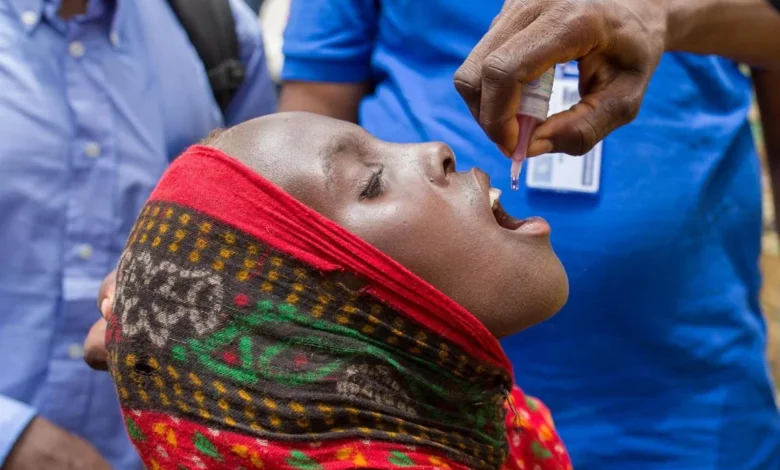
Throughout the late 1990s and early 2000s, health systems faced daunting infrastructure deficits. To combat this, the GPEI and its partners established a vast surveillance and immunization network. Millions of health workers and community volunteers were mobilized to administer drops of the oral polio vaccine (OPV) directly to children, traveling by foot, bicycle, boat, and vehicle to reach the most remote settlements.
A critical turning point occurred in 2016, when Nigeria—then the final endemic stronghold in Africa—recorded its last cases of wild poliovirus in the northeastern state of Borno. Following that detection, strict surveillance measures, rigorous outbreak responses, and military-civilian coordination were deployed to access previously inaccessible populations held by insurgent groups. For four years, intensive monitoring across every district of Nigeria and the wider continent failed to uncover a single new case of wild poliovirus, setting the stage for today’s formal certification by the independent Africa Regional Certification Commission (ARCC).
Overcoming Extraordinary Obstacles
The elimination of wild polio in the African region was achieved despite severe systemic hurdles. High levels of population movement—including nomadic communities, migrant workers, and massive refugee populations displaced by conflict—traditionally created wide corridors for the virus to cross international borders undetected.
Furthermore, armed conflict and persistent insecurity in regions such as the Lake Chad basin, the Horn of Africa, and parts of the Sahel severely restricted humanitarian access, often placing health workers in direct physical danger. Despite these threats, innovative strategies were deployed. Negotiators engaged with non-state actors and local religious and traditional leaders to establish temporary humanitarian pauses in fighting, often referred to as "Days of Tranquility," allowing vaccination teams to safely administer drops to children living behind frontlines.
Strong national leadership was equally vital. Governments across the region integrated polio vaccination campaigns into broader maternal and child health frameworks, ensuring high-level political accountability and sustained domestic financing alongside international donor support.
Global Leaders Hail an Unprecedented Public Health Triumph
The international community responded to the certification with widespread acclaim, emphasizing the inspirational value of the achievement during a turbulent era for global health.
"Ending wild poliovirus in Africa is one of the greatest public health achievements of our time and provides powerful inspiration for all of us to finish the job of eradicating polio globally," stated WHO Director-General Dr. Tedros Adhanom Ghebreyesus. "I thank and congratulate the governments, health workers, community volunteers, traditional and religious leaders, and parents across the region who have worked together to kick wild polio out of Africa."
Rotary International President Holger Knaack echoed these sentiments, highlighting the power of perseverance and cross-sector collaboration.
"During a challenging year for global health, the certification of the African region as wild poliovirus-free is a sign of hope and progress that shows what can be accomplished through collaboration and perseverance," Knaack said. "Since 1996, when Nelson Mandela joined with Rotary, the Global Polio Eradication Initiative, and governments of the African region, we’ve achieved something remarkable. Today’s milestone tells us that polio eradication is possible, as long as the world remains committed to finishing the job."
Donors and philanthropic institutions, including the Bill & Melinda Gates Foundation, also received immense praise for providing the financial backbone necessary to sustain immunization campaigns, laboratory networks, and cold-chain storage facilities across challenging terrains.
Broad Public Health Dividends and Pandemic Synergy
Beyond the direct elimination of a debilitating disease, the infrastructure built to fight polio has yielded profound secondary benefits for African public health systems. The extensive network of laboratories, cold-chain distribution channels, disease surveillance officers, and trained epidemiologists developed for polio eradication has repeatedly been repurposed to combat other infectious disease threats.
In recent years, polio infrastructure and personnel have played a foundational role in responding to outbreaks of Ebola, measles, yellow fever, and, most recently, the COVID-19 pandemic. Surveillance officers trained in polio tracking were swiftly transitioned to assist with contact tracing, case management, and community sensitization for the novel coronavirus, demonstrating the enduring value of targeted global health investments.
The Road Ahead: Remaining Vigilant Against New Threats
Despite the historic nature of the certification, public health experts and the GPEI have issued stern warnings against complacency. The battle against polio is not yet entirely won, and significant vulnerabilities remain that could threaten the continent’s hard-fought gains.
Foremost among these challenges is the ongoing threat posed by vaccine-derived polioviruses. While wild polio has been eradicated from the region, type 2 circulating vaccine-derived poliovirus (cVDPV2) remains active in 16 African countries. These rare strains occur in under-immunized populations where low herd immunity allows weakened virus strains found in the oral polio vaccine to mutate over time and regain the capacity to cause paralysis.
The risk of cVDPV2 outbreaks has been significantly magnified by the COVID-19 pandemic, which forced temporary suspensions of mass vaccination campaigns in numerous countries earlier in the year to prevent viral transmission. These interruptions have created growing immunity gaps among young children, leaving communities increasingly vulnerable to localized outbreaks.
Consequently, the GPEI is urging regional governments and international donors to maintain rigorous surveillance, ramp up routine immunization coverage, and deploy targeted outbreak response campaigns wherever cVDPV2 strains are detected. Until Pakistan and Afghanistan interrupt transmission of the wild poliovirus and every variant is systematically eradicated worldwide, the global community remains at risk of resurgence.
As the world celebrates the removal of wild polio from Africa, the achievement stands as a shining testament to what humanity can accomplish through science, solidarity, and relentless determination—offering a clear roadmap for tackling remaining global health crises in the decades to come.