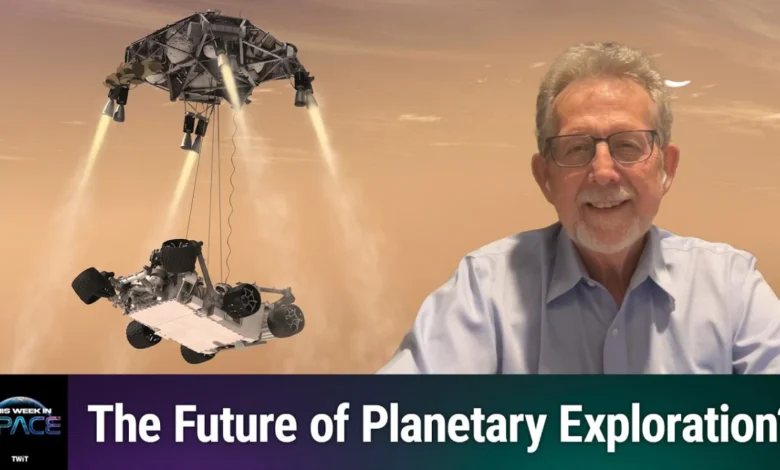
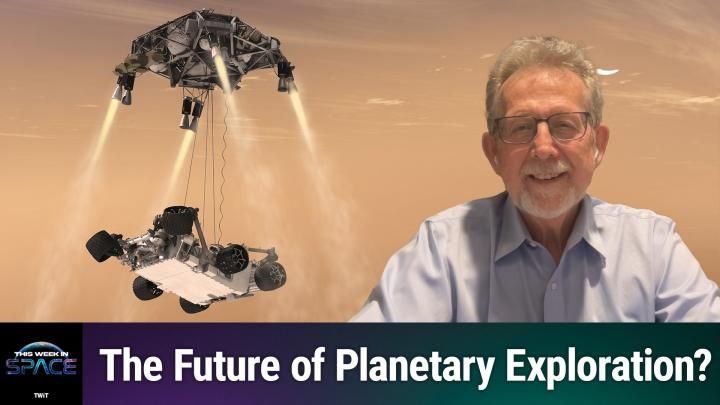
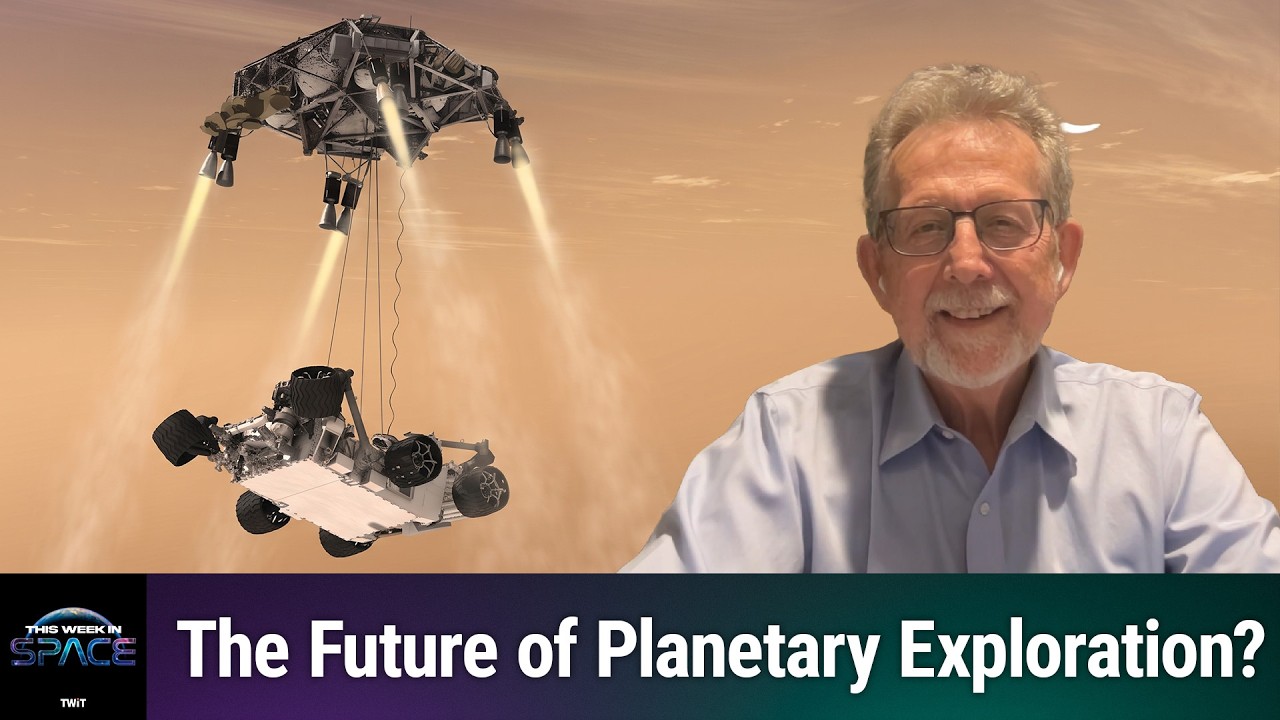
The vanguard of human exploration has long been defined not by the footprints of astronauts, but by the resilient, mechanical chassis of autonomous robots. On the latest installment of the podcast This Week in Space, hosts Tariq Malik and Rod Pyle were joined by Dr. Jim Green, the former Chief Scientist of NASA, to discuss the critical role of robotic systems in traversing the most inhospitable corners of the solar system. The discussion provided a comprehensive look at the evolution of interplanetary exploration and the optimistic outlook for discovering extraterrestrial life within our cosmic neighborhood.
The Strategic Importance of Robotic Pioneers
For decades, the standard operating procedure for NASA’s deep-space exploration has prioritized robotic missions as the essential precursor to human presence. Dr. Jim Green, who held the position of Chief Scientist at NASA from 2018 to 2022, emphasized that these machines serve as the "eyes and ears" of humanity in environments that are effectively lethal to human physiology.
"Robots are the bridge between our curiosity and the reality of the universe," Green noted during the discussion. By deploying rovers to Mars, orbiters to the gas giants, and probes into the icy plumes of moons like Enceladus, NASA has managed to gather petabytes of data regarding atmospheric composition, geological history, and potential biological markers without risking a single human life.
These missions are not merely exploratory; they are foundational. Robotic reconnaissance identifies hazards, characterizes resources such as water ice, and establishes the viability of landing zones, effectively de-risking future crewed expeditions. The "dark and scary" places referred to in the discussion include the permanently shadowed regions of the lunar south pole and the subterranean oceans of Europa, which represent the next great frontiers for both robotic and eventually human investigation.
A Chronology of Robotic Success
The history of robotic exploration is marked by milestones that have fundamentally altered our understanding of the solar system. The timeline of success began in earnest with the Viking missions in the 1970s, which provided the first comprehensive, if controversial, biological data from the surface of Mars.
Following the success of the Viking program, the 1990s and early 2000s saw a resurgence of interest in Mars. The Pathfinder mission, which landed the Sojourner rover in 1997, proved that mobile exploration was not only possible but highly effective. This success led to the Spirit and Opportunity rovers, which significantly outperformed their intended operational lifespans, providing years of data that confirmed the presence of liquid water on ancient Mars.
In the contemporary era, the Curiosity and Perseverance rovers represent the pinnacle of autonomous science. Equipped with sophisticated laboratories, these machines conduct in-situ chemical analysis, drilling into rock and sediment to search for biosignatures. Simultaneously, the Cassini-Huygens mission to Saturn provided unprecedented insights into the moon Titan, confirming that it possessed a complex, Earth-like climate system, albeit one driven by methane rather than water.
Supporting Data and the Search for Life
The probability of discovering life beyond Earth has shifted from the realm of science fiction to a legitimate scientific hypothesis. Dr. Green highlighted that current astrobiology efforts are focused on three primary areas: Mars, Europa (Jupiter’s moon), and Enceladus (Saturn’s moon).
The data supporting these targets is compelling. Analysis from the Cassini mission revealed that Enceladus ejects plumes of water vapor and organic compounds into space, directly from a subsurface ocean. Similarly, data from the Galileo orbiter and the Hubble Space Telescope suggest that Europa maintains a saltwater ocean beneath a thick crust of ice.
According to NASA’s recent mission planning data, the Europa Clipper mission, currently in its operational phase, is designed to perform dozens of close flybys of the moon. The goal is to map the surface composition and determine the depth and salinity of the ocean beneath. The statistical likelihood of finding microbial life in such environments is, according to many in the planetary science community, higher than it has ever been in human history.
The Intersection of Commercial Space and Exploration
The conversation also pivoted to the democratization of space exploration, underscored by the rise of commercial entities like SpaceX. The accessibility of space is no longer limited to national space agencies. As a testament to this, the episode highlighted the availability of high-fidelity, scale-model rockets, such as the Estes model of the SpaceX Falcon 9.
While a model rocket may seem like a triviality compared to deep-space probes, it represents a shift in the public perception of aerospace. The Falcon 9 has become an icon of the "New Space" era, demonstrating the feasibility of reusable launch technology. By reducing the cost per kilogram of payload to orbit, commercial providers have enabled smaller institutions and universities to launch their own CubeSats, thereby accelerating the pace of scientific discovery.
Institutional Challenges and Future Directions
The transition from robotic to human exploration presents a set of complex challenges. The primary obstacle remains the radiation environment of deep space and the long-duration physiological effects on the human body. NASA’s Artemis program is currently the centerpiece of these efforts, with a multi-phase approach to returning humans to the lunar surface.
Dr. Green noted that the lessons learned from the International Space Station (ISS) are critical. The station has served as a testbed for life support systems, radiation shielding, and long-term human psychology in isolation. The integration of these lessons into the Artemis architecture is essential for any potential mission to Mars.
Furthermore, the budgetary landscape for space exploration remains a point of contention. While NASA’s budget has historically been a small fraction of the federal budget, the demand for resources is increasing as the agency balances Earth science, heliopolis, astrophysics, and human exploration. The consensus among the experts is that international partnerships—such as the Artemis Accords—will be the most effective way to share the economic and scientific burden of these massive undertakings.
Broader Implications for Humanity
The search for life and the exploration of the solar system carry profound implications for our species. Beyond the scientific value, there is a philosophical component to the mission of space exploration. As Dr. Green pointed out, understanding the history of other planets, such as the dramatic climate shift of Mars from a wet world to a dry, frigid one, provides a mirror for our own planet’s future.
The development of autonomous systems will continue to be the primary engine of this discovery. Future missions are expected to utilize artificial intelligence to make real-time decisions, allowing robots to identify scientifically valuable targets without waiting for the significant time delay inherent in deep-space communications with Earth.
As we look toward the next decade, the convergence of high-resolution imaging, advanced spectroscopic analysis, and autonomous robotics will likely yield the most significant discoveries in the history of astronomy. Whether or not we find definitive evidence of life, the process of looking for it is transforming our technological capabilities and our understanding of our place in the universe.
The This Week in Space episode serves as a reminder that the "dark and scary places" in space are not to be feared, but to be understood. Through the eyes of our robotic proxies, humanity is systematically unraveling the mysteries of the solar system, one mission at a time. The work being done by scientists like Dr. Jim Green and the teams at NASA and its commercial partners ensures that the next century of exploration will be as consequential as any in human history.