Twenty-Five Years After the Anthrax Attacks: Lessons in Resilience and the Evolving Biothreat Landscape

Twenty-five years ago, as the United States grappled with the profound psychological and physical trauma of the September 11 terrorist attacks, the nation was struck by a second, silent assault. A series of letters laced with concentrated anthrax spores were introduced into the U.S. postal system, targeting media organizations and legislative offices. The resulting crisis caused 22 confirmed cases of anthrax infection, claimed five lives, and triggered a massive public health mobilization that cost the federal government billions of dollars in containment and recovery efforts. This anniversary serves not merely as a historical retrospective but as a critical diagnostic of the nation’s current preparedness for biological threats in an era defined by rapid technological advancement and geopolitical instability.
The Chronology of a Silent Siege
The 2001 anthrax crisis began with a medical anomaly that initially escaped broader recognition. In early October, a photo editor at American Media Incorporated (AMI) in Florida presented to his local hospital with symptoms of severe, unexplained illness. An astute clinician, noting unusual findings in a spinal tap specimen, suspected anthrax—a diagnosis that would soon shift from a localized medical curiosity to a national security emergency.
On October 4, 2001, the Centers for Disease Control and Prevention (CDC) was officially notified of the case. By the time a second AMI employee was confirmed to be infected, the investigation had moved beyond the scope of natural disease outbreaks. The realization that the postal system had been utilized as a biological delivery mechanism transformed the event into a major bioterrorism investigation. The CDC promptly activated its Emergency Operations Center (EOC), a centralized command structure that would oversee the deployment of epidemiological teams across the country to trace the movement of the mail and identify potential exposure sites.
The attacks occurred in two distinct waves. The first, postmarked September 18, 2001, contained a "crunchy" or clumped formulation of the pathogen, which resulted primarily in cutaneous (skin) infections among media workers. The second mailing, postmarked October 9, 2001, utilized a significantly more refined, "fine powder" formulation. This iteration was highly aerosolized, leading to more frequent inhalational anthrax cases—the most lethal form of the disease—and affecting postal workers who encountered the envelopes along the processing pathway.
Clinical Findings and Epidemiological Shifts
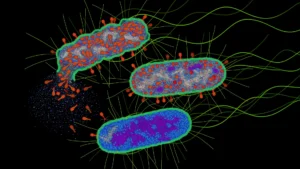
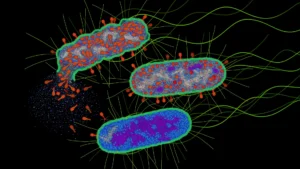
The investigation into the 2001 attacks provided groundbreaking insights into the behavior of Bacillus anthracis in a controlled, indoor environment. Molecular testing, a methodology that was in its relative infancy at the time, allowed investigators to prove that the isolates recovered from patients, environmental samples, and four specific envelopes were genetically indistinguishable. This confirmed a single, common source for the attacks.
However, the medical community faced significant challenges in translating prior knowledge into effective public health interventions. Historical literature had long suggested that the risk of re-aerosolization—the process by which deposited spores become airborne again—was minimal. Consequently, initial guidance focused narrowly on decontaminating and providing prophylaxis only to those who had directly opened the contaminated envelopes.
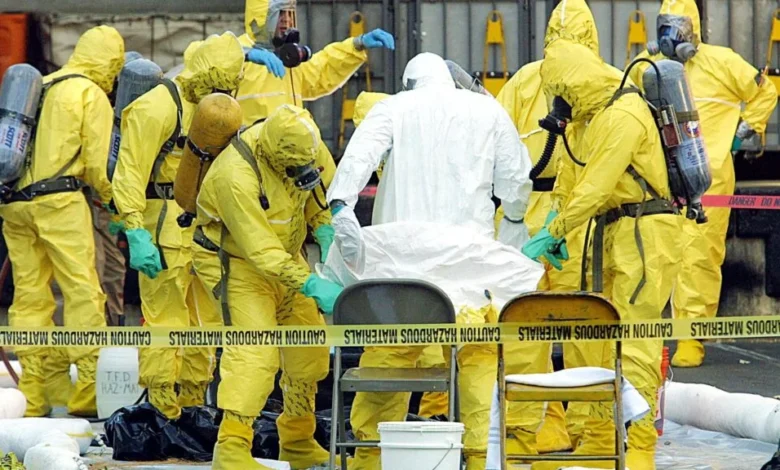
The emergence of inhalational anthrax among postal workers who had never opened a letter shattered these assumptions. As new evidence accumulated, the response strategy underwent a rapid, high-stakes pivot. Ultimately, approximately 32,000 individuals were placed on antimicrobial prophylaxis. The decision to expand the scope of the response proved vital, as it effectively halted the spread of infection among those who had been exposed at secondary sites.
The Changing Face of Biosecurity
In the quarter-century since the anthrax letters, the infrastructure for detecting and mitigating biological threats has undergone a fundamental transformation. The implementation of strict "select-agent" regulations has tightened oversight on the handling of dangerous pathogens, making it exponentially more difficult for individuals to weaponize biological materials. Furthermore, the U.S. Postal Service (USPS) integrated advanced bio-detection systems into its mail-sorting facilities, and the decline in physical mail volume has inherently altered the landscape of potential dissemination.
Despite these technological advancements, experts argue that the national biodefense architecture remains precariously fragile. The recent Center for Strategic and International Studies (CSIS) report highlights a sobering reality: the risk profile for biological threats is higher today than at any other point in the 21st century. This heightened risk is compounded by the democratization of synthetic biology and the rapid evolution of artificial intelligence. AI, in particular, has the potential to lower the barriers to entry for identifying, developing, and manufacturing highly infectious pathogens. The Bipartisan Commission on Biodefense has noted that AI serves as a "force multiplier" in the biological threat landscape, necessitating a shift in how we conceive of—and defend against—emerging pathogens.
Institutional Vulnerabilities and the Human Element
While the 2001 response relied on the "shoe-leather" epidemiology of dedicated public health officials, today’s response capabilities are constrained by significant institutional attrition. A reliance on high-tech diagnostic tools cannot replace the institutional memory provided by experienced personnel and the practiced relationships between federal, state, and local health departments.
Current data regarding the federal public health workforce indicates a significant decline in capacity. Compared to 2024, the CDC’s covered civilian staff levels have dropped by approximately 28%. This loss of scientific leadership and subject matter expertise creates a "readiness gap" that could prove disastrous in the event of a rapid-onset biological crisis.
Furthermore, the integrity of the response mechanism relies on independent, evidence-based decision-making. Observers have expressed concern that the politicization of public health planning and a lack of tolerance for internal, dissenting dialogue within current federal agencies could impede the ability to course-correct in real-time. Effective biodefense requires a culture that manages uncertainty and remains open to rapid, science-driven evaluation, rather than rigid adherence to top-down directives.
Lessons for the Future
As the nation reflects on the 25th anniversary of the anthrax attacks, three primary lessons emerge as pillars for future preparedness:
- Detection-to-Action Velocity: Detection is meaningless without a rapid, coordinated, and evidence-based response. Bureaucratic delays between the identification of a threat and the mobilization of resources at the state and local levels remain a critical point of failure.
- The Fallacy of Static Preparedness: The 2001 investigation demonstrated that initial assumptions—such as the risk of aerosolization—can be fundamentally wrong. Preparedness must be built upon a framework of constant re-evaluation, where data from the field dictates strategy, rather than relying on outdated, static protocols.
- Human Infrastructure: Technological tools are merely aids; the core of national biodefense is composed of experienced people and robust institutional networks. Sustained budget support and aggressive recruitment for scientific staff are not optional—they are the most vital components of the nation’s defensive posture.
The contemporary landscape of emerging infections, ranging from recent outbreaks of hantavirus and Ebola to the ongoing challenges posed by vaccine-preventable diseases like measles, underscores the persistent threat posed by biological pathogens. The specter of a deliberate, intentional release—whether by a state actor or an entity leveraging AI—serves as a necessary catalyst to refocus the national agenda.
Ultimately, the strength of the United States’ response to a future biological event will be measured not by the sophistication of its laboratory equipment alone, but by the resilience of its institutions and the depth of its scientific culture. Twenty-five years later, the lesson of the anthrax attacks remains clear: in the face of an evolving, invisible threat, our greatest defensive asset is the capacity to learn, adapt, and act decisively in the face of uncertainty.