New Climate Modelling Scenarios for the Seventh Assessment Cycle Refine Future Warming Projections

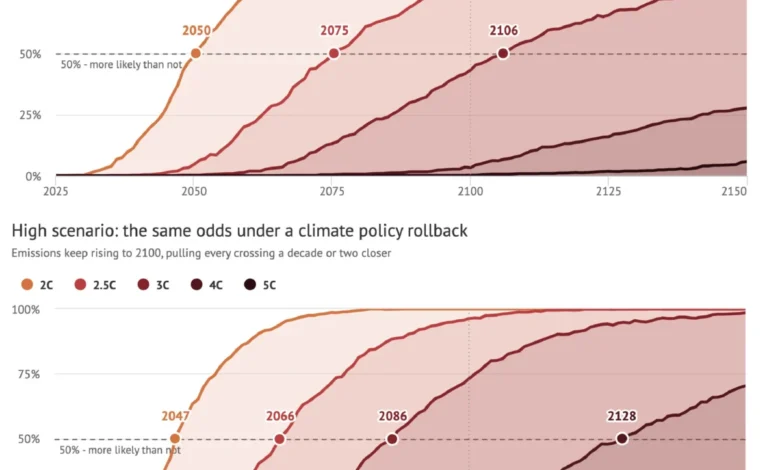
Every six to seven years, the global climate science community orchestrates a monumental effort to simulate the potential trajectories of our planet’s future. These simulations, which serve as the backbone for the Intergovernmental Panel on Climate Change (IPCC) assessment reports, are built upon a series of standardized greenhouse gas emission scenarios. As the world transitions into the seventh phase of the Coupled Model Intercomparison Project (CMIP7), a newly published set of scenarios has arrived, marking a significant evolution in how researchers conceptualize, model, and communicate the risks of human-driven climate change.
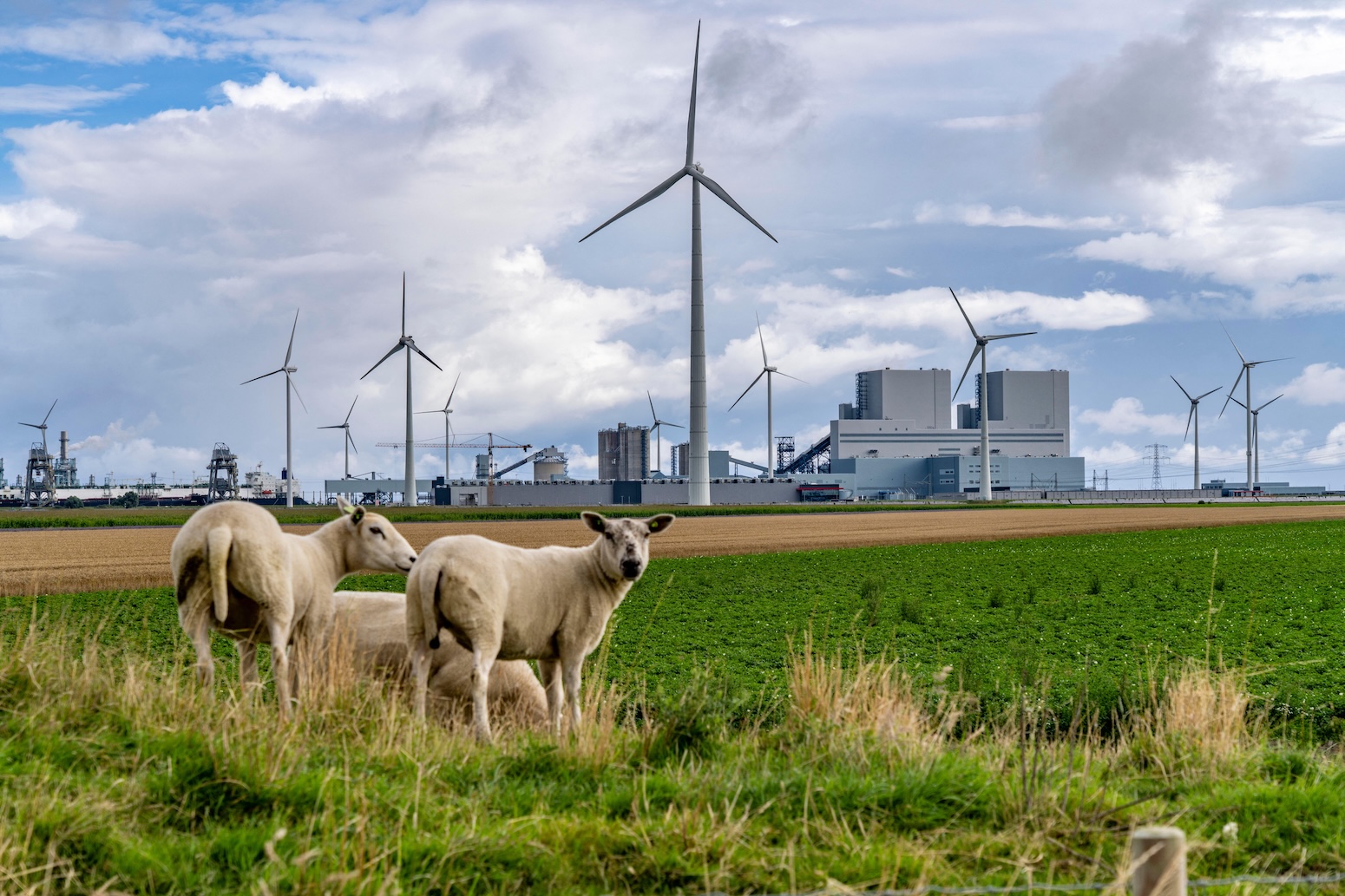
These new pathways, unveiled in the journal Geoscientific Model Development and finalized for public use in late 2026, represent a departure from the Shared Socioeconomic Pathways (SSPs) that defined the previous IPCC cycle. The updates are not merely iterative; they reflect a world that has changed drastically since the mid-2010s, characterized by the rapid deployment of renewable energy, a shifting global geopolitical landscape, and a more sober recognition of the limitations regarding climate mitigation.
A Departure from Enigmatic Nomenclature
The most immediate change for researchers and policymakers alike is the simplification of naming conventions. Previous generations of models were often identified by complex "radiative forcing" levels—technical indicators of how much energy the planet traps. The new CMIP7 scenarios are named according to their emissions trajectories, ranging from "low-to-negative" to "high." This shift is intended to make the science more accessible to the public and policy stakeholders, moving away from abstract terminology toward clear, descriptive labels that reflect the underlying human choices represented in each model.
Unlike their predecessors, these scenarios have abandoned the concept of "no-climate-policy" baselines. In previous cycles, researchers often included extreme, hypothetical scenarios that assumed an absence of any climate regulation, leading to models of coal-dominated futures that many experts now deem implausible. The CMIP7 framework instead focuses on the spectrum of current policy realities: how they might be strengthened, how they might be maintained, or, in the case of the "high" scenario, how they might be rolled back.
The Shifting Landscape of Emissions
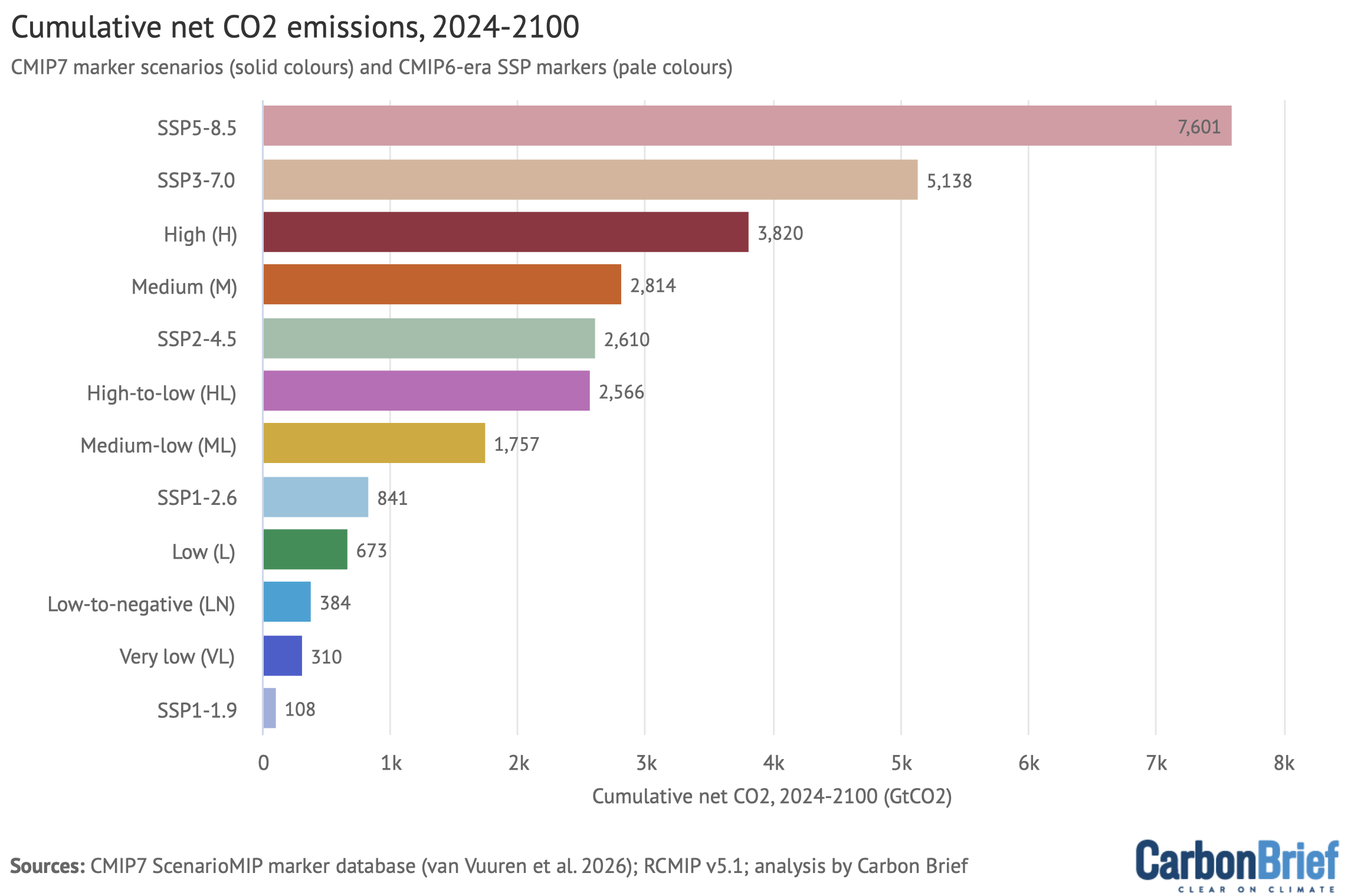
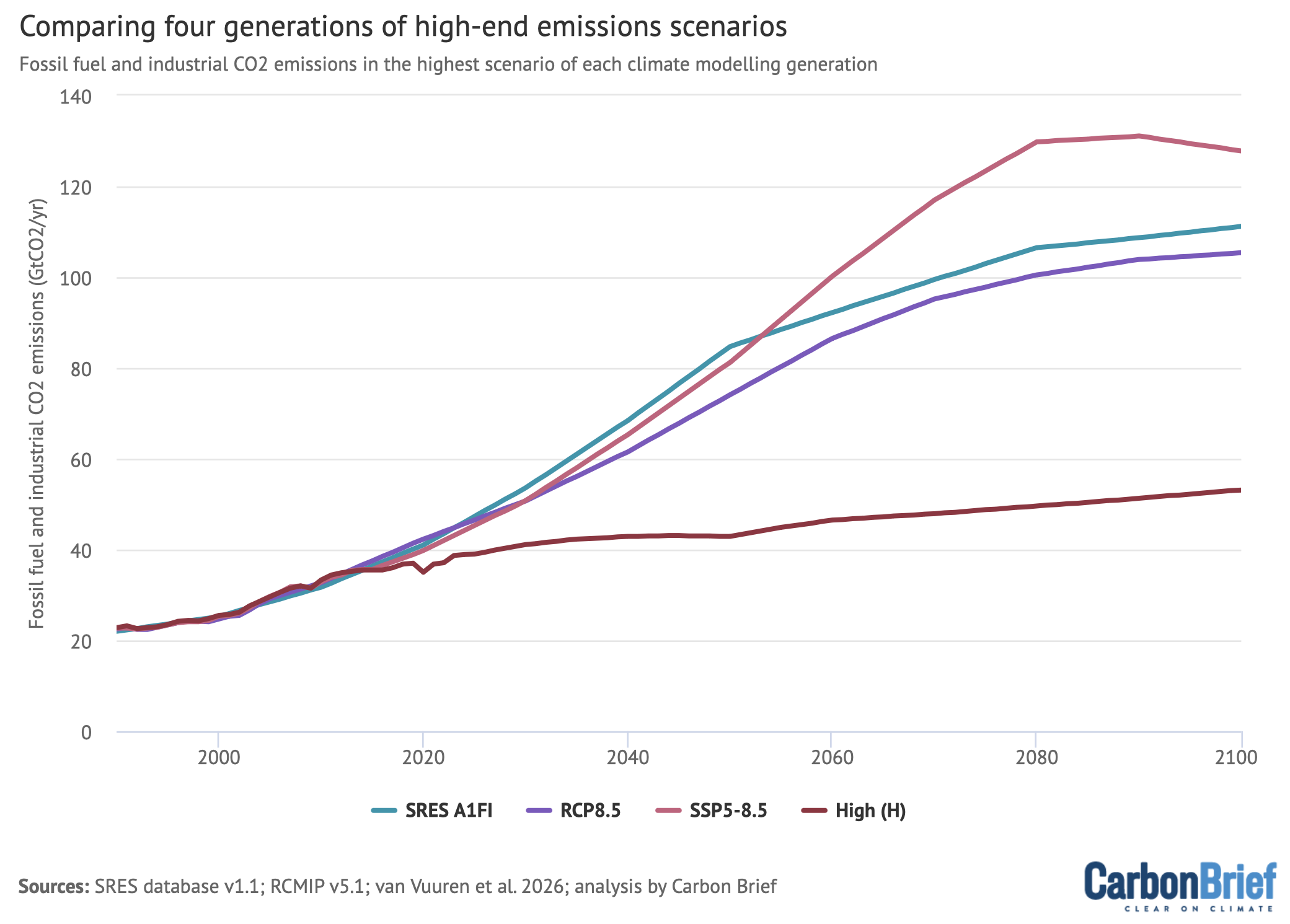
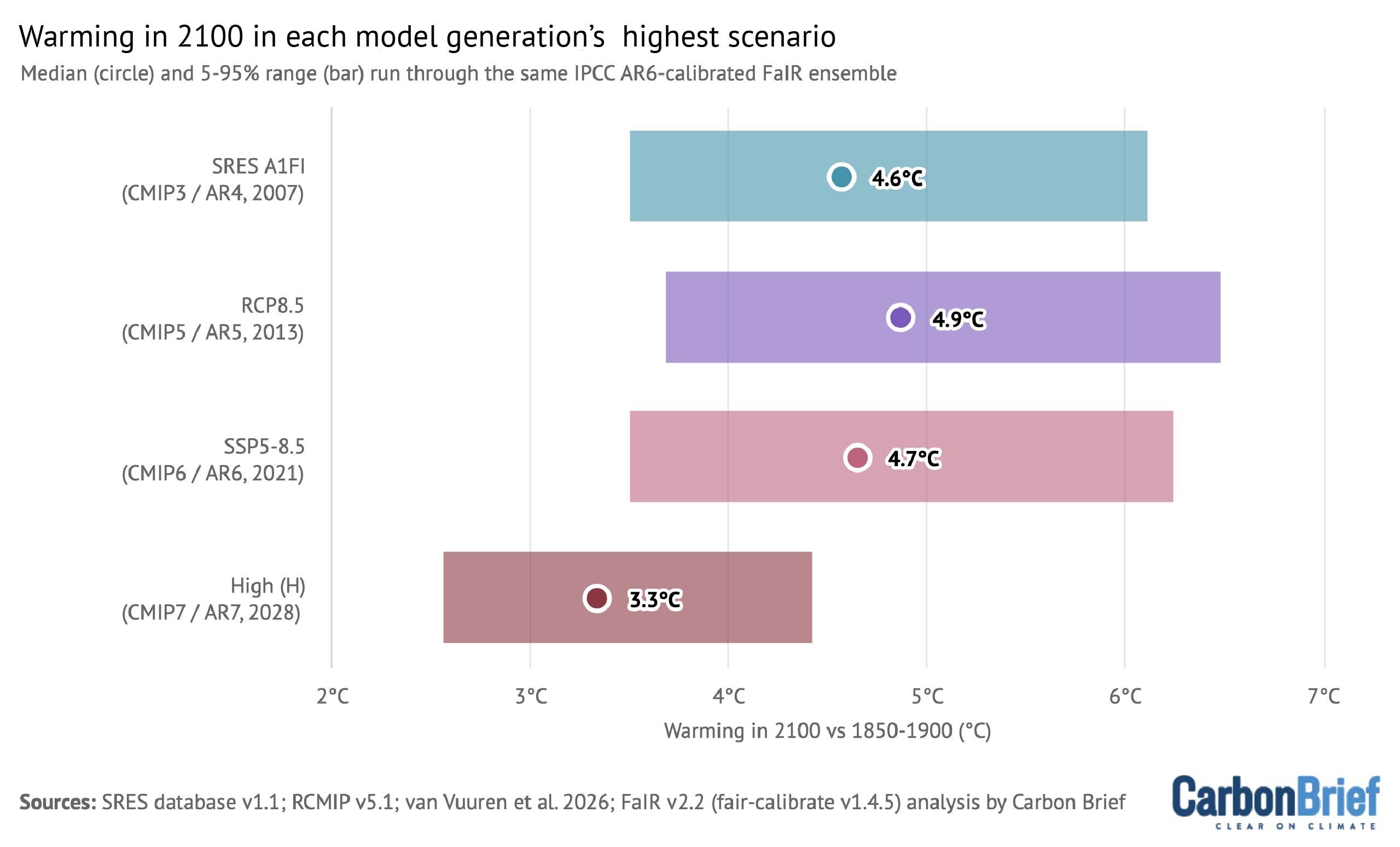
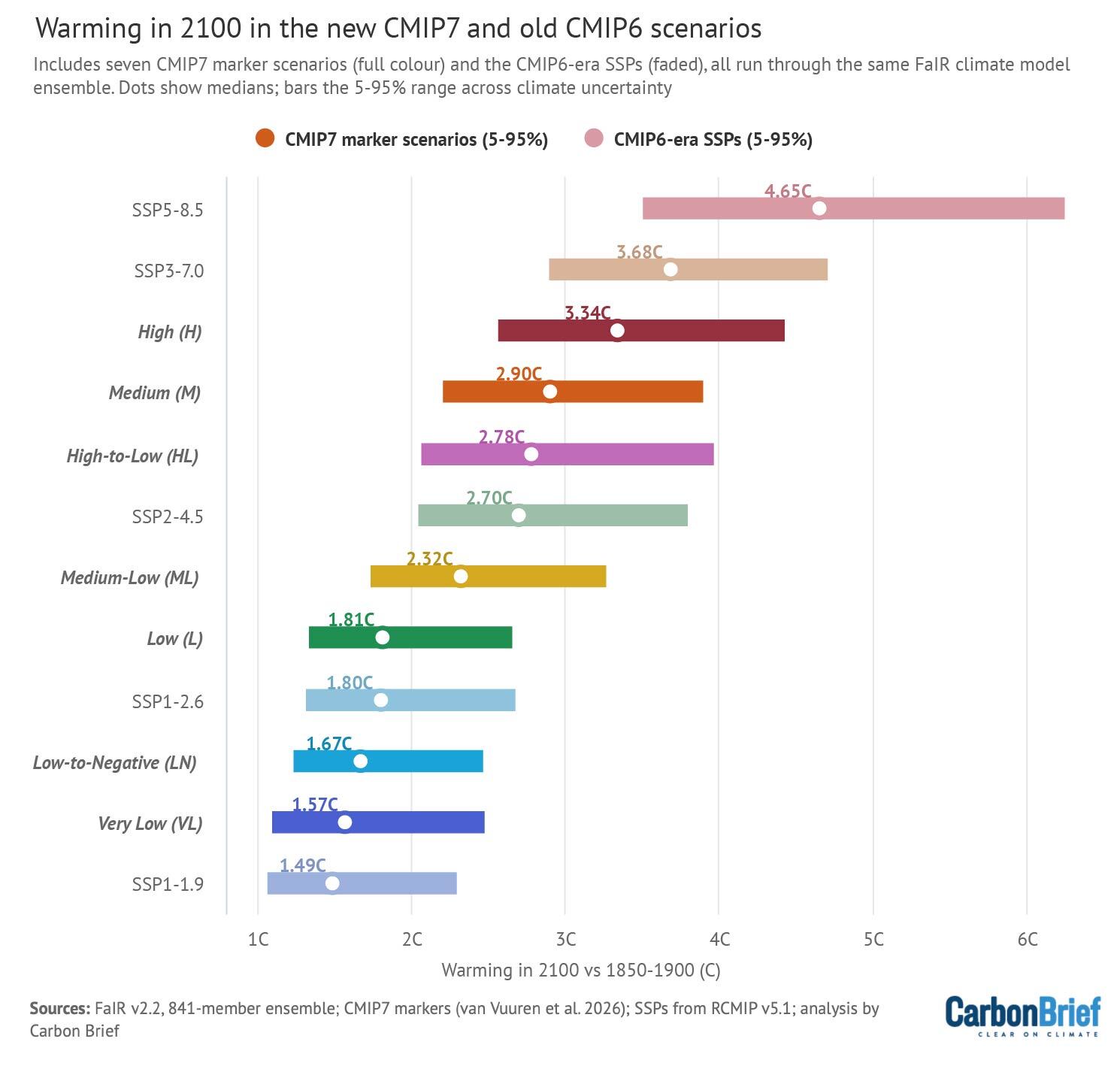
One of the most consequential findings in the CMIP7 design is the dramatic downward revision of the "high-end" emission scenarios. The highest emission pathway in the new suite, while still dangerous, does not reach the astronomical levels previously modeled in the CMIP6 era. This adjustment is grounded in empirical reality: the cost of solar, wind, and battery storage has plummeted, and global investment in clean energy now dwarfs fossil fuel expenditure. A future defined by an unchecked, coal-fueled 21st century is no longer considered a scientifically defensible "plausible" outcome.
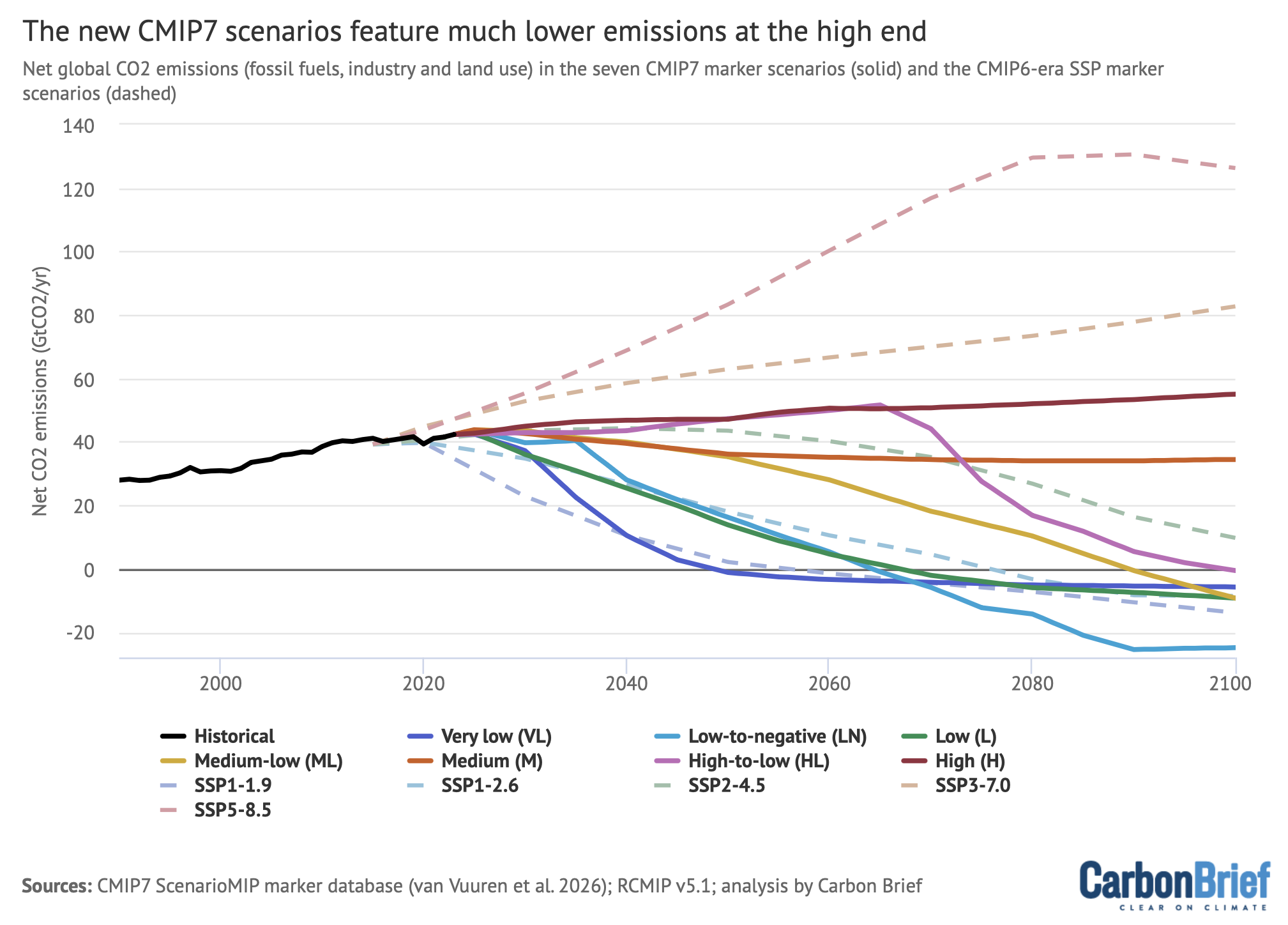
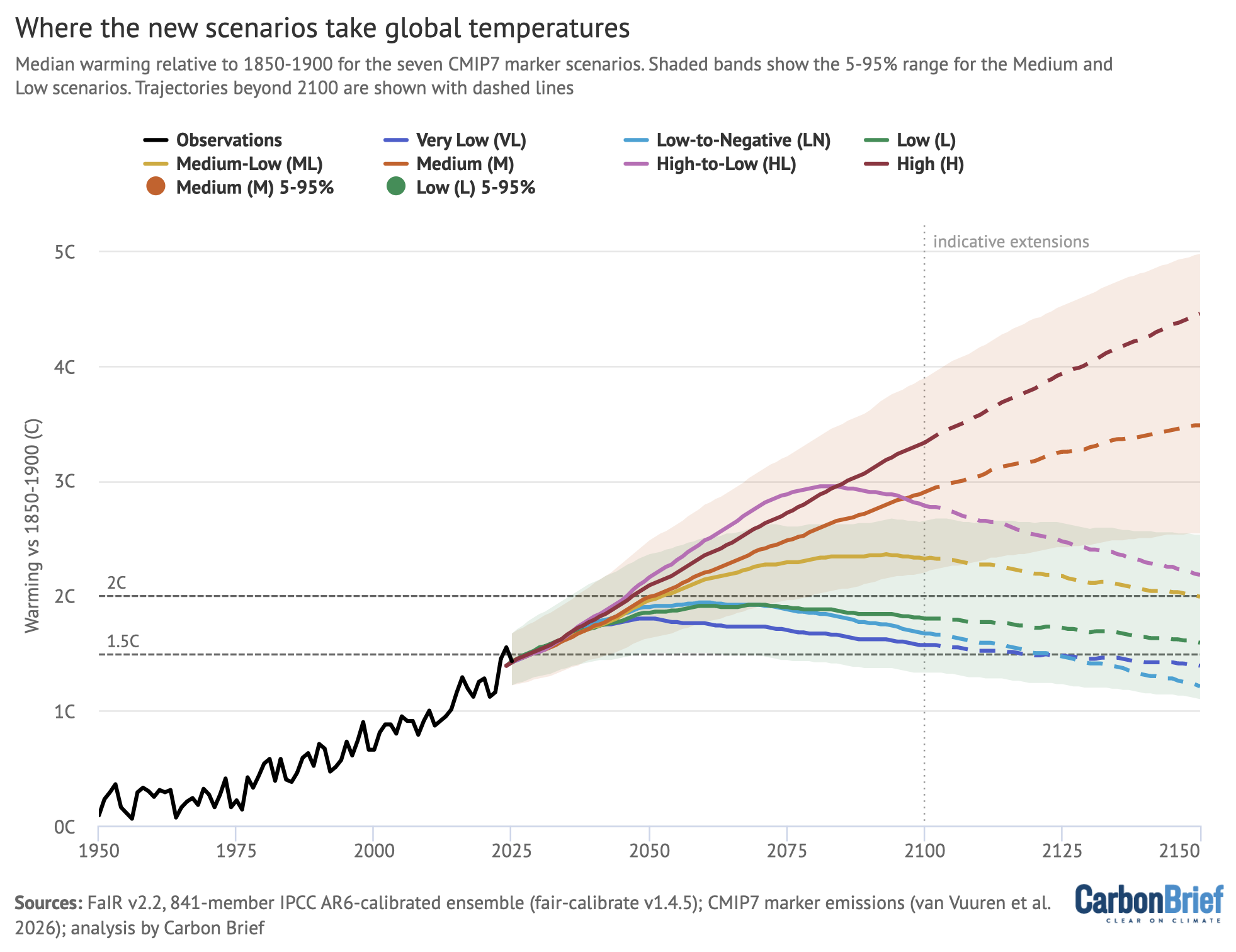
However, this downward adjustment at the top is mirrored by a more sobering upward revision at the bottom. The "very-low" emission scenarios, which target the Paris Agreement’s 1.5C aspirational goal, now acknowledge that some degree of "overshoot" is essentially unavoidable. Because global emissions did not decline as sharply in the early 2020s as some previous models assumed, the new pathways factor in a period of exceeding 1.5C, with a subsequent, aggressive push to return to lower temperatures through significant carbon dioxide removal (CDR).
Technical Advancements in CMIP7
The methodology behind CMIP7 introduces three critical technical improvements that will refine the accuracy of climate predictions. First, the models are now "emissions-driven" rather than "concentration-driven." In previous iterations, scientists prescribed the concentration of CO2 in the atmosphere. In CMIP7, models with an interactive carbon cycle calculate the atmospheric concentration themselves based on emissions. This allows the models to account for the complex, often unpredictable feedback loops between the climate and the natural world, such as how forests and oceans respond to varying levels of CO2.
Second, the scenarios are strictly harmonized with historical observations up to 2023. By ensuring that models align with real-world data points through the present day, researchers have eliminated the "divergence problem" that plagued earlier models, where simulations would begin to drift from reality years before the projected dates.
Third, the time horizon has been extended. While 2100 has traditionally been the cutoff, CMIP7 models will extend simulations to 2150, with further extensions to 2500. This longer view is essential for understanding the long-term stabilization of Earth systems, including the slow-moving but catastrophic melting of ice sheets and the subsequent rise in sea levels—phenomena that will profoundly affect the generations born in the coming decades.
Socioeconomic Realities: A More Crowded, Less Wealthy Future
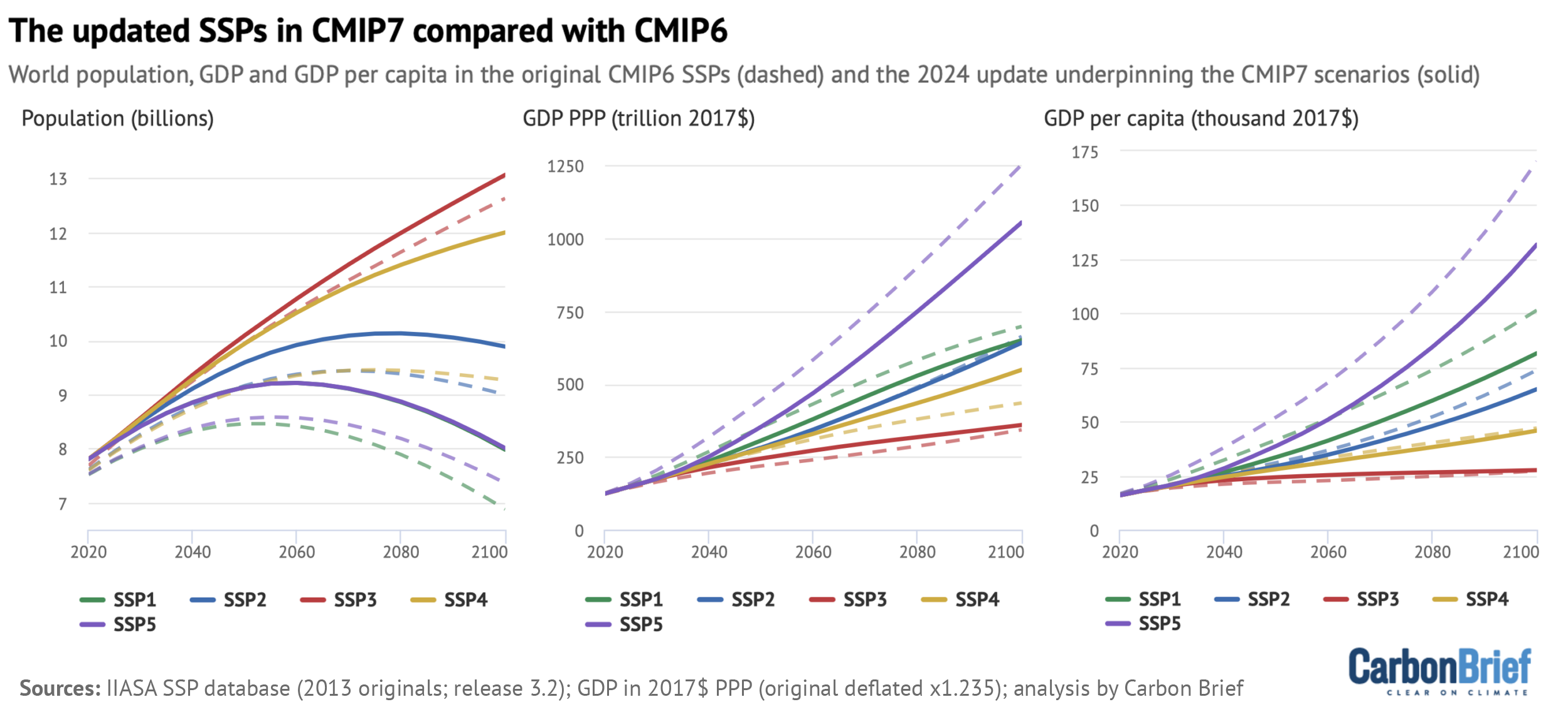
The underlying socioeconomic assumptions—the "storylines" that drive the energy demand and economic growth in these models—have also been updated to reflect current demographic trends. The 2024 projections suggest that the global population will be larger than previously anticipated, with a projected 9.9 billion people by 2100. Furthermore, the economic growth projections in several regions have been tempered. The result is a world model that is slightly more crowded and, on a per-capita basis, somewhat less wealthy than the optimistic forecasts of 2013.
These socioeconomic shifts matter because they define the "effort" required for decarbonization. A larger population with lower average income poses different challenges for energy transition than a smaller, wealthier one. By grounding the models in more current demographic data, the CMIP7 cycle provides a more realistic framework for analyzing the intersection of economic development and environmental sustainability.
The Critical Role of Carbon Dioxide Removal
Perhaps the most challenging aspect of the new scenarios is their reliance on carbon dioxide removal (CDR). Every pathway that succeeds in peaking and eventually lowering global temperatures requires a massive, planetary-scale deployment of CDR, ranging from land-based solutions like reforestation to engineered solutions such as direct air capture and geologic storage.
The "low-to-negative" scenario, for example, envisions the removal of 2,360 billion tonnes of CO2 by 2150. This is a staggering amount, equivalent to roughly 60 years of current global emissions, handled in reverse. The scientific community remains divided on the feasibility of scaling these technologies to such a level. While these pathways are mathematically possible, they necessitate an industrial infrastructure that does not currently exist, at a cost of trillions of dollars, and with significant, yet-to-be-fully-understood ecological risks.
Implications for Global Climate Policy
The release of the CMIP7 scenarios does not offer a singular, deterministic future. Instead, it offers a set of maps. The "medium" scenario, which assumes the continuation of current policies, projects a median warming of 2.9C by 2100. This is a temperature increase that would carry severe consequences for global biodiversity, food security, and extreme weather frequency.
The data underscores a clear reality: the window to avoid the most catastrophic outcomes is narrowing, but the tools to steer toward the "low" scenarios are well-defined. The fact that the "high-end" scenarios have been revised downward is a testament to the success of global climate policy and clean energy innovation. However, the upward revision of the "low-end" scenarios serves as a warning that the delay in systemic emissions reductions has come at a high cost, necessitating a much steeper, more difficult path to climate stability.
As the IPCC begins its seventh assessment cycle, these scenarios will be the primary lenses through which scientists analyze the risks ahead. The models are, ultimately, a mirror held up to human intent. They show that while the path of least resistance leads to a warming planet, the path of active, sustained, and global cooperation remains open. Whether these scenarios represent the ceiling of our progress or a floor for our ambition will be determined not by the models themselves, but by the policy decisions made in government chambers and boardrooms in the coming years.
The transition to CMIP7 marks a maturation of climate science. It is a transition from the era of "what-if" catastrophic modeling to an era of "how-to" implementation modeling. The new scenarios provide the most granular, data-driven, and realistic view of the future that has ever been available. What remains to be seen is how effectively that data will be utilized to bridge the gap between our current trajectory and a stable, sustainable climate.
Related posts: