
South Korean Presidential Frontrunner Proposes Revising Constitution Martial Law
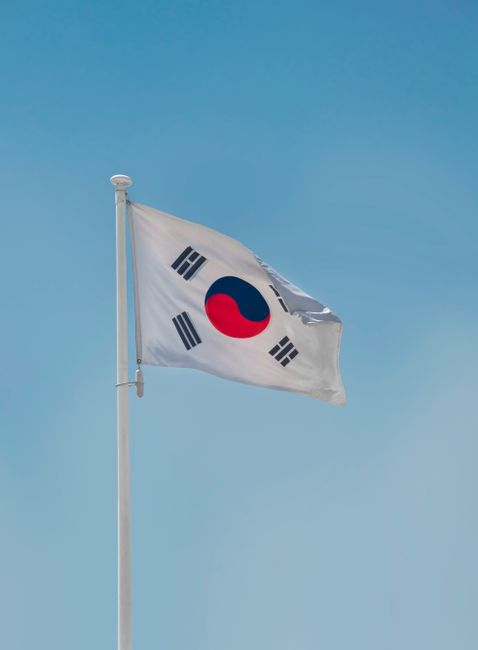
South Korean Presidential Frontrunner Proposes Revising Constitution on Martial Law
A leading contender in the upcoming South Korean presidential election has ignited a significant debate by proposing a revision to the nation’s constitution concerning the application of martial law. This proposal, emerging from the current political landscape, has immediately drawn both fervent support and staunch opposition, raising fundamental questions about the balance of power, democratic safeguards, and the historical context of such measures in South Korea. The frontrunner, whose platform emphasizes national security and decisive leadership, argues that the existing constitutional framework for martial law is too restrictive, hindering the government’s ability to respond effectively to severe national crises. This stance directly confronts entrenched democratic principles and the hard-won lessons of South Korea’s authoritarian past, where martial law was frequently employed to suppress dissent and maintain power.
The core of the proposed revision centers on loosening the conditions under which martial law can be declared and potentially extending the duration of its application without immediate legislative oversight. Currently, the South Korean Constitution, specifically Article 76, grants the President the power to declare martial law in cases of imminent threat to national security or public order. However, this power is subject to several checks and balances, including the requirement for presidential notification of the National Assembly and the possibility of the Assembly revoking the declaration. The presidential frontrunner’s proposal, as articulated through campaign statements and policy briefs, seeks to reduce the immediacy of legislative notification or, in some extreme scenarios, allow for a period of unchecked presidential authority before parliamentary review. This aspect of the proposal is particularly contentious, as it directly challenges the principle of separation of powers and the role of the legislature in acting as a counterweight to executive action during emergencies.
Proponents of the constitutional revision argue that in an era of increasingly complex and rapidly evolving threats, from sophisticated cyberattacks and potential military provocations to widespread social unrest, the current limitations on martial law are anachronistic and dangerous. They contend that the bureaucratic hurdles and the requirement for swift legislative consensus can lead to a paralysis of action when decisive and immediate measures are paramount. The frontrunner’s campaign has cited hypothetical scenarios involving large-scale natural disasters, widespread terrorist attacks, or sudden military aggression from neighboring states where, they claim, the current constitution would prevent the President from acting with the speed and authority necessary to save lives and preserve the nation. This perspective frames the proposed revision not as an authoritarian power grab, but as a pragmatic adjustment to ensure national resilience and effective crisis management in the 21st century. The emphasis is on empowering the executive to act decisively in extremis, thereby safeguarding the state and its citizens.
Conversely, opponents of the proposal vehemently criticize it as a dangerous step backward, a potential erosion of democratic freedoms and a troubling echo of South Korea’s authoritarian past. They point to historical instances where martial law was misused to stifle legitimate political opposition, curtail freedom of speech and assembly, and consolidate dictatorial power. The specter of military intervention in civilian affairs, a painful memory for many South Koreans, looms large in this opposition. Critics argue that any loosening of constitutional constraints on martial law, even under the guise of national security, creates an unacceptable risk of abuse. They highlight that the checks and balances currently in place are precisely designed to prevent such abuses, ensuring that extraordinary powers are not wielded arbitrarily. The argument is that a well-functioning democracy requires robust mechanisms to prevent the concentration of unchecked power, especially during times of perceived crisis.
The historical context of martial law in South Korea is crucial to understanding the heated debate surrounding this proposal. Following the Korean War, and particularly during the military dictatorships of Park Chung-hee and Chun Doo-hwan, martial law was repeatedly imposed and extended. These periods were characterized by severe restrictions on civil liberties, political purges, and the suppression of democratic movements. The transition to democracy in the late 1980s was a hard-fought struggle, and the current constitutional framework reflects a deliberate effort to embed democratic safeguards and prevent a recurrence of such authoritarian rule. Therefore, any proposal that appears to dilute these safeguards is met with deep suspicion and strong resistance from those who have actively campaigned for and defended democratic principles in the country. The scars of that era are not forgotten, and any perceived threat to the hard-won democratic gains is met with significant public scrutiny and activism.
Furthermore, legal experts have weighed in on the constitutional implications of the proposed revisions. They emphasize that the very essence of constitutionalism lies in placing limits on governmental power, particularly the executive, to protect individual rights and democratic processes. Altering the provisions related to martial law, they argue, requires careful consideration of potential unintended consequences and the long-term impact on the rule of law. Some legal scholars express concern that expanding the scope or easing the conditions for martial law could create a slippery slope, making it easier for future leaders to circumvent democratic norms. The debate extends to the interpretation of "imminent threat" and "public order," with opponents arguing that these terms are already broad enough and that any further expansion of presidential discretion could lead to subjective and politically motivated declarations of martial law. The constitutional architecture is designed to require a high threshold for such drastic measures, and any attempt to lower that threshold is seen as undermining the fundamental principles of constitutional governance.
The economic implications of such a proposal are also a point of discussion. While not the primary focus, concerns have been raised about how prolonged or frequently invoked martial law could impact investor confidence and economic stability. South Korea’s economy is heavily reliant on its global trade relationships and its reputation as a stable and predictable democracy. The imposition of martial law, even if intended to restore order, could be perceived internationally as a sign of instability, potentially leading to capital flight and a downturn in foreign investment. Businesses, both domestic and international, operate on the assumption of a stable legal and political environment. Any significant disruption to this environment, such as the widespread application of martial law, could have tangible negative consequences for the nation’s economic prosperity. This economic dimension adds another layer of complexity to the already charged political debate.
The political calculus behind the presidential frontrunner’s proposal is also subject to intense scrutiny. Critics suggest that this is a strategic move designed to appeal to a specific segment of the electorate that prioritizes strong leadership and national security above all else. By positioning himself as the candidate willing to take decisive action in times of crisis, the frontrunner may be seeking to differentiate himself from rivals perceived as more cautious or less decisive. This approach taps into anxieties about North Korea’s nuclear program, regional geopolitical tensions, and domestic social issues that can be framed as security threats. The proposal, therefore, can be seen as a calculated attempt to mobilize a particular base of voters who are more concerned with order and security than with the potential erosion of civil liberties. It speaks to a broader political strategy of emphasizing strength and control in a complex and often uncertain world.
The international reaction to such a proposal, should it become a significant part of the presidential discourse, is also noteworthy. South Korea is a key ally for many democratic nations, and any perceived move away from democratic norms could raise concerns among its international partners. The United States, in particular, has a long-standing security alliance with South Korea and would likely monitor any significant constitutional changes closely, especially those impacting the balance of power and democratic governance. The global perception of South Korea as a vibrant democracy is a significant aspect of its international standing, and a proposal that appears to weaken democratic checks and balances could have repercussions for its diplomatic relationships and its role on the global stage.
In conclusion, the South Korean presidential frontrunner’s proposal to revise the constitution regarding martial law is a deeply significant and polarizing issue. It pits the perceived need for decisive executive action in the face of modern threats against the fundamental principles of democratic governance and the hard-won lessons of the nation’s history. The debate forces a crucial examination of the constitutional safeguards necessary to protect civil liberties and prevent the abuse of power, while simultaneously acknowledging the evolving nature of national security challenges. The outcome of this debate, and the ultimate decision on any proposed constitutional revision, will have profound implications for the future of South Korean democracy, its governance, and its place in the international community. The intricate balance between security and liberty, executive power and legislative oversight, remains at the heart of this critical political moment.
