Giornate degli Autori Unveils a Groundbreaking Female-Centric Program for its 2026 Venice Film Festival Edition

The parallel section Giornate degli Autori (GdA) at the Venice Film Festival has announced its meticulously curated lineup for the 2026 edition, a program distinguished by its strong emphasis on female voices and narratives. This year’s selection, drawn from an impressive 1,036 submissions originating from 114 countries, features a robust slate of 25 world premieres. Among these, 13 are Italian productions, and a significant 14 are directed by women, underscoring GdA’s commitment to showcasing emerging and established female talent on the international stage. The program will comprise 10 films vying for the GdA Director’s Award, one closing film presented out of competition, five special events, and a curated showcase of nine titles within the Venetian Nights sidebar.
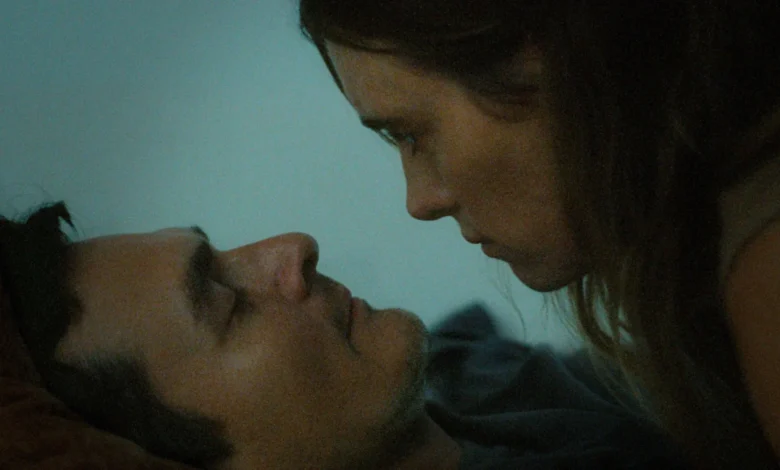
The 2026 edition will commence with the world premiere of Hungarian director Lili Horvát’s highly anticipated first English-language film, My Notes on Mars. This science fiction romance boasts a compelling narrative starring Mackenzie Davis as a scientist who mysteriously disappears during a hiking expedition. Her reappearance on the day of her own memorial service, with no recollection of the intervening period, sets the stage for a profound exploration of memory, identity, and lost time. Rupert Friend is set to co-star in this intriguing production.
Horvát’s previous work, Preparations to Be Together for an Unknown Period of Time, garnered significant critical acclaim. That film, which also debuted within the GdA program in its 2020 edition, followed the journey of a talented surgeon who abandons her career for a man who subsequently denies ever meeting her. The film’s success was further cemented by numerous awards, including the prestigious Golden Hugo at the Chicago International Film Festival’s New Directors Competition, signaling Horvát’s distinctive cinematic vision.
The Giornate degli Autori’s closing film will be Léa Domenach’s A Man’s Skin. Described as a vibrant queer and feminist musical comedy, the film is set against the backdrop of the Italian Renaissance. The cast features notable French performers Pomme, Karin Viard, and Catherine Deneuve, promising a visually rich and thematically bold conclusion to the section.
Within the competitive strand, My Notes on Mars stands as one of the ten films vying for the GdA Director’s Award. This prestigious award not only recognizes directorial achievement but also provides significant financial support, with a €20,000 prize to be split between the director and their international distributor, fostering the continued growth and distribution of promising cinematic works.
Further contenders in the competition include Agata the Writer, the latest work from Polish-born, Australia-based filmmaker Kuba Dorabialski. The film features Mia Wasikowska as an Australian writer who travels to Sarajevo with the intention of penning a novel about the Bosnian War. Her experience in the city forces her to confront the limitations of her artistic perspective and the complex realities of the conflict.
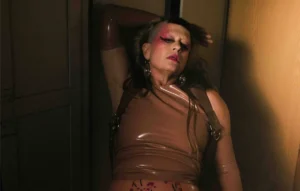
Another noteworthy competition entry is Salón de Belleza, marking the directorial debut of Nathalia Acevedo, known for her role in the acclaimed film Post Tenebras Lux. Adapted from Mario Bellatin’s radical novel, the film is set in a beauty salon within a city ravaged by an enigmatic disease. The salon becomes a sanctuary for the afflicted, a liminal space where individuals linger between life and death, offering a profound meditation on mortality and resilience. The film features performances by Belgian multi-disciplinary artist Sam Louwyck and Erwan Kepoa Falé.
The competition lineup also includes contributions from established directors. Robert Guédiguian, a filmmaker with a long and distinguished career, presents A Woman Today. The film stars newcomer Marilou Aussilloux as a young woman navigating the chasm between her aspirations for freedom and the persistent realities of contemporary society, marked by violence and inequality. Guédiguian, known for his collaborative approach, enlists his longtime collaborators Ariane Ascaride, Jean-Pierre Darroussin, and Gérard Meylan to enrich the ensemble cast.
The jury tasked with awarding the GdA Director’s Award comprises a distinguished panel of international film professionals. Spanish filmmaker Carla Simón, renowned for her deeply personal and critically acclaimed works, will lend her expertise. She will be joined by Italian director and editor Sara Fgaier, whose sharp editing skills have contributed to numerous significant films, and Hania Mroué, the director of Beirut’s influential Metropolis arthouse cinema, a cultural hub for independent film in the region. Their collective experience and discerning eyes will undoubtedly contribute to a thoughtful and rigorous selection process.
Beyond the main competition, audiences at the Sala Perla will have the opportunity to cast their votes for the Audience Award, a testament to the power of popular reception in shaping cinematic discourse. Furthermore, the Europa Cinemas jury will deliberate to select the winner of the Europa Cinemas Label, an award specifically recognizing European films within the Giornate degli Autori program, promoting the distribution and exhibition of European cinema across the continent.
The Special Events section promises a diverse and thought-provoking array of films, encompassing documentaries, autobiographical narratives, historical explorations, and experimental works. Among these is Francesca Archibugi’s Carla Lonzi, A Feminist Story. This documentary delves into the life and legacy of Carla Lonzi, a pivotal figure and one of the most radical feminist voices of 20th-century Italy, whose influential writings and activism continue to resonate.
In a significant cultural partnership, the Miu Miu Women’s Tales program will feature acclaimed filmmakers Claire Denis and Mona Fastvold as guests of honor. This marks the 15th edition of the initiative, a collaboration with GdA that provides a platform for female filmmakers to share their insights and experiences. Denis and Fastvold will participate in on-stage conversations, offering invaluable career advice and reflections on their creative journeys. This program aligns perfectly with GdA’s overarching goal of elevating female perspectives in cinema.
The 23rd edition of Giornate degli Autori is dedicated to the memory of Giorgio Gosetti, the sidebar’s founder and a steadfast champion of independent cinema, who passed away unexpectedly in March. His vision and unwavering dedication laid the foundation for the free and vibrant space that GdA represents today.
Artistic Director Gaia Furrer eloquently expressed the sentiment of remembrance and continuity, stating, "This edition carries with it a deep void and a deep gratitude. We owe to Giorgio the very idea for this free arena we inhabit, along with his faith in the new directions of cinema and his stubborn, loving determination to build and consolidate, year after year, a community of men and women filmmakers and audiences. This year, Giornate springs from the desire to honor this legacy by continuing to do what Giorgio taught us: seek out, discover, go wrong, become passionate about, and believe in cinema and in those who make it happen." Furrer’s words encapsulate the spirit of GdA, a space that thrives on discovery, passion, and a profound belief in the power of cinema.
The Giornate degli Autori will run concurrently with the main Venice Film Festival, from September 2 to September 12. The section’s primary venues will be Casa degli Autori and Sala Laguna, located on the picturesque Venice Lido, providing a dedicated and intimate setting for filmmakers, industry professionals, and cinephiles to engage with the presented works.
Official Selection Breakdown
The comprehensive program reflects a global commitment to diverse storytelling. The following is the official selection for the 2026 Giornate degli Autori:
In Competition
- Sadness Sometimes, Other Times Revolt by María Aparicio (Argentina, Spain, 2026)
- Agata the Writer by Kuba Dorabialski (Australia, 2026)
- Balcanica – debut feature by Nicola Sorcinelli (Italy, Serbia, Croatia, 2026)
- Camouflage – debut feature by Mykyta Gibalenko (Germany, 2026)
- Dear Ajayi by Damilola Orimogunje (Nigeria, Germany, 2026, 120 min)
- I Plant My Hand in the Garden – debut feature by Boris Hadžija & Hoda Taheri (Germany, Serbia, U.S.)
- The Indies – debut feature by Pauline Julier, Nicolas Chapoulier (Switzerland, Spain, 2026)
- My Notes on Mars – opening film by Lili Horvát (Hungary, Austria)
- Salón de Belleza – debut feature by Nathalia Acevedo (Mexico, France, 2026)
- A Woman Today by Robert Guédiguian (France, Italy, 2026)
Out of Competition
- Man’s Skin – closing film by Léa Domenach (France, 2026)
Special Events
- Al Baranyea by Ashgan El-Hamus (Netherlands, Egypt, Belgium, Saudi Arabia, 2026)
- Carla Lonzi, A Feminist Story by Francesca Archibugi (Italy, 2026)
- The Phantom by Ignacio Masllorens, David Lamelas (Argentina, 2026)
- The Massacre by Cosimo Messeri (Italy, 2026)
- Even If Hell Came by Samuele Rossi (Italy, 2026)
Broader Implications and Context
The Venice Film Festival, as one of the world’s oldest and most prestigious cinematic events, provides an unparalleled platform for launching films and shaping global film trends. The Giornate degli Autori, established in 2004 as an independent section, has consistently championed cinematic innovation and auteur-driven filmmaking, offering an alternative perspective to the main festival programs. Its deliberate focus on female directors in 2026 is not merely a statistical anomaly but a strategic decision reflecting a growing awareness within the industry of the need for greater gender parity and the amplification of diverse narratives.
The significant number of submissions received by GdA highlights the vibrant and burgeoning global cinema landscape, particularly among emerging filmmakers. The fact that 14 of the selected films are directed by women signifies a positive trend, suggesting that female directors are increasingly gaining access to funding, production resources, and international recognition. This emphasis at GdA can serve as a powerful catalyst for these filmmakers, providing them with crucial visibility and potential distribution deals.
The inclusion of a strong contingent of Italian films within the lineup underscores the vitality of Italian cinema and its ability to engage with contemporary global themes while maintaining a distinct national identity. The balance between established directors and debut features within the competition also speaks to GdA’s dual mission of supporting seasoned artists and nurturing the next generation of cinematic talent.
The dedication of this edition to Giorgio Gosetti is a poignant reminder of the human element that drives the film festival circuit. Gosetti’s legacy, as described by Artistic Director Gaia Furrer, emphasizes community building and a deep-seated belief in the future of cinema. This dedication imbues the 2026 edition with a sense of purpose and continuity, encouraging attendees and filmmakers alike to embrace the spirit of exploration and passion that characterized Gosetti’s work.
The success of films launched or championed by sections like Giornate degli Autori often ripples through the broader film industry, influencing critical discourse, audience reception, and subsequent production trends. The female-centric programming of GdA in 2026 is likely to inspire further initiatives aimed at supporting women in film and to bring to the forefront stories that may have previously been underrepresented, ultimately enriching the cinematic landscape for all.