Support acts are pulling out of Ed Sheeran’s tour in protest of Macklemore being kicked off for sharing his support of Palestine on stage.

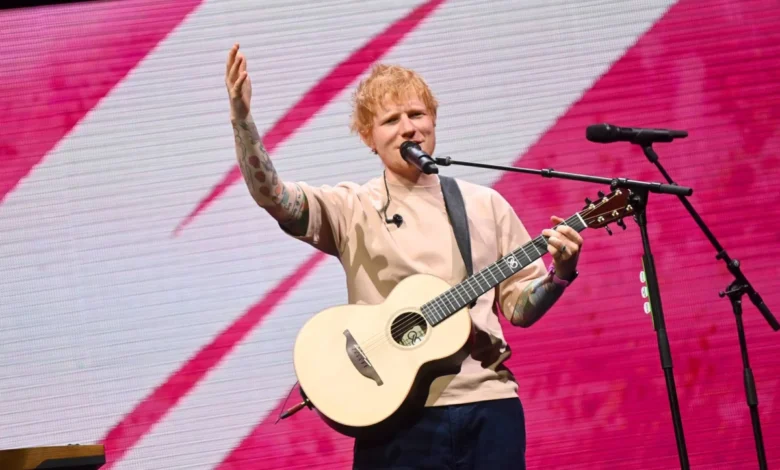
The music industry is currently grappling with a significant fallout following the removal of rapper Macklemore from Ed Sheeran’s global tour itinerary. The decision to drop the artist, triggered by his vocal advocacy for Palestine during performances, has catalyzed a wave of solidarity among fellow musicians. A growing list of high-profile acts, including Finneas, Lukas Graham, Beoga, and Aaron Rowe, have officially withdrawn from their scheduled commitments with Sheeran, citing concerns over censorship and the suppression of political discourse within the live music ecosystem.
The Genesis of the Controversy
The tension began during a series of recent concerts in New Jersey. Macklemore, known for his politically charged lyrics and advocacy, utilized his platform during the opening sets to call for the protection of human rights in Gaza and the West Bank. His speech emphasized a plea for "all human beings to be treated with dignity, respect, and equality." This was followed by a performance of his track Hind’s Hall, a song explicitly written in support of the Palestinian people and the student protest movements that emerged on university campuses earlier this year.
The backlash was immediate. The Israeli-American Council (IAC) formally petitioned for his removal, labeling his onstage commentary as the promotion of a "one-sided political agenda." The situation escalated when reports surfaced that Robert Kraft—the billionaire owner of the New England Patriots and Gillette Stadium—had intervened. According to statements released by Macklemore, Kraft threatened to cancel the shows entirely if the rapper remained on the bill, forcing a choice between the tour’s viability and the inclusion of his support act.
Chronology of Events
The timeline of this incident highlights the rapid escalation of a localized performance issue into a broader industry-wide protest:
- Mid-September: Macklemore performs at MetLife Stadium in New Jersey, delivering an impassioned speech advocating for Palestinian rights and calling for a ceasefire.
- September 20–22: Public pressure mounts from various advocacy groups, including the IAC, calling for the rapper’s removal from upcoming tour dates.
- September 24: Macklemore releases a public response, asserting that his calls for equality should not be categorized as controversial.
- September 25: Confirmation is provided that Macklemore has been removed from the remainder of the tour. The rapper reveals the pressure exerted by venue ownership.
- Late September: Ed Sheeran issues a statement clarifying that he was not the primary architect of the decision, attempting to distance himself from the censorship claims while admitting he was unable to bridge the gap between stakeholders.
- October 2026: A wave of support acts, including Finneas and the band Beoga, announce their departure from the tour, citing ethical objections to the silencing of political speech.
Official Responses and Stakeholder Positions
The conflict has drawn a sharp line between those prioritizing venue management and those advocating for artistic autonomy. Robert Kraft defended his actions in a formal statement, asserting that the venue has a responsibility to guard against what he termed "hate speech." Kraft argued that Macklemore’s history of rhetoric and the imagery displayed on stage were "deeply offensive and hurtful to the Jewish community." He emphasized that the decision was not intended to minimize Palestinian suffering but rather to reject what he viewed as the endorsement of organizations labeled as terrorist entities by the U.S. government.

Conversely, Ed Sheeran has attempted to navigate the fallout by framing himself as a mediator who ultimately failed to reconcile opposing parties. In his public remarks, Sheeran stated, "I am not complicit or responsible for this decision," noting that he spent significant time attempting to find a solution that would allow the tour to proceed without compromising his support acts. However, the lack of success in these efforts has left the tour’s personnel in a state of flux.
The Musicians’ Stance: Solidarity and Principles
The decision by supporting acts to leave the tour has been rooted in a collective concern for the freedom of expression. Finneas, a Grammy-winning producer and artist, stated via Instagram: "Artists must not be silenced when they speak up for the oppressed. I have decided to withdraw from my upcoming tour dates with Ed Sheeran. I stand with Palestine and its people."
The Irish folk band Beoga, who have long-standing ties to Sheeran, echoed this sentiment with a focus on their own national history. "We are Irish people who understand colonialism," the band stated. "As founding members of the Irish Artists for Palestine movement, we are committed activists for justice."
Lukas Graham, the Danish pop band, expressed a similar frustration regarding the role of capital in silencing discourse. "Money doesn’t give you the right to own the conversation," the band wrote in a public post. "Nobody’s bank balance should decide who gets to speak or which suffering we’re allowed to acknowledge."
Broader Implications for the Music Industry
This controversy serves as a microcosm of a larger, ongoing debate regarding the role of artists as political conduits. In an era where social media allows artists to maintain direct contact with their fan bases, the traditional "neutral" stance of the touring musician is becoming increasingly difficult to maintain.
From an industry perspective, the incident raises complex questions about the power dynamics between venue owners, promoters, and performers. Historically, venue contracts have included clauses regarding conduct, but the application of these clauses to political speech is a point of growing contention. Legal analysts suggest that while private venues maintain the right to restrict content on their property, the exercise of that right is subject to intense public scrutiny and the potential for a "reputational tax."

Furthermore, the economic impact of such boycotts cannot be understated. When established acts withdraw from a tour, it affects not only the lead artist but also the entire infrastructure of the tour—including lighting crews, sound engineers, and local vendors. The decision by these musicians to prioritize their ethical stance over the financial security of a major tour demonstrates a significant shift in the priorities of the current generation of performers.
Data and Context: The Human Cost
Macklemore, in his final address regarding the matter, urged his audience to maintain perspective. "I am not a victim," he stated. "The victims are the Palestinian people. The men, women, and children who have been killed, starved, displaced and forced to live through unimaginable violence."
Data from humanitarian organizations and international observers, including the United Nations, has consistently highlighted the scale of the crisis in Gaza. Reports indicate that the death toll and the displacement of civilians have reached levels not seen in the region for decades. The intense polarization of the public discourse surrounding these statistics is precisely what fueled the conflict at the Sheeran concerts. The incident highlights the extreme difficulty of navigating these narratives in a commercialized environment where "neutrality" is often conflated with "complicity" by both sides of the political divide.
Future Outlook
As of now, Ed Sheeran has not provided further comment on the cascading withdrawals of his support acts. The situation remains fluid, with advocacy groups continuing to call for boycotts and public pressure campaigns aimed at the tour’s remaining dates.
The incident is likely to have long-term consequences for how international tours are structured. Industry experts predict that future tour contracts may include more rigorous "political conduct" clauses, or conversely, more robust "artistic freedom" protections, as both artists and promoters attempt to mitigate the risks of public backlash.
Ultimately, the departure of artists like Finneas and Beoga from one of the world’s most lucrative concert tours underscores a fundamental truth: the music industry is no longer shielded from the geopolitical realities of the world. As artists increasingly feel compelled to leverage their reach for humanitarian advocacy, the infrastructure that supports them will be forced to adapt to a new landscape where the stage is viewed as a political space as much as an entertainment venue. The fallout from the Sheeran-Macklemore dispute is not merely an isolated personnel issue; it is a signal of a deepening divide between the corporate management of global entertainment and the increasingly vocal convictions of the artists who sustain it.
Related posts: