
Supreme Court Birthright Citizenship Injunctoins Sauer
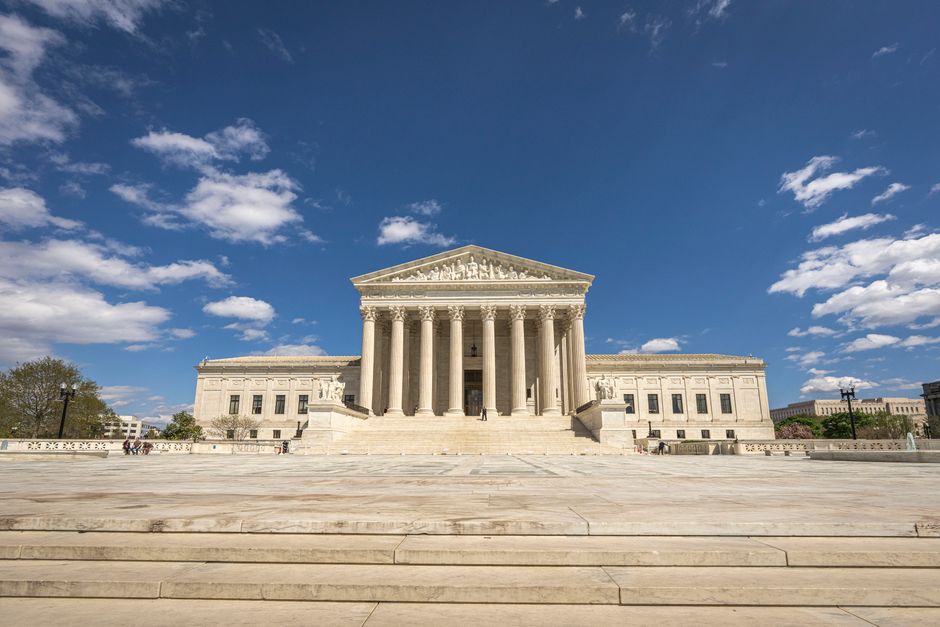
Supreme Court Birthright Citizenship Injunctions: A Deep Dive into Sauer v. U.S. Citizenship and Immigration Services
The concept of birthright citizenship, deeply embedded in American legal tradition and enshrined in the Fourteenth Amendment, is a cornerstone of U.S. immigration law. This principle, often referred to as jus soli (right of the soil), grants automatic citizenship to virtually anyone born on U.S. territory, regardless of their parents’ immigration status. However, recent legal challenges, most notably the case of Sauer v. U.S. Citizenship and Immigration Services, have brought this fundamental right under intense scrutiny and raised significant questions about its future. This article will explore the legal underpinnings of birthright citizenship, the arguments advanced in Sauer, the implications of potential injunctions, and the broader societal and legal ramifications of altering such a foundational aspect of American identity.
The Fourteenth Amendment, ratified in 1868, states, "All persons born or naturalized in the United States, and subject to the jurisdiction thereof, are citizens of the United States and of the State wherein they reside." For over a century, this clause has been interpreted by courts, including the Supreme Court in landmark cases like United States v. Wong Kim Ark (1898), to include children born to undocumented immigrants. Wong Kim Ark definitively established that even children of foreign nationals who were not eligible for citizenship themselves could still be citizens by birth, as long as they were born within U.S. jurisdiction and were not subject to a foreign sovereign’s jurisdiction (e.g., children of diplomats). This interpretation has been the bedrock of birthright citizenship, creating a clear and consistent rule that has governed millions of lives. The rationale behind this broad interpretation often centers on the desire to avoid creating a permanent, stateless underclass within the nation and to foster social integration.
The Sauer v. U.S. Citizenship and Immigration Services case emerged from a series of legal actions challenging the application of birthright citizenship, particularly in relation to children born to parents who are themselves not U.S. citizens or lawful permanent residents. The plaintiffs in Sauer, represented by organizations and individuals arguing for a narrower interpretation of the Fourteenth Amendment, contend that the "subject to the jurisdiction thereof" clause was not intended to encompass individuals whose parents lack legal status in the United States. They argue that this phrase was primarily aimed at excluding individuals who owed allegiance to a foreign power, such as the children of enemy combatants during wartime or the offspring of diplomatic personnel. This interpretation suggests that children born to parents who are not lawfully present in the U.S. are, in essence, not fully "subject to the jurisdiction" of the United States in the intended sense of the Fourteenth Amendment.
A critical element in the Sauer litigation, and a focal point for potential injunctions, revolves around the specific legal arguments concerning the scope of "jurisdiction." Proponents of a restrictive interpretation of birthright citizenship often point to historical context surrounding the amendment’s passage. They emphasize that the primary objective of the Fourteenth Amendment was to grant citizenship to formerly enslaved people, thereby ensuring their civil rights and protections after the Civil War. The exclusion of children born to those whose parents had no legal right to be in the country is, according to this view, consistent with the amendment’s original intent to solidify citizenship for those who were legitimately integrated into the fabric of American society. Furthermore, they argue that granting citizenship to children of undocumented immigrants incentivizes illegal immigration, creating a pull factor that undermines national sovereignty and border security.
The prospect of an injunction in Sauer, or similar cases, carries profound legal and societal implications. An injunction, in this context, would likely involve a court order preventing the government from automatically granting citizenship to children born to parents without legal status. This would create a significant shift in how citizenship is conferred, potentially leading to a system where citizenship is contingent not only on birth within U.S. territory but also on the legal status of the parents. Such a change would necessitate the creation of complex administrative systems to track parental status and determine eligibility for citizenship, introducing a level of bureaucratic entanglement that is currently absent from the birthright citizenship framework.
The legal battles surrounding birthright citizenship are complex and deeply intertwined with broader debates about immigration policy, national identity, and the interpretation of constitutional law. The plaintiffs in Sauer are not merely challenging a legal precedent; they are advocating for a fundamental redefinition of who is considered an American. Their arguments often draw upon a more textualist or originalist approach to constitutional interpretation, seeking to understand the Fourteenth Amendment’s provisions based on their historical meaning and intent at the time of their adoption. This perspective contrasts with a more "living constitution" approach, which suggests that constitutional provisions can evolve and adapt to contemporary societal needs and values.
The potential impact of an injunction on families would be immense. If birthright citizenship were to be curtailed, children born in the U.S. to undocumented parents could find themselves in a precarious legal limbo. They might be denied U.S. citizenship, even though they have lived their entire lives in the United States, attended American schools, and are culturally American. This could lead to the creation of a generation of individuals who are legally stateless or who possess only the citizenship of their parents’ country of origin, a status that might offer them few rights or opportunities if they have no ties to that nation. Such a scenario could exacerbate social divisions, create economic disparities, and raise significant human rights concerns.
Moreover, the enforcement of any injunction against birthright citizenship would present formidable practical challenges. Determining the legal status of parents at the time of a child’s birth would require extensive record-keeping and verification processes. This could involve accessing vast databases of immigration records, potentially leading to privacy concerns and the risk of erroneous classifications. The administrative burden on government agencies would be substantial, and the potential for litigation over individual cases would likely be extensive. The very notion of defining "jurisdiction" in the context of a child born on U.S. soil, but to parents who may not have had the legal right to be there, is a thorny legal and practical issue.
The Supreme Court’s involvement in cases that touch upon birthright citizenship, whether directly or indirectly through injunctions in lower courts, is always a significant event. The Court’s decisions can set powerful precedents that shape the legal landscape for decades to come. While Sauer itself may not directly reach the Supreme Court, the legal arguments being advanced and the potential for nationwide injunctions highlight the ongoing tension between different interpretations of the Fourteenth Amendment and the evolving nature of immigration in the United States. The outcome of such legal challenges could have far-reaching consequences for the definition of American citizenship and the composition of American society.
The debate over birthright citizenship also intersects with broader discussions about the rule of law and the consequences of immigration enforcement. Proponents of maintaining birthright citizenship often argue that it promotes stability and integration, preventing the formation of a marginalized underclass. They contend that it simplifies the immigration system and avoids the complexities and injustices that would arise from a system where citizenship is conditional on parental status. On the other hand, those who advocate for a more restrictive interpretation of birthright citizenship often argue that it is a loophole that encourages illegal immigration and that U.S. citizenship should be reserved for those who have a direct legal connection to the United States through their parents or through a more formal naturalization process.
The legal arguments in Sauer and related cases are not solely confined to the interpretation of the Fourteenth Amendment. They also touch upon the broader principles of constitutional law, including the powers of the executive and legislative branches in shaping immigration policy. The question of whether Congress has the power to legislate on birthright citizenship, or whether it is solely a constitutional matter, is a significant aspect of the ongoing legal debate. While the Supreme Court has historically affirmed the principle of birthright citizenship as established by the Fourteenth Amendment, future rulings could refine or alter this interpretation, particularly if new legal theories gain traction or if the composition of the Court changes.
The potential for injunctions in cases like Sauer underscores the dynamic and often contentious nature of immigration law in the United States. Birthright citizenship, while seemingly settled, remains a subject of intense legal and political debate. The arguments for a narrower interpretation, focusing on parental status and the original intent of the Fourteenth Amendment, are gaining momentum in certain legal and political circles. However, any significant alteration to this fundamental right would face immense legal hurdles and would undoubtedly trigger widespread social and political upheaval. The future of birthright citizenship, and the potential for injunctions to disrupt its long-standing application, remains a critical and evolving issue in American jurisprudence.
