
Tag Rare Earth Mining
Rare Earth Element Mining: A Comprehensive SEO-Optimized Deep Dive
Rare earth elements (REEs) are a group of seventeen metallic elements crucial for modern technology, encompassing the fifteen lanthanides, plus scandium and yttrium. Their unique magnetic, catalytic, and luminescent properties make them indispensable components in a vast array of high-tech applications, from consumer electronics like smartphones and laptops to advanced defense systems, renewable energy technologies like wind turbines and electric vehicles, and medical imaging equipment. The demand for REEs is intrinsically linked to technological advancement and the global transition towards a green economy, positioning their extraction and processing as a strategically vital, yet environmentally complex, industry. Understanding the intricacies of rare earth mining is essential for policymakers, industry stakeholders, and environmentally conscious consumers alike, as it underpins the functionality of much of our modern world. This article delves into the global landscape of REE mining, exploring extraction methods, geological occurrences, environmental considerations, geopolitical implications, and future trends.
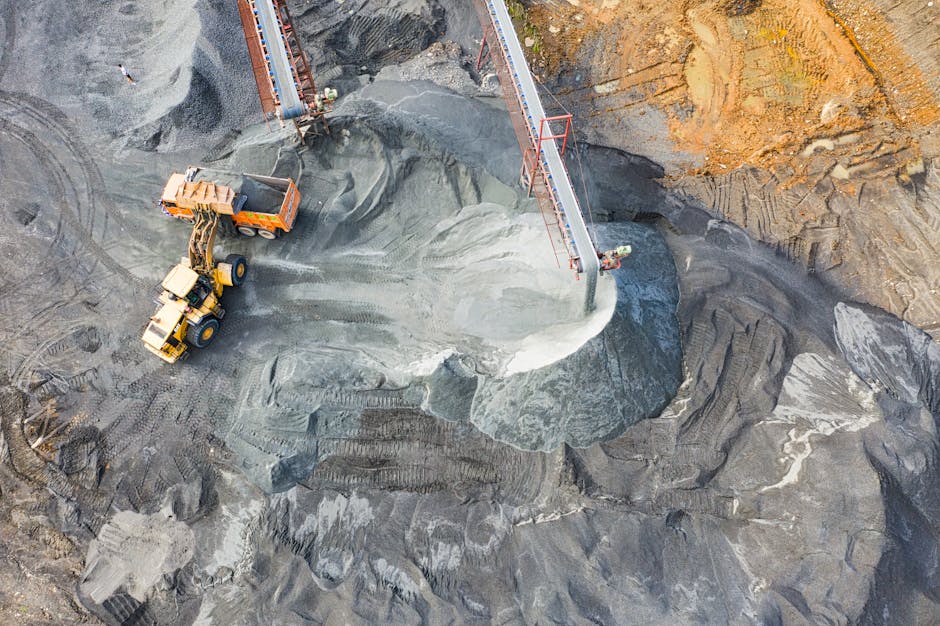
The extraction of rare earth elements is a multifaceted process that begins with identifying and accessing suitable ore deposits. These deposits are not as "rare" in terms of their elemental abundance as their name might suggest; rather, their rarity stems from the difficulty and economic viability of extracting them in commercially viable concentrations. REE-bearing minerals are typically found in igneous rocks, often associated with alkaline intrusions, carbonatites, and even certain placer deposits. Key ore minerals include bastnäsite, monazite, xenotime, and ion-adsorption clays. The geological formation processes that concentrate these elements into mineable quantities are relatively uncommon, leading to a geographically concentrated supply chain. Exploration for REE deposits involves geological surveys, geochemical sampling, and geophysical methods to identify promising anomalies. Once a deposit is identified and deemed economically feasible, the mining process can commence. Open-pit mining is the most common method for extracting REE ores due to their often shallow occurrence. This involves removing overburden to expose the ore body, followed by drilling, blasting, and excavation to extract the mineralized rock. Underground mining techniques are employed when deposits are deeper or possess specific geological characteristics. The extracted ore is then transported to a processing facility for beneficiation and separation.
Beneficiation is the initial stage of ore processing, aimed at concentrating the REE-bearing minerals and removing waste rock. This typically involves several physical separation techniques. Crushing and grinding reduce the ore to a fine powder, increasing the surface area for subsequent processing. Froth flotation is a widely used method where chemical reagents are added to the finely ground ore slurry. These reagents selectively attach to REE-bearing mineral particles, making them hydrophobic and allowing them to attach to air bubbles introduced into the slurry. These mineral-laden bubbles rise to the surface and are collected as a concentrate. Gravity separation techniques, such as jigging and shaking tables, can also be employed, exploiting differences in density between REE minerals and gangue (waste) materials. Magnetic separation is particularly effective for concentrating minerals like monazite and bastnäsite, which exhibit magnetic properties. The goal of beneficiation is to increase the REE content in the concentrate, making it more amenable to the complex chemical processes that follow. This stage is crucial for improving the efficiency and reducing the cost of the subsequent extraction and separation phases.
The extraction and separation of individual REEs from the beneficiated concentrate is by far the most complex and environmentally sensitive part of the mining process. This is due to the chemical similarity of the lanthanide series, which makes their separation incredibly challenging. Hydrometallurgical techniques are predominantly used. The concentrate is subjected to strong acid or alkaline leaching to dissolve the REE-bearing minerals. For instance, sulfuric acid or hydrochloric acid is commonly used to leach REEs from bastnäsite and monazite. Following leaching, the pregnant leach solution, containing dissolved REEs and impurities, undergoes a series of purification steps. Solvent extraction is the cornerstone of REE separation. This process involves using organic solvents that selectively extract specific REEs from an aqueous solution. By carefully controlling the pH, concentration of extractants, and other parameters, individual REEs can be progressively separated. This is a multi-stage process, often requiring hundreds of extraction stages in cascaded circuits to achieve the high purities required for technological applications. Ion exchange chromatography is another technique used for high-purity separation, particularly for certain critical REEs. The waste streams generated from these chemical processes are a significant environmental concern, often containing residual acids, solvents, and low concentrations of radioactive elements, which necessitate stringent waste management protocols.
The geological distribution of rare earth element deposits is highly uneven, leading to significant geopolitical concentrations of production. China has historically dominated global REE production, accounting for the vast majority of both mining and processing capacity. This dominance stems from its vast reserves, favorable geological conditions, and decades of investment in the industry. However, this concentration has raised concerns about supply chain security and price volatility, particularly for countries heavily reliant on REE imports for their advanced industries. Other significant REE-producing nations include Australia, the United States, Myanmar, and India, though their production volumes have historically been much smaller than China’s. Recent geopolitical tensions and a growing recognition of the strategic importance of REEs have spurred efforts by other nations to diversify their supply chains and develop domestic REE mining and processing capabilities. This includes exploring new deposits, investing in advanced extraction technologies, and establishing partnerships with countries possessing significant reserves. The "rare earth" element landscape is thus a dynamic geopolitical chessboard, with strategic competition and cooperation playing a significant role in shaping global supply and pricing.
The environmental impact of rare earth element mining is a critical consideration and a subject of intense scrutiny. The extraction and processing of REEs can lead to a range of environmental challenges. Water pollution is a significant concern, as the leaching and separation processes utilize large volumes of water and can generate acidic wastewater containing dissolved heavy metals and residual radioactive isotopes, such as thorium and uranium, which are often found in association with REE deposits. Improperly managed tailings ponds, containing the solid waste from mining and processing, can also pose a risk of leakage and contamination of surface and groundwater. Air pollution can occur through dust emissions from mining operations and the release of volatile compounds during processing. Land disturbance is inherent to open-pit mining, leading to habitat destruction and landscape alteration. Furthermore, the energy-intensive nature of REE processing contributes to greenhouse gas emissions. Responsible mining practices, including robust wastewater treatment, effective tailings management, dust suppression measures, and land rehabilitation efforts, are essential to mitigate these environmental impacts. Regulatory oversight and technological advancements in cleaner processing methods are crucial for ensuring the sustainability of REE mining.
Rare earth element recycling and urban mining represent a promising avenue for reducing reliance on primary extraction and mitigating its environmental footprint. As REEs are critical components in electronic devices, a substantial amount of these valuable metals is present in discarded consumer electronics, often referred to as e-waste. Urban mining involves the recovery of these REEs from end-of-life products. This process typically begins with the collection and dismantling of e-waste. Shredding and mechanical separation techniques are then used to recover different material fractions, including plastics, metals, and circuit boards. The REE-containing components, such as magnets in hard drives and speakers, phosphors in displays, and catalysts in batteries, are then subjected to specialized hydrometallurgical or pyrometallurgical processes for REE recovery. While technically feasible, REE recycling faces several challenges. The low concentrations of REEs in individual e-waste items make collection and processing economically challenging. The complex mixture of materials in e-waste requires sophisticated and often energy-intensive separation techniques. Developing efficient and cost-effective recycling technologies is a key area of research and development, aiming to create a circular economy for REEs and reduce the environmental and geopolitical burdens associated with primary mining.
The future of rare earth element mining is characterized by several key trends. Firstly, increasing global demand, driven by the expansion of electric vehicles, wind turbines, and advanced electronics, will continue to necessitate increased REE production. This will likely lead to the exploration and development of new deposits globally. Secondly, there will be a sustained effort to diversify supply chains, reducing the over-reliance on any single country. This will involve significant investment in exploration, mining, and processing infrastructure in countries outside of China. Thirdly, technological innovation will play a crucial role. Advances in mineral processing, particularly in more efficient and environmentally friendly extraction and separation techniques, will be critical. This includes developing novel reagents for solvent extraction, improving ion-exchange processes, and exploring alternative separation methods. Fourthly, the importance of REE recycling will continue to grow. As recycling technologies mature and become more economically viable, urban mining will contribute a significant portion of the global REE supply, complementing primary extraction. Finally, increasing environmental regulations and public awareness will drive the adoption of more sustainable mining and processing practices, pushing for cleaner technologies and more robust environmental management systems. The industry’s trajectory will be shaped by the interplay of technological advancement, geopolitical considerations, and the imperative for environmental sustainability.
