Rome’s MIA Market Launches European Investment Hub to Demystify Complex Audiovisual Financing

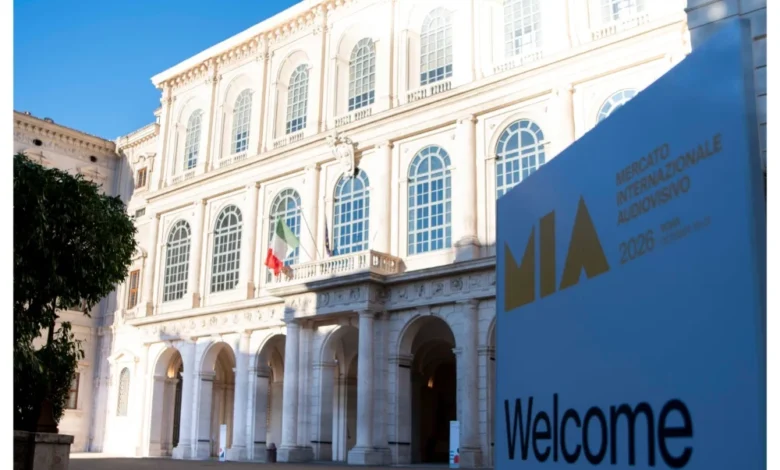
The shifting landscape of international film and television funding has prompted Rome’s premier audiovisual gathering to establish a dedicated navigational resource for industry professionals. The Mercato Internazionale Audiovisivo (MIA), widely recognized as one of Europe’s top co-production and networking markets, is launching the European Investment Hub during its upcoming 12th edition. Scheduled to run from October 19 to 23 in the Italian capital, the initiative arrives at a critical juncture when producers are increasingly required to stitch together sophisticated financial packages spanning traditional soft money, public subsidies, and a growing influx of private equity.
Designed to span the first two days of the five-day market, the European Investment Hub is the result of a concerted, high-level collaboration between MIA organizers and major institutional and financial bodies. These partners include the European Commission, the European Investment Fund (EIF), the CineRegio network of regional film funds across Europe, and the pan-European fund Eurimages, alongside several prominent private equity players. Through a series of targeted panels, roundtables, and advisory one-on-one sessions, the Hub aims to bridge the persistent gap between independent content creators and the dense ecosystem of financial tools currently at their disposal.
Background and Context of the Initiative
For decades, the European audiovisual sector has relied heavily on a patchwork of public subsidies, national tax credits, regional film funds, and broadcaster pre-sales—collectively known as "soft money." While these mechanisms have successfully preserved the cultural diversity and artistic integrity of European cinema and television, they have often proven difficult for small and medium-sized enterprises (SMEs) to navigate efficiently. Furthermore, as global streaming platforms recalibrate their content acquisition strategies and traditional broadcast models evolve, the necessity for alternative capital structures has reached a fever pitch.
In response, private equity, completion bonds, risk-mitigation instruments, and specialized equity funds dedicated to intellectual property (IP) creation have steadily assumed a more prominent role in financing media assets. However, the operational disconnect between traditional soft money administrators and private equity investors often creates friction. The European Investment Hub at MIA has been conceived specifically to dismantle these barriers, offering producers a clear, practical understanding of how to blend public and private resources without compromising creative control or financial sustainability.
Key Industry Figures and Global Participation
The launch of the Hub has already drawn significant international attention, pulling high-profile financiers, legal experts, and dealmakers to Rome. Among the notable international attendees making the trip to the Eternal City are Roeg Sutherland, co-head of Creative Artists Agency’s (CAA) media finance department and its international film group, alongside principals Raj Singh and Christopher Woodrow from U.S. specialty finance firm Media Capital Technologies (MCT).
Their presence underscores the trans-Atlantic interest in European content ecosystems, particularly as international investors seek out scalable opportunities within mature European production hubs like Italy, Spain, France, and the United Kingdom. Alongside them, prominent U.S. entertainment lawyer Steve Saltzman, who leads the International Entertainment Group at London-based law firm Fieldfisher, is set to participate in specialized discussions analyzing the legal and structural frameworks governing international co-productions.
An Intensive Two-Day Program
The European Investment Hub will kick off the MIA market with a robust agenda focused on practical applications and direct engagement. MIA chief Gaia Tridente emphasized that the core philosophy of the initiative is to foster direct, unmediated contact between content creators and institutional representatives who can offer actionable guidance.
"The idea is to foster direct contact between producers and representatives from these various entities who can provide guidance," Tridente explained. She noted that the program addresses a broad spectrum of project scales, catering equally to massive, high-budget cinematic or serial undertakings and more modest, independent auteur projects. "We are talking about funds accessible to projects with budgets of €50 million and up, as well as others with lower budgets that are more typical for European cinema and television."
Adding to the diversity of perspectives, representatives from 35 European co-production funds will be present on-site to demystify their respective national mechanisms. For instance, the delegation from Spain will feature representatives from three distinct regional and national funds, offering attendees a granular understanding of how to seamlessly layer Spanish tax incentives with broader European co-production treaties.
Industry Responses and Institutional Backing
The introduction of the European Investment Hub has received enthusiastic endorsement from leading trade organizations in Italy, reflecting a broader European consensus that financing literacy is the primary determinant of future industry growth.
Alessandro Usai, head of Italy’s motion picture association ANICA, highlighted the strategic importance of the new initiative in a formal statement. "In recent years, it has become clear to everyone that access to finance is the true game-changer for the industry, and that we must work together to remove remaining barriers and obstacles, better understand best practices and implement new ones," Usai noted. He underscored that mastering public-private partnerships and guarantee systems is vital not only for the domestic Italian market but for the continent’s entire creative economy.
Echoing these sentiments, Chiara Sbarigia, head of the Italian TV producers’ association APA, pointed to the acute challenges confronting independent producers. "There was a need for a new space dedicated to audiovisual financing to address the challenges faced by producers, particularly small and medium-sized ones," Sbarigia stated.
She highlighted an initiative previously spearheaded by APA—a proposal presented to relevant institutional stakeholders regarding the creation of a new public-private fund—which will be officially showcased to international professionals during the MIA market. "While competing in international markets certainly requires ideas, talent, and production capacity, understanding where to invest in development—and how and where to secure resources—remains crucial," she added.
Panel Highlights and Financing Frontiers
The curated panels forming the backbone of the European Investment Hub will delve deeply into specific financial engineering techniques, risk-mitigation strategies, and capital acquisition models.
Among the headline sessions is "Unlocking Italy’s Potential," featuring Raj Singh, Roeg Sutherland, and Steve Saltzman. This panel will examine the competitive advantages, tax structures, and co-production incentives that make the Italian audiovisual ecosystem an increasingly attractive destination for global capital. Additionally, Singh is scheduled to use a separate dedicated session to formally launch a new financial venture designed to expand avenues for content creation funding.
Another centerpiece of the program is the panel titled "Equity and Growth Capital: Investing in Creativity, IP and Long-Term Value." This discussion will feature Christopher Woodrow of Media Capital Technologies; Celine Dornier, content executive at the Finland-U.K. based film investment fund IPR.VC; and Alexandra Lebret, partner at the Together Fund, a vehicle recently launched in strategic partnership with Paris-based investment firm Axio Capital. These leaders will explore how equity funds can acquire long-term value from intellectual property, providing sustainable balance sheet support to production companies rather than relying solely on single-project financing.
Broader Implications for the European Audiovisual Sector
The establishment of the European Investment Hub at MIA arrives at a pivotal moment for European media economics. As regulatory pressures mount, including stricter European works quotas for streaming services and evolving national tax credit regulations, producers face a complex regulatory and financial labyrinth. By consolidating access to soft money administrators, private equity pioneers, legal experts, and regional fund managers under one roof in Rome, MIA is positioning itself as an indispensable nexus for pragmatic industry dealmaking.
Ultimately, the success of the European Investment Hub will be measured by its ability to translate high-level policy discussions into executed financing agreements. By equipping producers—particularly independents who form the cultural backbone of European cinema—with the financial literacy and institutional connections necessary to leverage both public subsidies and private equity, the initiative promises to fortify the global competitiveness of European storytelling for years to come.