Matthew Lillard Expresses Deep Regret And Shame Over Joining Scream 7 Following The Controversial Firing Of Melissa Barrera

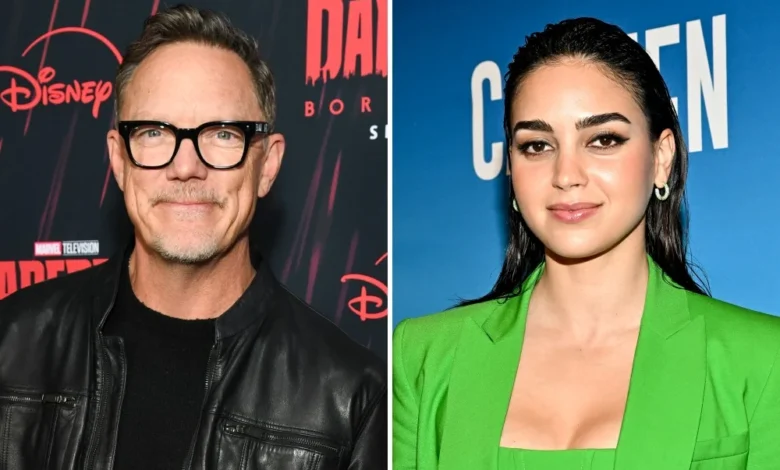
Actor Matthew Lillard has publicly admitted that he feels a profound sense of shame and regret regarding his return to the iconic horror franchise in this year’s commercial blockbuster, Scream 7. Lillard, who cemented his place in cinematic history by portraying the deranged killer Stu Macher in Wes Craven’s groundbreaking 1996 original, reprised his role in the seventh installment, which debuted in theaters this past February and shattered box office expectations by grossing $214 million worldwide. However, this triumphant cinematic homecoming has been heavily overshadowed by ethical and professional remorse.
The catalyst for Lillard’s public soul-searching traces back to the high-profile firing of his fellow franchise star, Melissa Barrera, in late 2023. Barrera, who spearheaded the revived franchise as Sam Carpenter in Scream (2022) and Scream VI (2023), was abruptly dropped from Scream 7 by production company Spyglass Media Group following a series of social media posts addressing the Israel-Hamas war. Barrera’s dismissal triggered a massive cultural firestorm, pitting free-speech advocates and pro-Palestinian supporters against studio executives, while deeply dividing the dedicated fan base of the slasher franchise.
A Candid Admission at a Milestone Retrospective
Lillard’s self-reflection came to light during a recent commemorative screening celebrating the 30th anniversary of the original Scream. During a post-screening Q&A session, a fan pressed the actor on the complexities and professional risks associated with political activism for Hollywood personalities. Lillard, known for his outspoken nature and willingness to court controversy, did not shy away from the inquiry.
Last year, the actor generated significant media attention when he publicly shouted a profanity-laced anti-ICE (U.S. Immigration and Customs Enforcement) slogan during another promotional screening of the horror classic. Elaborating on his philosophy regarding public advocacy, Lillard explained to the audience that staying silent is simply not an option for him given his personal convictions and familial responsibilities.
“I don’t know how else to do it,” Lillard stated during the panel. “For me, I have queer kids. If I’m not standing up for queer kids or kids in the trans community then what the fuck am I doing? If I’m not standing up against ICE, then what the fuck am I doing?”
Yet, acknowledging the personal and professional stakes involved in such stances, Lillard pivoted directly to the controversy surrounding Barrera, admitting that speaking truth to power carries very real consequences in the modern entertainment landscape.
The Chronology of a Franchise Crisis
To fully understand Lillard’s current remorse, it is essential to examine the sequence of events that fractured the Scream franchise between late 2023 and early 2025:
- October 2023: Armed conflict erupts in the Middle East following the October 7 attacks by Hamas, prompting a global wave of commentary, protests, and intense geopolitical polarization across social media platforms.
- November 2023: Melissa Barrera uses her Instagram stories and grid posts to share commentary regarding the ongoing crisis in Gaza. Her posts utilize terminology critical of the Israeli government, explicitly accusing the state of carrying out “genocide and ethnic cleansing.”
- Late November 2023: Spyglass Media Group abruptly announces that Barrera has been removed from the cast of the then-upcoming Scream 7. In a strongly worded public statement, the studio asserts a “zero tolerance for antisemitism or the incitement of hate in any form, including false references to genocide, ethnic cleansing, Holocaust distortion or anything that flagrantly crosses the line into hate speech.”
- Late 2023 to Early 2024: The fallout from Barrera’s termination creates immediate turmoil behind the scenes. Jenna Ortega, who co-starred alongside Barrera as Tara Carpenter, exits the project shortly thereafter, citing scheduling conflicts with her Netflix series Wednesday, though industry analysts widely speculate the timing is linked to solidarity or corporate fallout. Director Christopher Landon also departs the project.
- Mid to Late 2024: Franchise mastermind Kevin Williamson is brought on to direct Scream 7, shifting the narrative focus and orchestrating legacy character returns, notably incorporating Matthew Lillard’s Stu Macher into the storyline.
- February 2025: Scream 7 premieres in theaters worldwide. Despite ongoing calls for boycotts and vocal protests organized by pro-Palestinian activists outside the film’s Los Angeles premiere, the movie performs exceptionally well at the box office, ultimately crossing the $214 million threshold to become the highest-grossing entry in the nearly three-decade-old franchise.
- Current Date: Lillard publicly expresses profound regret, labeling his decision to accept the paycheck and return to the franchise as a failure of solidarity with Barrera.
Evaluating the Geopolitical Fallout and Industry Precedent
The firing of Melissa Barrera remains one of the most high-profile instances of Hollywood labor repercussions tied to international political discourse in the post-social media era. Industry observers have frequently compared the incident to other recent high-profile dismissals, highlighting a persistent tension between corporate risk mitigation and artistic free expression.
Spyglass Media Group’s hardline stance was praised by various advocacy groups that monitor antisemitism, who argued that Barrera’s rhetoric crossed the boundary from legitimate political critique into inflammatory tropes. Conversely, civil rights organizations, free-speech advocates, and numerous entertainment unions expressed alarm, arguing that Hollywood studios were enforcing a de facto blacklist against artists—particularly performers of color—who spoke out against military actions in the Middle East.
Lillard touched upon this systemic failure during his retrospective panel, expressing deep disappointment that the broader entertainment community did not rally behind Barrera when her livelihood was stripped away.
“Melissa Barrera, who’s a beautiful actor, was fired for what she said after what started happening in Israel,” Lillard reflected. “It’s really fucking bullshit and really hard and she’s on the right side of history. When they start coming after your job, sometimes things are worth it… When that happened to Melissa, the whole world didn’t pipe up. But she was a year early on what the fuck’s going on. But the whole world should have popped up and said, ‘She’s right.’ And they didn’t. And that’s brutal.”
Lillard’s Personal Reckoning: Caught Between Nostalgia and Accountability
For Lillard, the decision to step back into the shoes of Stu Macher—a role fans spent decades speculating might somehow have survived the events of the 1996 original film—was initially driven by creative excitement and fan service. However, the external criticism he faced upon signing onto the project forced him to reevaluate his priorities.
“I went back to do ‘Scream,’ and I got called out. And I’m like, ‘Oh, fuck. That’s brutal,’” Lillard confessed to the audience. “I feel bad about that. I feel ashamed about that. Because in that moment I didn’t really think about Melissa and that journey. I didn’t say no. I’m embarrassed, that’s the truth… I blew that. I’m on the wrong side of history for that. I still like being in the movie [but] it may not have been the best idea.”
This rare level of public accountability from a veteran studio actor has drawn widespread praise across digital platforms, distinguishing Lillard from many of his industry peers who have chosen to remain entirely silent on the intersection of franchise filmmaking and global human rights issues.
Broader Implications for Hollywood Franchises
As intellectual properties become increasingly valuable corporate assets, the pressure on actors to maintain political neutrality—or adhere strictly to studio-approved public relations guidelines—has never been higher. Yet, incidents like the Barrera firing and Lillard’s subsequent public contrition demonstrate that creative workplaces are no longer insulated from the turbulent realities of global politics.
The financial success of Scream 7 proves that consumer bases are deeply fractured; while internet campaigns and premiere-night protests called for comprehensive boycotts, the general moviegoing public propelled the film to record-breaking box office heights. This duality leaves studio executives navigating a precarious landscape where artistic output, social media surveillance, and moral accountability continuously collide.
Ultimately, Matthew Lillard’s candid remarks serve as a stark reminder of the personal toll exacted by corporate policy decisions in modern Hollywood. While the box office numbers for Scream 7 solidify the financial viability of the franchise for years to come, the ethical questions raised by its production history will likely linger long after the final box office tallies are finalized.
Related posts: