Global Hunger Declines Slightly But Escalates in Africa and Western Asia Amidst Economic Instability

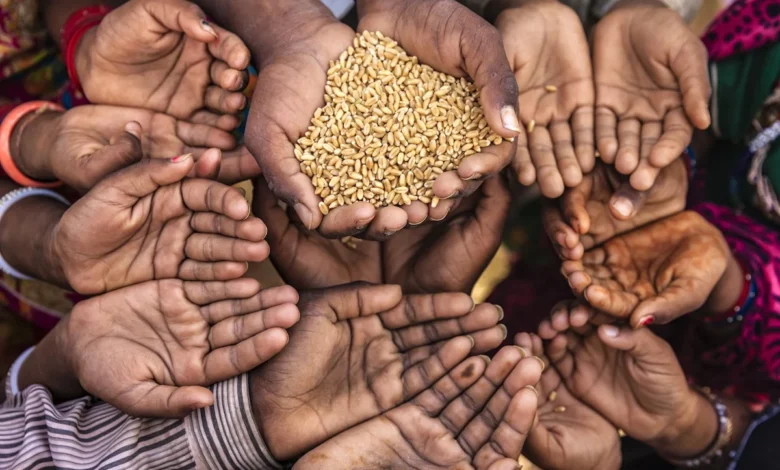
The global landscape of food security remains a study in stark contrasts, as the latest edition of The State of Food Security and Nutrition in the World (SOFI) report reveals a marginal improvement in aggregate hunger statistics, even as millions in specific regions face deepening crises. Published by five specialized United Nations agencies—the Food and Agriculture Organization (FAO), the International Fund for Agricultural Development (IFAD), the World Food Programme (WFP), UNICEF, and the World Health Organization (WHO)—the 2025 assessment provides a sobering look at the progress, or lack thereof, toward the UN’s Sustainable Development Goal of Zero Hunger.
According to the report, approximately 673 million people, or roughly 8.2 percent of the global population, suffered from hunger in 2024. While this represents a statistical improvement from the 8.7 percent recorded in 2022 and 8.5 percent in 2023, the underlying data indicates that the path to global food security is far from linear. In absolute terms, the number of undernourished people dropped by roughly 15 million from 2023 and 22 million from 2022, yet the persistent nature of food insecurity in conflict-affected and economically vulnerable regions continues to threaten the stability of the international community.
A Chronology of Crisis and Recovery
The trajectory of global nutrition has been significantly derailed over the past half-decade. The onset of the COVID-19 pandemic in 2020 served as the primary catalyst for the most recent surge in food insecurity, disrupting global supply chains and triggering the first major inflation spike in the modern era. By 2021, the world was already struggling with the economic fallout of pandemic-related policy responses, which included unprecedented fiscal interventions that unintentionally fueled inflationary pressures.
The situation deteriorated further in 2022, when the Russian invasion of Ukraine sent shockwaves through global grain and fertilizer markets. Because both nations were major exporters of wheat, corn, and sunflower oil, the conflict led to a dramatic spike in global food price inflation, which climbed from a median of 2.3 percent in December 2020 to a peak of 13.6 percent by early 2023. Compounding these economic stressors, the world has faced an increasing frequency of extreme weather events—droughts, floods, and unseasonal heatwaves—that have decimated local agricultural yields and hindered the recovery of food systems in developing nations.
Regional Disparities and the Widening Gap
While Asia and parts of Latin America and the Caribbean have shown signs of recovery, the trends in Africa and Western Asia are deeply concerning. In Asia, the prevalence of undernourishment fell to 6.7 percent in 2024, down from 7.9 percent two years prior. Similarly, Latin America and the Caribbean have managed to reduce undernourishment to 5.1 percent, a significant improvement from the 2020 peak of 6.1 percent.
Conversely, Africa remains a focal point of the global crisis. The proportion of the population facing hunger in Africa surpassed 20 percent in 2024, affecting approximately 307 million people. In Western Asia, the situation is similarly precarious, with an estimated 12.7 percent of the population—more than 39 million people—facing chronic hunger. The SOFI 2025 report explicitly links these figures to prolonged food crises, political instability, and the inability of these regions to absorb the shocks of global price volatility.
The Economic Burden of a Healthy Diet
One of the most revealing metrics in the report is the persistent inability of vulnerable populations to afford a healthy, nutritious diet. While the global number of people unable to afford a healthy diet fell to 2.6 billion in 2024, the situation in low-income countries is moving in the opposite direction. In these nations, 545 million people could not afford a healthy diet last year, a marked increase from 464 million five years earlier.
This affordability crisis is largely driven by the extreme nature of food price inflation in developing economies. While global inflation peaked at roughly 13.6 percent, low-income nations experienced localized food price inflation that reached as high as 30 percent in May 2023. This disparity illustrates a "two-speed" global recovery, where wealthy nations have largely stabilized their food markets, while low-income countries remain trapped in a cycle of high costs and limited purchasing power.

Official Responses and Strategic Recommendations
The heads of the UN agencies involved in the report have issued urgent calls for a shift in global policy. FAO Director-General QU Dongyu noted that while the decrease in the global hunger rate is encouraging, the progress is "uneven," requiring a more collaborative and innovative approach to support vulnerable populations.
IFAD President Alvaro Lario emphasized the necessity of structural investment, stating, "In times of rising food prices and disrupted global value chains, we must step up our investments in rural and agricultural transformation. These investments are not only essential for ensuring food and nutrition security; they are also critical for global stability."
The report suggests a three-pronged policy approach to combat these issues:
- Monetary Stability: Implementation of transparent, credible monetary policies to contain inflationary pressures that disproportionately affect food prices.
- Targeted Fiscal Measures: Use of time-bound social protection programs to shield the most vulnerable households from sudden price spikes.
- Infrastructure Investment: Long-term capital allocation toward agrifood research, market information systems, and rural infrastructure, including transportation and storage, to boost productivity and resilience against climate shocks.
The Human Cost: Children and Malnutrition
The impact of food insecurity is most devastating when viewed through the lens of early childhood development. UNICEF Executive Director Catherine Russell highlighted that over 190 million children under the age of 5 are currently affected by undernutrition. The long-term consequences of this crisis are profound, as stunted physical and mental development can rob an entire generation of its potential to thrive in the global economy.
The report advocates for the strengthening of social protection programs and the prioritization of nutritional education, specifically the promotion of breastfeeding and the consumption of locally produced, nutrient-dense foods. By teaching families how to utilize local resources, organizations hope to mitigate the dependence on volatile international markets for basic sustenance.
Looking Toward 2030: The Challenge Ahead
The UN’s Sustainable Development Goal of "Zero Hunger" appears increasingly distant. Current projections estimate that 512 million people could still be experiencing chronic undernourishment by 2030, with nearly 60 percent of those individuals residing in Africa. This suggests that the current international framework for food security is insufficient to meet the scale of the challenge.
The confluence of climate change, armed conflict, and economic mismanagement has created a "perfect storm" for food insecurity. Without significant international cooperation to address the structural inequalities of the global food trade, the current trend of moderate improvement may be offset by localized humanitarian disasters. The 2025 SOFI report serves not just as a data repository, but as a warning that the global community must transition from reactive crisis management to a proactive, investment-heavy strategy that empowers local food systems to withstand the uncertainties of the 21st century.
As the international community navigates the remainder of the decade, the focus must remain on the 2.3 billion people currently facing moderate or severe food insecurity. The numbers, while down slightly from the 28.4 percent observed in 2023, remain unacceptably high. True progress will be measured not by the decline in global averages, but by the ability of the most vulnerable nations to secure the basic right of every individual to a healthy, consistent, and nutritious diet.