
Trumps Guard Deployment La Protests Puts Newsom Political Predicament
Trump’s Guard Deployment in LA Protests: Newsom’s Political Predicament and the Shifting Landscape of Public Order
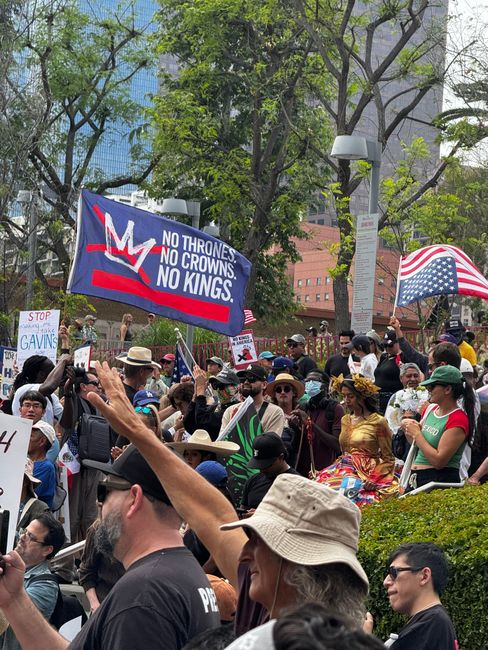
The unprecedented deployment of federal law enforcement and National Guard forces in Los Angeles during the George Floyd-inspired protests presented Governor Gavin Newsom with a profound political predicament, exposing deep fissures in the state-federal relationship and amplifying existing tensions over public order, civil liberties, and the role of government in managing unrest. President Donald Trump’s assertive, and at times provocative, intervention, framing the protests as lawless riots requiring a decisive federal response, placed Newsom in a difficult position. He was caught between the demands of federal authority, the escalating pressures from his own constituents to address systemic injustice and police brutality, and the constitutional implications of federal overreach into state matters. This deployment not only intensified the immediate crisis in Los Angeles but also had far-reaching consequences for Newsom’s political standing, California’s autonomy, and the broader national discourse on policing and protest.
The decision to deploy federal assets, including the Department of Homeland Security’s tactical units, was framed by the Trump administration as a necessary measure to restore order in cities experiencing significant civil unrest. However, this interpretation was heavily contested by many local leaders, including Newsom, who argued that the federal intervention was an unnecessary escalation and an infringement upon state and local control. Newsom, while condemning violence and looting, had consistently advocated for de-escalation and dialogue, emphasizing the need to address the root causes of the protests, including racial inequality and police misconduct. The presence of federal agents, often clad in riot gear and lacking clear local identification, fueled the perception of an occupying force, further inflaming tensions and leading to accusations of excessive force and suppression of legitimate dissent. This starkly contrasted with Newsom’s stated commitment to criminal justice reform and his attempts to navigate a complex political landscape where appeasing progressive calls for systemic change clashed with the need to maintain public safety and prevent further property destruction.
Newsom’s predicament was exacerbated by the fact that the federal deployment occurred against his wishes and without his explicit request for such a significant federal presence. While he had authorized the activation of the California National Guard to assist local law enforcement and provide logistical support, the influx of federal agents, operating under a different command structure and with a potentially different mandate, created a dual-authority scenario that was ripe for conflict. This situation put Newsom in a difficult bind: publicly challenging the federal government carried the risk of alienating the Trump administration and potentially facing further federal pressure, while tacitly accepting the deployment could be perceived as a capitulation and a betrayal of the protesters’ demands for accountability and reform. His efforts to assert state authority and emphasize a more nuanced approach to policing and protest were overshadowed by the aggressive federal posture, making it challenging for him to control the narrative and project an image of effective leadership in managing the crisis.
The deployment of federal forces in Los Angeles also served as a potent symbol of the deepening political polarization in the United States. Trump’s rhetoric often painted protesters as violent extremists and anarchists, a narrative that resonated with his conservative base. Newsom, on the other hand, had to contend with a diverse electorate, including a vocal progressive wing that demanded radical change, and a more moderate segment concerned about public safety and economic stability. The federal intervention amplified this divide, transforming the protests into a proxy battleground over the fundamental principles of governance, individual rights, and the appropriate response to social unrest. Newsom’s ability to bridge this chasm, to simultaneously acknowledge the legitimate grievances of protesters and uphold the rule of law, was severely tested by the presence of federal forces that many viewed as part of the problem, not the solution.
Moreover, the deployment raised critical questions about the constitutional boundaries of federal power and the balance of authority between the federal government and the states. The use of federal law enforcement agents in domestic crowd control, particularly in the absence of a direct request from state officials, sparked widespread debate about the Posse Comitatus Act and the potential for executive overreach. Newsom, as the chief executive of California, found himself at the forefront of this legal and political battle, tasked with defending the state’s sovereignty and the rights of its citizens against what many perceived as an unconstitutional federal intrusion. His public statements and legal challenges, if any, in response to the deployment would have been closely scrutinized, serving as a bellwether for how other state leaders might navigate similar situations.
The economic impact of the protests and the associated federal response also contributed to Newsom’s political predicament. Los Angeles, a global economic hub, experienced significant disruptions, including business closures, property damage, and a decline in tourism. While Newsom had initiated plans for economic recovery and supported relief efforts for affected businesses, the extended presence of federal troops and the lingering tension could have had a prolonged negative effect on investment and consumer confidence. The narrative surrounding the protests, amplified by the federal response, could shape perceptions of Los Angeles and California as unstable or unsafe, thus hindering long-term economic recovery efforts.
The media’s coverage of the events played a crucial role in shaping public opinion and influencing Newsom’s political calculus. Images of federal agents clashing with protesters, often juxtaposed with Trump’s pronouncements about restoring law and order, created a powerful and often distorted narrative. Newsom had to work to counter this narrative, emphasizing the peaceful nature of the majority of protests and highlighting his administration’s efforts to address the underlying issues. However, the sheer volume and intensity of the federal intervention often made it difficult for his message to break through, further complicating his efforts to manage public perception and maintain political control.
The long-term implications of Trump’s guard deployment in LA extended beyond the immediate crisis. It set a precedent for federal intervention in state matters, potentially empowering future administrations to adopt a more assertive stance in managing domestic unrest. For Newsom, it represented a significant challenge to his leadership and his ability to assert state autonomy. His response, whether through public pronouncements, legal challenges, or policy adjustments, would have lasting repercussions on his political legacy and his standing within the Democratic Party. The events underscored the fragility of the federal-state balance of power and the evolving nature of public order in an era of heightened social and political division. The incident in Los Angeles became a microcosm of the broader national struggle to reconcile the demands for justice and accountability with the need for peace and stability, a struggle that Newsom, by virtue of his position and the circumstances, was forced to confront head-on, and in doing so, found himself navigating a perilous political tightrope. The deployment’s impact was not merely tactical but deeply strategic, forcing Newsom to make difficult choices with significant political ramifications for his administration and the future of California’s relationship with the federal government.
