
Unwelcome Kennedy Center Lgbtq Orchestra Defiantly Plays Maryland
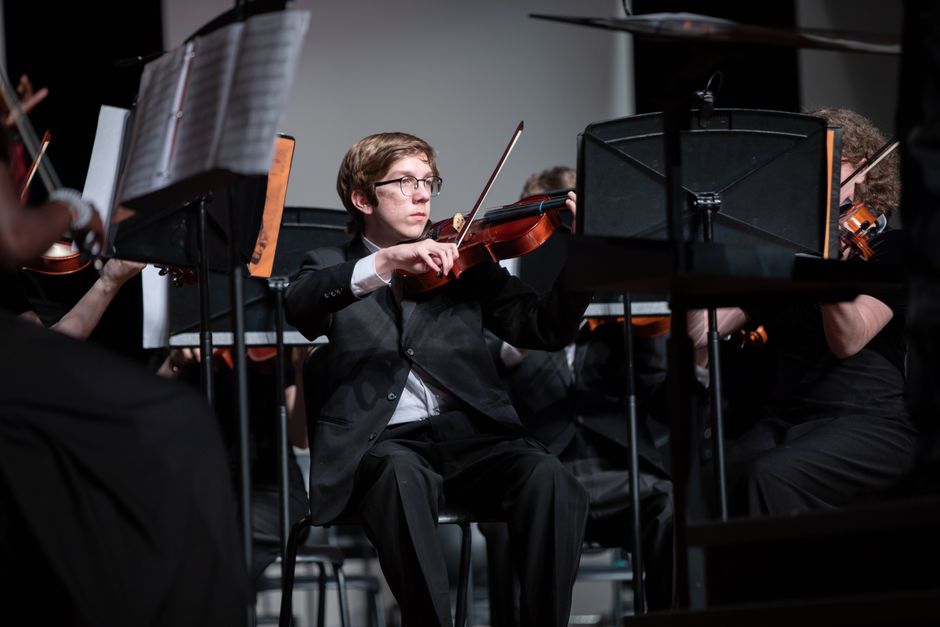
The Unwelcome Kennedy Center LGBTQ Orchestra Defiantly Plays Maryland
The Kennedy Center, a national symbol of artistic excellence and a venue that has historically strived for inclusivity, found itself at the center of a contentious performance when its LGBTQ+ orchestra, the "Queer Harmonies," defiantly played "Maryland, My Maryland" on a recent evening. The choice of song, typically a state anthem and deeply rooted in Southern sentiment, sparked immediate and widespread debate, particularly given its historical ties to the Confederacy. The orchestra, composed of musicians from diverse backgrounds united by their LGBTQ+ identities, asserted that their rendition was not an endorsement of historical oppression but a deliberate act of reclaiming and reinterpreting a contested piece of American musical heritage.
The performance, which took place during a public rehearsal accessible to a limited audience and later documented and disseminated online, was intended to be a provocative artistic statement. Proponents argue that "Queer Harmonies" aimed to challenge traditional interpretations of nationalistic symbols and demonstrate that art can be a powerful tool for social commentary and transformation. They posited that by taking a song laden with historical baggage and infusing it with their unique perspectives, they were engaging in a form of artistic defiance, forcing a conversation about who gets to define and interpret American identity and history. The orchestra’s statement, released shortly after the performance, emphasized their commitment to using music to explore themes of belonging, historical memory, and the ongoing struggle for equality. They stated, "We are not here to erase history, but to confront it. ‘Maryland, My Maryland,’ like many historical artifacts, carries layers of meaning. Our performance sought to peel back those layers and reveal the complexities that lie beneath, particularly for communities historically excluded from the grand narratives of American identity."
The reaction to the performance was swift and polarized. Critics decried the choice of song as insensitive and deliberately provocative, accusing the LGBTQ+ orchestra of disrespecting the nation’s history and heritage. Many viewed the selection of "Maryland, My Maryland," with its historical associations with the Confederacy and its origins as a poem written in support of secession, as a direct affront to national unity and historical remembrance. Social media platforms buzzed with outrage, with many calling for sanctions against the Kennedy Center and the orchestra. Opponents highlighted the song’s origins as a poem by James Ryder Randall, written in 1861 in response to the passage of federal troops through Baltimore, and its subsequent adoption as the state song of Maryland. They argued that its historical context could not be divorced from its meaning and that any attempt to "reclaim" it was a misrepresentation and an insult. Online commentary frequently employed terms like "woke agenda," "cultural appropriation of history," and "insulting to patriots."
Conversely, supporters of "Queer Harmonies" defended the orchestra’s artistic freedom and the underlying message of their performance. They argued that the act of playing the song was not an endorsement of its Confederate origins but a powerful statement of resilience and the right to participate in and redefine national symbolism. This perspective emphasizes the orchestra’s right to engage with all aspects of American culture, including those that have been used to marginalize them. For this group, the performance was an assertion of agency, a demonstration that LGBTQ+ individuals are not merely passive recipients of history but active participants capable of reinterpreting and reshaping it. They drew parallels to other instances where marginalized groups have reclaimed symbols and narratives previously used against them. Art critics and academics who championed the performance lauded it as a bold and necessary exploration of historical memory and identity in contemporary America. They pointed to the inherent complexity of many national symbols, arguing that no single interpretation should hold absolute sway.
The controversy also ignited a broader discussion about the role of public institutions like the Kennedy Center in showcasing diverse artistic expressions, even those that provoke discomfort. The question of whether an institution funded by public monies should host performances that some deem offensive is a recurring debate in the arts. Supporters of the orchestra’s right to perform argued that the Kennedy Center’s mission to present a wide spectrum of American artistic voices necessitates the inclusion of performances that challenge conventional norms and spark dialogue. They believe that silencing or censoring such performances would be a betrayal of artistic freedom and a disservice to the public’s engagement with complex societal issues. This perspective often invokes the idea of the arts as a space for critical inquiry and often uncomfortable truths.
The historical context of "Maryland, My Maryland" is crucial to understanding the intensity of the reactions. Originally a poem by James Ryder Randall, it expressed strong support for the Confederacy and was set to the tune of the German folk song "O Tannenbaum." It was adopted as Maryland’s state song in 1939, a decision that itself has been subject to historical scrutiny, with many arguing it was a testament to lingering Confederate sympathies in the state. The song’s lyrics have been widely criticized for their pro-Confederate sentiments and their inflammatory language. Randall’s poem, for instance, contains lines such as "The despot’s heel is on thy shore, Maryland! His touch is degradation," and "I tell you, freemen, Maryland! Before the slave’s chain shall be rent." These lines, undeniably, are rooted in a historical period of immense division and conflict.
The "Queer Harmonies" orchestra, by choosing this particular piece, was undoubtedly aware of its contentious nature. Their intention, as articulated, was not to revive Confederate ideology but to deconstruct and re-examine the song’s place in American culture. This act of reinterpretation can be seen through the lens of cultural reclamation, a process by which marginalized groups take symbols, narratives, or artistic expressions previously used to oppress them and imbue them with new meanings that affirm their identities and experiences. For example, the reclamation of the word "queer" itself, from a slur to a term of empowerment, serves as a parallel. In this instance, the orchestra was challenging the notion that certain songs or symbols belong exclusively to one historical narrative or one group of people. They were asserting their right to engage with, and indeed, to inhabit, all of American culture, even its most problematic elements.
The performance also highlights the evolving landscape of national identity. As the United States grapples with its complex and often painful history, public spaces and institutions are increasingly expected to reflect the diversity of the nation’s population. The presence of an LGBTQ+ orchestra performing a historically charged piece at a national venue like the Kennedy Center signifies a shift in who is seen as a legitimate participant in the cultural conversation. It suggests a move towards a more inclusive understanding of American identity, one that acknowledges and incorporates the experiences of previously marginalized communities. This broadening of perspective inevitably leads to friction as established norms and interpretations are challenged.
Furthermore, the debate surrounding the "Queer Harmonies" performance underscores the power of art to provoke dialogue, even when that dialogue is uncomfortable. Art is not always meant to be pleasing or agreeable; often, its most profound impact comes from its ability to challenge assumptions, raise difficult questions, and force audiences to confront uncomfortable truths. In this case, the orchestra’s performance served as a catalyst, igniting conversations about history, identity, inclusion, and the role of public art in a diverse society. Whether one agreed with the orchestra’s choice of song or their interpretation, the performance undeniably prompted a significant engagement with these complex issues.
The Kennedy Center, as a federally funded institution, operates in a delicate balance between supporting artistic freedom and responding to public sentiment. The decision to allow the performance, or at least not to intervene in the rehearsal, indicates a commitment to fostering an environment where diverse artistic voices can be heard. However, the ensuing backlash also highlights the challenges such institutions face in navigating a politically charged cultural landscape. The institution must consider its mandate to reflect the breadth of American artistic expression while also being mindful of the diverse audiences it serves and the historical sensitivities involved.
The discourse surrounding "Maryland, My Maryland" by the Queer Harmonies orchestra extends beyond the immediate event. It prompts reflection on how historical artifacts, particularly songs and symbols, are preserved, interpreted, and presented to the public. It raises questions about whether historical works should be sanitized, contextualized, or allowed to stand in their original, potentially offensive, form. The orchestra’s approach suggests a belief in the latter, coupled with a strong emphasis on contemporary contextualization and artistic reinterpretation by diverse voices. This method aims to educate and engage audiences with the complexities of history, rather than to simply present a sanitized or singular narrative.
In conclusion, the "Queer Harmonies" orchestra’s defiant performance of "Maryland, My Maryland" at the Kennedy Center was a multifaceted artistic act that generated significant controversy and sparked essential conversations. It was a demonstration of artistic agency, a challenge to historical narratives, and a powerful assertion of LGBTQ+ inclusion in the realm of national culture. While the performance was unwelcome to some, its impact was undeniable, forcing a re-examination of how we engage with our history, our symbols, and the ever-evolving definition of American identity. The orchestra’s action, through its deliberate choice of a historically charged piece, illuminated the ongoing struggle for equitable representation and the power of art to provoke, educate, and transform. The debate it ignited is a testament to the vital role that artistic expression plays in a democratic society, even when that expression is met with resistance.
