Jaguar Land Rover Issues Recall for Over 23,000 Vehicles Due to Critical Electrical System Failure

Jaguar Land Rover (JLR) has officially announced a recall affecting 23,677 vehicles across its product lineup due to a specific electrical issue involving the DC-to-DC converter. This component, which is responsible for managing voltage regulation between the vehicle’s high-voltage battery and the 12-volt electrical system, has been identified as a potential point of failure. According to documentation filed with the National Highway Traffic Safety Administration (NHTSA), the malfunction could lead to a cascading loss of power, including the potential for engine stalling and the failure of critical safety systems such as exterior lighting.
The recall, which is officially tracked under NHTSA Campaign Number 24V-599, represents a significant logistical undertaking for the manufacturer. While the automotive industry is no stranger to electrical recalls, the nature of this specific fault—which directly impacts the ability of the vehicle to maintain power to essential electronic control units—has necessitated immediate action to prevent potential road hazards.
The Technical Nature of the Fault
At the heart of the recall is the DC-to-DC converter module. In modern automotive architecture, particularly within mild-hybrid and electric-capable vehicles, this converter acts as the bridge between the auxiliary power supply and the primary battery. Should the software managing this converter experience an error or if the component fails internally, the vehicle’s 12-volt system stops receiving the necessary charge.
As the 12-volt battery depletes, the vehicle’s onboard computers, sensors, and actuators begin to lose power. This creates a sequence of events: initially, the vehicle may display warning messages on the instrument cluster. As the voltage continues to drop, the vehicle’s propulsion system may experience a loss of power or sudden stalling. Critically, if the 12-volt system dies entirely, the vehicle may lose external lighting, which is a fundamental requirement for safe operation on public roads.
Affected Models and Scope
The scale of this recall is broad, encompassing several of the most popular nameplates in the Jaguar Land Rover stable. According to the data provided by the manufacturer to federal regulators, the breakdown of affected units is as follows:
- Range Rover Sport: 11,048 vehicles
- Range Rover: 6,654 vehicles
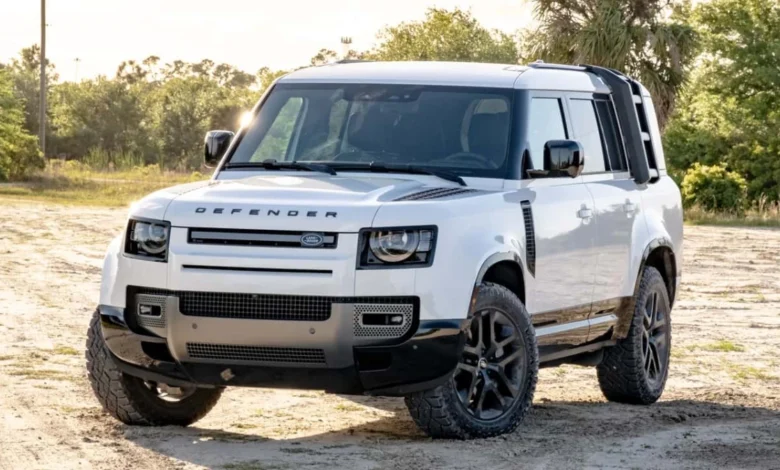
- Land Rover Defender: 5,492 vehicles
- Range Rover Velar: 477 vehicles
- Discovery Sport: 3 vehicles
- Jaguar E-Pace: 3 vehicles
The discrepancy in numbers—ranging from over 11,000 affected Range Rover Sports to just three units of the Discovery Sport and E-Pace—suggests that the issue is tied to specific production batches or software configurations rather than a systemic, across-the-board hardware failure in all units built within these model years.
Chronology of the Recall Process
The discovery and subsequent rectification process follows a standard regulatory timeline for automotive safety recalls. Jaguar Land Rover first identified the potential for this failure through its internal quality control and data monitoring systems. Upon verifying that the DC-to-DC converter software could cause the power loss described, the company initiated the process of notifying the NHTSA.
Owners of the affected vehicles are scheduled to receive formal notification via first-class mail by November 13, 2024. This timeline allows JLR to coordinate with its authorized dealership network to ensure that service departments are prepared to handle the influx of vehicles requiring the update.
For the vehicle owner, the process is notably straightforward. Unlike mechanical recalls that may require the replacement of engine components, suspension parts, or physical wiring harnesses, this issue is addressed through a software update. By recalibrating the firmware governing the DC-to-DC converter, technicians can ensure the system remains stable and that voltage distribution is managed correctly under all operating conditions. Dealers are instructed to perform this update at no cost to the consumer.
Broader Industry Context and Reliability
Electrical issues have historically been a sensitive subject for British automotive manufacturers. The historical perception—often jokingly attributed to the defunct Lucas Electronics company—has lingered in the automotive enthusiast community for decades. However, modern automotive engineering has moved far beyond the mechanical switches and analog wiring of the 20th century. Today’s vehicles are essentially mobile supercomputers, relying on complex software stacks and sophisticated power electronics to manage everything from engine timing to driver-assistance systems.
This transition to "software-defined vehicles" means that recalls are increasingly focused on firmware rather than hardware. While a software-based recall is often easier to implement and less intrusive for the owner, it highlights the increasing complexity of vehicle maintenance. As manufacturers move toward over-the-air (OTA) updates, the industry expects that future recalls of this nature will eventually be resolved without the owner ever having to visit a physical dealership. For the current cohort of affected JLR vehicles, however, a visit to the service center remains a necessary step to ensure compliance with safety standards.
Implications for Owners
For owners currently operating one of the affected models, the advice from safety experts and the manufacturer is to monitor the vehicle for any warning lamps or unusual messages on the driver display. While the failure is described as a "loss of power," it is rarely instantaneous; the vehicle typically provides warnings before the electrical system reaches a critical state.
If a vehicle displays a "Battery Not Charging" or "Electrical System Fault" warning, it is recommended that the driver pull over in a safe location as soon as possible and contact JLR roadside assistance or a local dealership. Owners can also proactively check their vehicle’s status by entering their 17-digit Vehicle Identification Number (VIN) into the official NHTSA recall search tool or the JLR recall portal.
Summary of Safety Measures
The recall highlights the importance of the manufacturer’s obligation to maintain system integrity throughout the vehicle’s lifecycle. By acting before a widespread failure occurs in the field, Jaguar Land Rover is attempting to mitigate the risk of mid-drive stalls, which pose a significant safety risk on highways.
The simplicity of the fix—a software patch—is a positive development for those who might be concerned about the integrity of their vehicles. It suggests that the hardware itself is robust, and the issue is limited to the logic governing the power conversion. As the industry continues to integrate more electrification into traditional internal combustion platforms, these types of voltage-management updates are likely to become a more common feature of vehicle ownership.
For now, the roughly 23,000 owners impacted by this notice have a clear path to resolution. By ensuring the software is updated before the November deadline, they can maintain the reliability and safety standards expected of the brand. Consumers who have questions regarding their specific vehicle or who wish to schedule an appointment ahead of the formal notice can contact the JLR customer service line at 800-637-6837, where representatives are prepared to cross-reference VINs and assist with the booking process.
This recall serves as a reminder of the delicate balance between high-performance electronic architecture and long-term vehicle stability. While the "ghosts" of electrical issues past may provide fodder for industry humor, the modern reality is one of data-driven safety and proactive software management, ensuring that even the most complex mechanical systems remain under the control of the driver.