BYD Set to Launch the Great Han EV on October 13 With Over 1,000 Kilometers of Range and Ultra-Fast Flash Charging

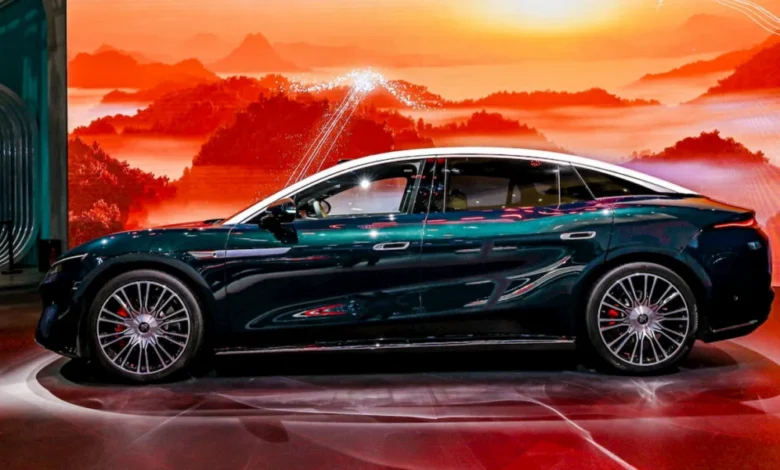
Electric vehicle manufacturing giant BYD is preparing to officially launch its highly anticipated flagship electric sedan, the Great Han (known as the Da Han in domestic Chinese markets), on October 13. This milestone vehicle represents a significant leap forward for the company’s Dynasty family, introducing its first-ever D-segment full-size flagship sedan. Promising a combination of immense driving range, lightning-fast charging architectures, and high-end luxury amenities at a competitive price point, the Great Han is poised to disrupt the upper echelons of the global electric vehicle market. Pre-orders for the vehicle officially opened on August 21 at the Chengdu Auto Show, signaling a robust consumer interest and setting the stage for what industry analysts expect to be a fiercely contested luxury EV landscape.
Main Facts and Specifications of the Great Han Lineup
The Great Han will be available in three distinct variants, catering to consumers seeking either maximized range or high-performance all-wheel-drive dynamics. The lineup is divided into two rear-wheel-drive (RWD) options—the Premium and the Flagship—and one high-powered all-wheel-drive (AWD) variant.
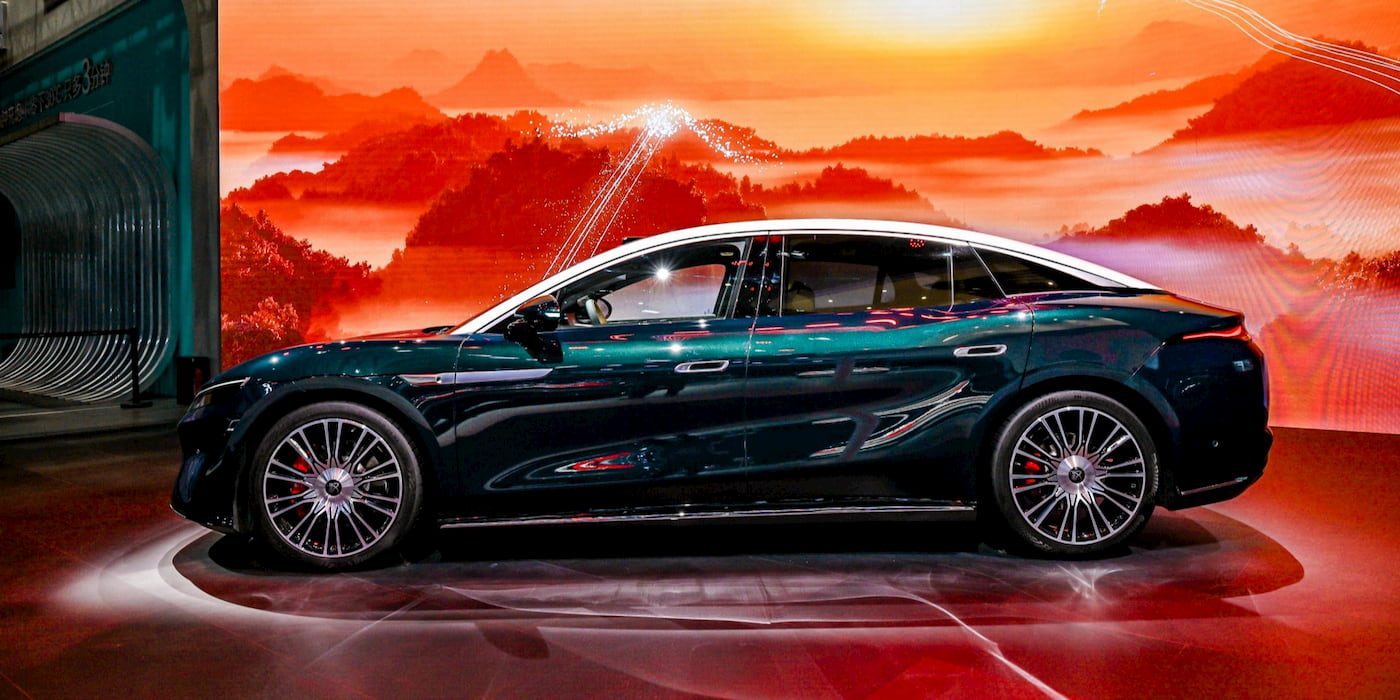
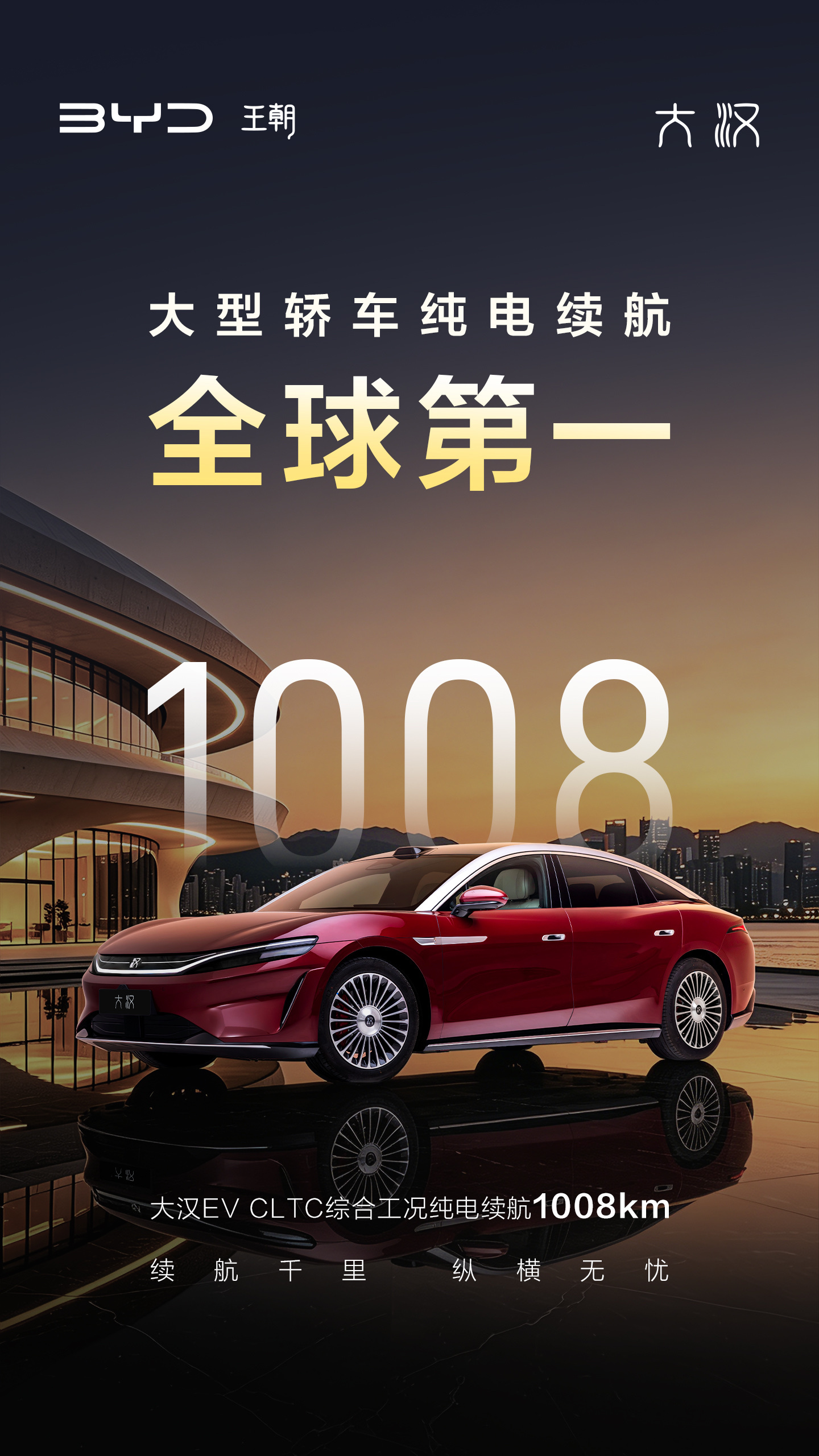
The RWD Premium and Flagship models start at 249,900 yuan (approximately $37,200 USD) and 269,900 yuan (approximately $40,200 USD), respectively. Both rear-wheel-drive trims utilize a single electric motor capable of outputting 370 kilowatts, which translates to an impressive 496 horsepower. Powered by a substantial 102.326 kWh battery pack, these variants achieve a remarkable CLTC (China Light-Duty Vehicle Test Cycle) driving range of up to 1,008 kilometers, equivalent to approximately 626 miles on a single charge.
For buyers prioritizing performance, the AWD variant introduces an additional front electric motor, elevating the combined output to an astonishing 570 kW, or 764 horsepower. While the AWD version retains the identical 102.326 kWh battery pack found in its RWD counterparts, the increased energy draw from the dual-motor configuration results in a slightly reduced, yet still exceptional, CLTC range of 880 kilometers (546 miles).
At the core of the Great Han’s engineering is BYD’s next-generation Blade Battery 2.0 paired with advanced Flash Charging technology. Utilizing a 1,500 kW ultra-fast charging architecture, the sedan can replenish its battery from 10% to 70% in a mere five minutes. Furthermore, a full charge from 10% to 97% requires only nine minutes, addressing one of the most persistent consumer anxieties regarding long-distance electric vehicle travel.
Chronology and Development Timeline
The journey toward the commercial release of the Great Han has been meticulously paced by BYD’s product development divisions. The vehicle first surfaced in the public consciousness in June, when it appeared in a routine batch of new energy vehicles approved for sale by China’s Ministry of Industry and Information Technology (MIIT). This regulatory disclosure provided automotive enthusiasts and market analysts with their first sneak peek into the scale and technical specifications of BYD’s upcoming flagship sedan.
Following the MIIT leak, momentum accelerated quickly through the summer months. On August 21, during the prominent Chengdu Auto Show, BYD officially opened pre-orders for the Great Han, confirming its baseline pricing and initial variant structure. Lu Tian, the general manager of BYD’s Dynasty series, subsequently solidified the rollout schedule, officially announcing that the vehicle would hold its formal launch event on October 13. This tight timeline underscores BYD’s manufacturing efficiency and its ability to transition vehicles from regulatory approval to consumer availability in rapid succession.
Dimensions and Luxury Appointments
In terms of physical footprint, the Great Han dwarfs many of its established competitors in the premium electric sedan segment. Measuring 5,256 millimeters in length, 1,999 millimeters in width, and 1,510 millimeters in height, with a generous wheelbase of 3,130 millimeters, the vehicle surpasses the physical dimensions of both the Tesla Model S and the Lucid Air. In terms of size, it occupies a bracket closer to a long-wheelbase Mercedes-Benz S-Class, offering executive-level interior volume and road presence.

Mirroring the philosophy seen in its stablemate, the Great Tang SUV, BYD has ensured that the Great Han comes heavily equipped with standard luxury features. The sedan utilizes BYD’s proprietary DiSus-A dual-chamber air suspension system, designed to dynamically adjust ride comfort and body control across varying road surfaces. Maneuverability at low speeds and stability at high velocities are enhanced through integrated rear-wheel steering. Inside the cabin, occupants are treated to zero-gravity front seats engineered to reduce fatigue during long-distance journeys.
Technology and Autonomous Driving Capabilities
Beyond raw performance and physical luxury, the Great Han serves as a showcase for BYD’s most advanced software and driver-assistance engineering. All variants of the flagship sedan come equipped with the company’s proprietary "God’s Eye B" smart driving system. This advanced driver-assistance system (ADAS) suite incorporates sophisticated features such as Navigation on Autopilot (NOA), automated lane changes, and advanced remote parking capabilities, positioning the vehicle to compete directly with global leaders in autonomous driving software.
Broader Industry Impact and Strategic Implications

The introduction of the Great Han marks a critical juncture in BYD’s corporate strategy. While the company has historically dominated the mass-market and affordable segments of the electric vehicle sector, recent quarters have seen a calculated and aggressive push into higher-end vehicle categories. Following the successful introduction of the Great Tang SUV and a slate of luxury-oriented offerings under its specialized Denza brand, the Great Han solidifies BYD’s transition into a comprehensive automaker capable of competing across every price point and vehicle class.
Market analysts note that the pricing strategy for the Great Han—starting at approximately $37,200 USD—presents a formidable challenge to both domestic and international competitors. By offering hyper-extended range capabilities exceeding 1,000 kilometers, ultra-fast charging times under ten minutes, and executive-level dimensions at a fraction of the cost of Western luxury EVs, BYD is effectively redefining value propositions in the D-segment.
As the October 13 launch date approaches, industry observers will be closely monitoring order conversion rates and initial delivery schedules. The success of the Great Han will not only validate BYD’s technological investments in Blade Battery 2.0 and Flash Charging architectures but will also test the global appetite for high-end Chinese electric sedans as they continue to reshape the international automotive paradigm.