Pennsylvania Dedicates $37 Million in Federal NEVI Funds to Add 515 Public EV Charging Ports Across the Greater Philadelphia Region

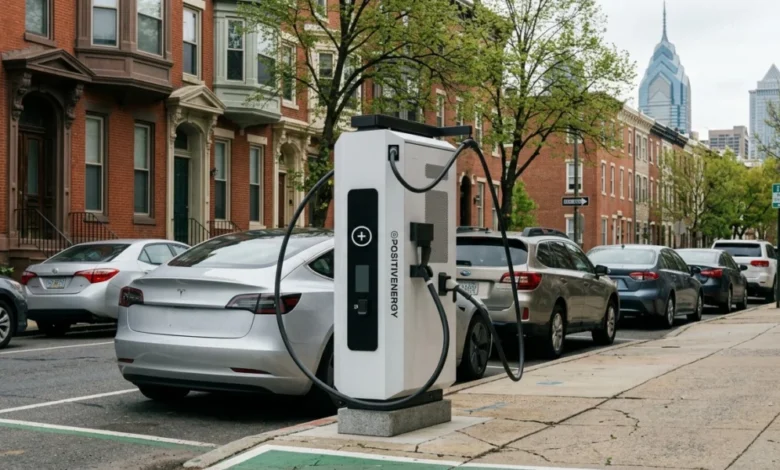
The Commonwealth of Pennsylvania is dramatically accelerating its transition toward electric mobility, directing $37 million in federal funding from the National Electric Vehicle Infrastructure (NEVI) program toward the deployment of 515 new public electric vehicle charging ports across the greater Philadelphia metropolitan area. Announced by the Pennsylvania Department of Transportation (PennDOT), this sweeping regional infrastructure initiative encompasses Bucks, Chester, Delaware, Montgomery, and Philadelphia counties, representing a significant stride in addressing the growing demand for accessible, reliable electric vehicle (EV) supply equipment (EVSE).
According to state transportation officials, this latest allocation of capital will expand overall public charging availability by 27% across the five-county region. Crucially, the urban core of Philadelphia will witness a staggering 53% surge in charging capacity, directly confronting historical infrastructure deficits that have long discouraged urban residents without private garages or dedicated driveways from purchasing electric vehicles.
The funding deployment reflects a meticulously planned strategy to balance high-speed corridor charging with hyper-local, neighborhood-based accessibility. By pairing curbside Level 2 chargers with strategic DC fast-charging installations in municipal parking lots and commercial hubs, Pennsylvania is setting a national benchmark for equitable and comprehensive EV infrastructure rollout.
Bridging the Urban Charging Gap Through Curbside Innovation
A primary hurdle for urban EV adoption has consistently been the lack of off-street parking. Residents living in row homes, apartments, or dense urban neighborhoods frequently lack driveways where they can install home Level 2 chargers, leaving them reliant on scarce public infrastructure or commercial stations that may be miles away from their residences.
To mitigate this barrier, a substantial portion of the newly awarded funds is dedicated exclusively to curbside charging solutions. Companies specializing in on-street infrastructure are poised to transform the urban streetscape. Notably, It’s Electric PA has been awarded $2.93 million to deploy 157 on-street Level 2 charging ports distributed strategically across 13 distinct Philadelphia neighborhoods. Meanwhile, Voltpost has secured additional funding to install 62 curbside ports spanning the four surrounding suburban counties.
These installations will allow residents to park and plug in overnight or during extended periods near their homes, mimicking the convenience of residential garage charging for urban dwellers. The integration of curbside chargers into municipal planning marks a paradigm shift in how cities accommodate zero-emission transportation, integrating energy distribution directly into the public right-of-way.

Expanding Fast-Charging Networks and Commercial Partnerships
While curbside Level 2 chargers address overnight and long-dwell-time charging needs, the initiative also places heavy emphasis on rapid replenishment. Fast-charging infrastructure remains vital for commercial fleets, rideshare drivers, and motorists undertaking longer journeys through the metropolitan area.
To meet this demand, PositivEnergy has been awarded $7.2 million to install 54 direct current (DC) fast-charging ports across 11 Philadelphia Parking Authority (PPA) lots. These centralized locations will provide drivers with high-power charging capabilities in secure, accessible municipal spaces.
In addition to municipal and startup initiatives, major private-sector charging operators are scaling up their footprint. Tesla has received two separate awards of $392,000 each, totaling 16 new fast-charging ports split evenly between a Royal Farms location in Broomall, Delaware County, and a Wawa facility in Plymouth Meeting, Montgomery County. The involvement of established convenience retail chains underscores the symbiotic relationship between commercial businesses and EV infrastructure, as retailers increasingly recognize that providing charging amenities drives customer foot traffic and extended dwell times.
The Evolution and Impact of the Federal NEVI Program
The financial engine driving Pennsylvania’s EV expansion is the National Electric Vehicle Infrastructure program, established under the landmark Bipartisan Infrastructure Law enacted by the Biden administration. The overarching federal program aims to build a nationwide network of 500,000 public EV chargers, reducing range anxiety and facilitating seamless interstate electric travel.
Pennsylvania’s total five-year allocation under the NEVI program stands at $171.5 million. Initially, federal guidelines mandated that states focus exclusively on building fast-charging infrastructure along designated alternative fuel highway corridors, such as major interstates and federal highways. States were permitted to pivot toward broader community-based charging programs only after the Federal Highway Administration formally certified that their respective corridor requirements had been fully satisfied.
Pennsylvania achieved this crucial corridor certification on September 22, 2025, clearing the path for community-centric investments. Demonstrating exceptional administrative efficiency and implementation speed, the commonwealth has already constructed 54 EV charging stations utilizing NEVI funds—a figure that outpaces any other state in the nation by a factor of two.

Stringent State Standards for Public Charging Infrastructure
To ensure that taxpayer funds yield resilient, user-friendly, and future-proof infrastructure, PennDOT has established rigorous minimum operational and technical requirements for all projects receiving community charging grants.
Under published program guidelines, every proposed station must feature a minimum of four charging ports to minimize wait times and accommodate multiple vehicles simultaneously. Furthermore, each port must deliver at least 6 kW of power to guarantee efficient energy transfer. Accessibility is also a cornerstone of the program, requiring every funded station to include at least two ADA-compliant parking spaces, ensuring that drivers with disabilities have unhindered access to charging amenities.
Hardware specifications mandate that every port be equipped with either J1772 or CCS connectors, ensuring broad vehicle compatibility across diverse automotive brands. Additionally, all equipment deployed through the program must strictly adhere to federal "Buy America" provisions, bolstering domestic manufacturing supply chains and ensuring long-term hardware reliability and domestic servicing capabilities.
Comprehensive Statewide Timeline and Future Funding Rounds
The $37 million southeastern regional award represents just one phase of Pennsylvania’s broader $100 million statewide community charging initiative, which encompasses a total of 71 distinct project awards in the Philadelphia metropolitan area alone.
The commonwealth’s rollout is proceeding systematically across regional cohorts. Following the closure of the southeastern application window and subsequent awards, applications for the western region of Pennsylvania closed on November 20. Meanwhile, municipal and private stakeholders in central and eastern Pennsylvania have until March 12, 2027, to submit their funding applications.
For the newly announced southeastern projects, PennDOT has outlined a detailed implementation schedule. Environmental reviews are slated to run from November 2026 through January 2027. Following environmental clearance, project agreements will be formally executed between January and February 2027.

However, motorists must exercise patience. While administrative approvals and funding disbursements are moving forward rapidly, the physical construction, grid interconnection, and final commissioning phases mean that these newly funded ports will take several months to become fully operational and open to the public.
Broader Implications for Air Quality and Economic Development
The rapid deployment of EV infrastructure carries profound implications for Pennsylvania’s economy, public health, and long-term environmental targets. Transportation remains one of the largest sources of greenhouse gas emissions and particulate air pollution in the commonwealth, particularly within dense urban corridors like Philadelphia.
By making electric vehicle ownership viable for residents without private driveways and significantly reducing range anxiety through widespread DC fast charging, these infrastructure investments are expected to accelerate regional EV adoption rates. In turn, lower vehicular emissions will contribute to measurable improvements in local air quality, reducing rates of respiratory illnesses associated with urban tailpipe pollution.
Furthermore, the infusion of federal and state capital stimulates local economic activity. Engineering firms, construction contractors, electrical workers, and equipment manufacturers stand to benefit directly from the engineering, procurement, and construction phases of the 515 new ports. As charging density increases, local businesses situated near charging hubs are anticipated to see secondary economic benefits as EV drivers patronize nearby shops and restaurants while their vehicles recharge.
As Pennsylvania moves closer to completing its multi-year NEVI rollout, the commonwealth is solidifying its position as a national leader in modern transportation infrastructure. Through careful financial stewardship, stringent regulatory standards, and close collaboration with both private industry and municipal partners, PennDOT is building a robust, accessible foundation that will power Pennsylvania’s mobility sector well into the future.
Related posts: