NASA Officially Opens Applications for New Astronaut Class to Pioneer Artemis Lunar Base and Future Mars Missions

The National Aeronautics and Space Administration has officially opened the application window for its next generation of spacefarers, inviting qualified United States citizens to apply for a position in the elite astronaut corps. This newly announced recruitment cycle is designed to select candidates who will directly support the agency’s overarching strategic objectives: returning American astronauts to the lunar surface, establishing a sustainable, long-term Moon Base near the lunar South Pole, and ultimately laying the critical operational and technological groundwork for the first crewed missions to Mars.
The announcement marks a pivotal moment for the agency’s human spaceflight program as it transitions from orbital operations aboard the International Space Station toward deep-space exploration. Interested applicants have until 11:59 p.m. EST on Thursday, December 3, to complete and submit their official application materials through the designated NASA portal at go.nasa.gov/3WyvlQi. Successful candidates chosen during this selection process will undergo an intensive multi-year training regimen at NASA’s Johnson Space Center in Houston, preparing them to operate in deep space, conduct complex lunar geology research, perform intricate spacewalks, and pilot high-performance aircraft.
Historical Context and Evolution of the Astronaut Corps
Since the inception of NASA’s human spaceflight endeavors in the late 1950s and early 1960s with the historic Mercury, Gemini, and Apollo programs, the agency has selected a total of 370 individuals to train as astronaut candidates. Over the decades, the criteria and composition of the astronaut corps have evolved significantly to reflect the changing demands of space exploration. From the initial cadre of military test pilots who first broke the sound barrier to today’s diverse pool of engineers, scientists, physicians, and mission specialists, the corps has remained at the forefront of human technological achievement.
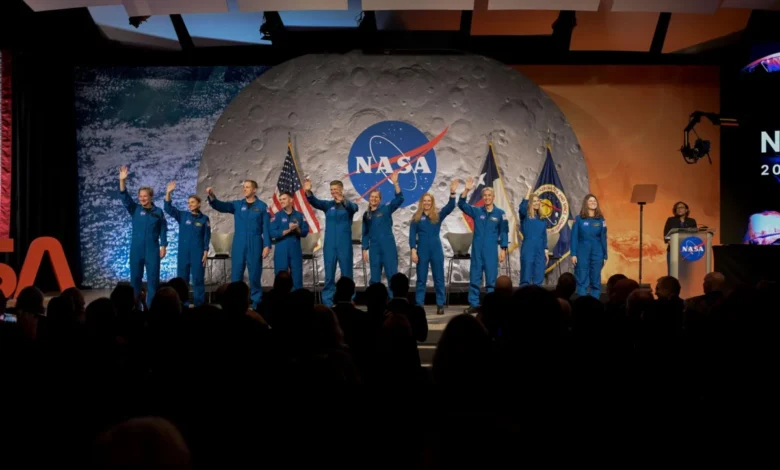
The last open call for astronaut applications occurred in 2024, which generated immense public and professional interest. During that recruitment cycle, NASA received more than 8,000 applications from across the United States. Following a rigorous, months-long evaluation process that tested candidates’ physical endurance, psychological resilience, and intellectual capabilities, the agency selected 10 exceptional astronaut candidates in 2025. These candidates are currently nearing the completion of a demanding two-year training curriculum, mastering everything from robotics and systems operations to Russian language proficiency and spacewalk simulations inside the Neutral Buoyancy Laboratory.
Currently, NASA maintains a lean, active corps of 32 astronauts stationed primarily at the Johnson Space Center. This active roster is responsible for supporting ongoing operations aboard the International Space Station, serving as capsule communicators (CAPCOM) in mission control, and developing the operational procedures for upcoming Artemis missions. The new class of selectees will join these veterans, injecting fresh talent into a workforce tasked with expanding humanity’s permanent footprint beyond low-Earth orbit.
Chronology of the Selection and Training Process
The path from submitting an application to stepping onto the launchpad—or potentially walking on the Moon—is long, rigorous, and selective. The timeline for the current recruitment campaign is structured to ensure that only the most qualified candidates advance through each phase of evaluation:
- Application Period: Applications open immediately and close sharply at 11:59 p.m. EST on Thursday, December 3. Candidates must ensure all educational transcripts, professional histories, and references are accurately submitted through the online portal.
- Initial Screening and Evaluation: Throughout 2026, NASA’s Astronaut Selection Board will review thousands of applications, verifying educational credentials, professional experience, and physical fitness prerequisites.
- Interview and Medical Evaluations: Shortlisted candidates will be invited to the Johnson Space Center for extensive panel interviews, psychological assessments, and comprehensive long-duration astronaut flight physicals.
- Final Selection Announcement: NASA anticipates making its final announcements and extending formal invitations to the new astronaut candidate class in late 2027.
- Candidate Training Program: Selected candidates will report to Houston shortly after selection to begin approximately two years of foundational training, which includes survival training, flight instruction in T-38 jets, geological field training, and technical systems integration.
Leadership Perspectives and Official Statements
Agency leadership has emphasized the historic nature of this recruitment cycle, framing it as an unmissable opportunity for a new generation of scientists and aviators to leave their mark on history.
"This is an extraordinary time to join NASA’s astronaut corps," said NASA Administrator Jared Isaacman. "The people we select could walk on the Moon, live and work at the Moon Base, and help pioneer the systems and operations that will ultimately carry crews to Mars. Those missions will demand technical excellence, sound judgment, teamwork, and courage. NASA’s astronaut corps has always called on remarkable Americans willing to take on extraordinary challenges in service to the nation. If you are ready to join that tradition, come help write the next chapter of humanity’s greatest adventure."
Echoing these sentiments, NASA Deputy Administrator Matt Anderson underscored the direct role that applicants will play in shaping the future of space exploration. "The window is open. The mission is waiting. And the only thing missing from the greatest adventure humanity has ever embarked upon is you," Anderson remarked.
Scott Tingle, chief astronaut and chair of the Astronaut Selection Board at the Johnson Space Center, highlighted the profound personal and professional impact of entering the corps. "For those who apply, becoming a NASA astronaut is more than a career opportunity," Tingle stated. "It is a chance to join a legacy of explorers who have pushed the boundaries of discovery and play a role in the missions that will shape humanity’s future in space. The next generation of astronaut candidates could help write history while inspiring future scientists, engineers, and explorers."
Strict Eligibility and Qualification Requirements
To be considered for the NASA astronaut corps, applicants must meet stringent academic, professional, and physical standards designed to ensure they can endure the physical and mental demands of spaceflight.
The foundational eligibility criteria include:
- Citizenship: Applicants must be United States citizens. Dual citizenship is permissible, but applicants must be prepared to navigate security clearance procedures associated with federal employment and national security space operations.
- Educational Attainment: Candidates must hold a master’s degree from an accredited institution in a science, technology, engineering, or mathematics (STEM) field. Acceptable disciplines include engineering, biological science, physical science, computer science, or mathematics.
- Alternative Educational Pathways: The master’s degree requirement can also be fulfilled through specific alternative milestones, such as holding a Doctor of Medicine (M.D.) or Doctor of Osteopathic Medicine (D.O.) degree, completing a nationally recognized test pilot school program, or achieving doctoral candidacy in a related STEM field.
- Professional Experience: Applicants must possess a minimum of three years of related, progressively responsible professional experience gained after the completion of their qualifying degree. Alternatively, candidates may present a significant record of high-performance flight experience, including specific hours logged as pilot-in-command in jet aircraft. For medical doctors, approved residency training programs count toward the professional experience requirement, provided they are completed by July 2027.
- Physical Readiness: Every candidate must successfully pass the stringent NASA long-duration astronaut flight physical, which evaluates cardiovascular health, visual acuity, neurological stability, and musculoskeletal endurance.
In addition to technical competence and physical stamina, NASA places immense emphasis on behavioral characteristics. Candidates must demonstrate exceptional interpersonal skills, cross-cultural communication abilities, leadership capability, and the capacity to function effectively within small, highly cohesive teams operating under extreme pressure and isolation.
Broader Economic, Scientific, and Geopolitical Implications
The recruitment of this new astronaut class is not merely an internal human resources exercise for the space agency; it is a critical component of a broader national strategy involving commercial aerospace partners, international allies, and scientific institutions.
As part of the ongoing Artemis campaign, NASA is shifting from a model of temporary exploration to one of sustainable habitation. The establishment of the Moon Base near the lunar South Pole will serve as a permanent outpost for scientific research, resource utilization—such as extracting water ice for life support and propellant manufacturing—and technology testing. The operational lessons learned on the lunar surface will directly inform the architecture of future crewed missions to Mars, which will require months of transit time, autonomous medical care, and robust life-support recycling systems.
Furthermore, the expansion of human spaceflight generates significant economic ripple effects. The development of advanced life support systems, extravehicular mobility units (spacesuits), lunar habitats, and deep-space transport vehicles stimulates research and development across the American industrial base. Universities, technology startups, and established aerospace contractors all contribute to the ecosystem required to support these ambitious endeavors, driving innovation that frequently translates into terrestrial benefits, including medical advancements, water purification technologies, and materials science breakthroughs.
As global interest in space exploration accelerates, with multiple space agencies and private commercial entities turning their attention to the Moon and Mars, NASA’s astronaut selection process remains the gold standard for professional spacefaring. For those who possess the requisite academic pedigree, professional discipline, and personal courage, the open application window represents an unprecedented invitation to step off the surface of the Earth and help chart the future course of human history.
For comprehensive details regarding the application instructions, required documentation, and a deeper look into the daily life of a NASA astronaut, prospective candidates are encouraged to visit the official portal at go.nasa.gov/astro2026.