The automotive landscape is undergoing a profound structural transformation, driven by relentless advancements in battery chemistry, thermal management, and electrical architecture. For years, the psychological barrier of range anxiety has remained one of the primary deterrents for mainstream consumers contemplating a transition to battery-electric vehicles (BEVs). However, recent real-world evaluations are challenging the traditional assumptions associated with electric mobility. A striking testament to this engineering evolution arrived when the overhauled 2027 Mercedes-Benz EQS 450+ shattered expectations during a rigorous industry evaluation, covering an astonishing 539 miles on a single charge without pausing to replenish its energy reserves.
This extraordinary performance not only eclipses the vehicle’s official Environmental Protection Agency (EPA) estimates by a substantial margin but also redefines the competitive boundaries of the luxury electric sedan segment. As legacy automakers and pure-play electric vehicle manufacturers race to deliver superior efficiency, the latest milestone achieved by Mercedes-Benz signals that long-distance, zero-emission touring is no longer a distant aspiration, but a tangible present-day reality.
The Engineering Overhaul Behind the Range Breakthrough
The remarkable longevity demonstrated by the 2027 Mercedes-Benz EQS 450+ is not a stroke of serendipity; it is the direct result of a comprehensive mechanical and electrical redesign. Recognizing the necessity to stay ahead in an intensely competitive global market, Mercedes-Benz engineers subjected the flagship EQS electric sedan to a thorough modernization program.
At the core of this overhaul is the integration of a massive, high-density 122 kWh battery pack, paired with an advanced 800-volt electrical architecture. Transitioning from traditional 400-volt systems to an 800-volt framework yields critical operational advantages. Higher voltage architectures significantly reduce electrical resistance losses during high-output driving and enable dramatically faster charging speeds by minimizing thermal buildup. Furthermore, the meticulous optimization of the vehicle’s aerodynamics, rolling resistance, and permanent-magnet synchronous motors plays an instrumental role in maximizing every kilowatt-hour stored within the energy cells.

Under standardized EPA testing protocols, the 2027 Mercedes-Benz EQS 450+ is officially rated for up to 467 miles of driving range. While this figure already positions the vehicle near the upper echelon of the global EV market, real-world evaluations consistently provide a more nuanced perspective on how these machines perform under mixed driving conditions that mirror daily consumer usage.
Decisive Results from the Edmunds EV Range Test
The true capabilities of the refreshed EQS sedan were vividly illustrated during a recent evaluation conducted as part of the Edmunds EV Range Test. This standardized testing protocol is specifically designed to simulate everyday driving environments by implementing a carefully balanced route consisting of approximately 60 percent city driving and 40 percent highway transit. To maintain rigorous scientific consistency, test vehicles are driven at an average speed of 40 miles per hour, strictly adhering to posted speed limits within a five-mph tolerance, while interior climate control systems are standardized to an automatic setting of 72 degrees Fahrenheit.
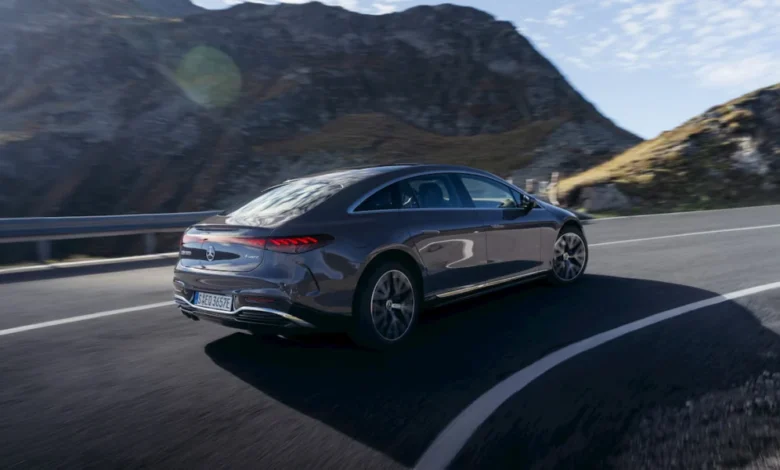
During this grueling evaluation, the 2027 Mercedes-Benz EQS 450+ pushed past its official ratings to achieve a monumental driving distance of 539 miles on a single charge. This exceptional performance meant the luxury sedan outperformed its own EPA estimate by an impressive 72 miles.
In doing so, the EQS 450+ claimed the title of the longest-range electric sedan ever evaluated by the publication. It surpassed the Lucid Air, which historically pioneered the milestone of breaking the coveted 500-mile threshold in similar testing environments. Within the broader landscape of all battery-electric vehicles tested by the organization, the EQS is currently second only to the Cadillac Escalade IQ—a massive utility vehicle that relies on a sprawling 205 kWh battery pack to achieve 558 miles.
Beyond raw distance, the efficiency metrics recorded during the test were equally compelling. The new EQS consumed energy at a rate of 29.6 kWh per 100 miles, outperforming its official EPA energy consumption estimate of 28 kWh per 100 miles in certain operational profiles, while demonstrating vast improvements over its predecessor. For context, the 2025 model year Mercedes EQS 450+ managed 464 miles during identical testing while consuming 34 kWh per 100 miles, underscoring a generational leap in powertrain efficiency and energy management.

Charging Performance and Infrastructure Synergy
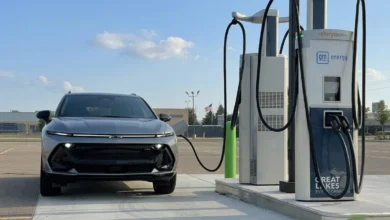
Range capability is only one component of the modern electric vehicle equation; the speed and efficiency with which a vehicle can replenish its energy reserves are equally vital to the consumer experience. Alongside its extended range, the 2027 Mercedes-Benz EQS 450+ demonstrated significant improvements in its DC fast-charging performance.
During the evaluation, the vehicle achieved a peak charging rate of 350 kW, matching the manufacturer’s engineering projections. More importantly, the vehicle sustained an impressive average charging rate of 222 kW throughout the refueling session. This represents a substantial performance enhancement compared to the previous iteration of the EQS, which recorded a peak charging rate of 208 kW and a sustained average of 175 kW.
Expressed in practical terms, these charging dynamics translate to exceptional journey-time efficiency. The updated EQS 450+ demonstrated the capability to recover approximately 825 miles of range in a single hour of charging. More strikingly, the vehicle could absorb enough energy to travel 100 miles in just over seven minutes—effectively cutting the replenishment time of the preceding model year in half. As public high-power charging networks continue to expand and mature, these technological strides ensure that long-distance travel in an electric vehicle increasingly mirrors the convenience of traditional liquid-fueled automobiles.
Comparative Context Within the Luxury EV Segment
The impressive performance of the EQS 450+ does not exist in a vacuum. Recent evaluations across the broader automotive sector indicate that substantial efficiency gains are rapidly cascading across multiple vehicle segments and competing luxury marques.
In the same evaluation window, the newly introduced 2027 BMW iX3 50 xDrive astonished observers by covering 436 miles on a single charge during real-world testing, exceeding its official 392-mile EPA rating by 44 miles while maintaining an efficiency of 28.3 kWh per 100 miles. Similarly, new market entrants such as the 2027 Volvo EX60 and the 2027 Mercedes-Benz GLC Electric demonstrated competitive real-world ranges of 352 miles and 392 miles, respectively.

These concurrent achievements highlight a broader industry trend: automakers are no longer relying solely on brute-force methodology—such as installing exponentially larger and heavier battery packs—to achieve high driving ranges. Instead, the focus has shifted toward holistic vehicle optimization, encompassing advanced semiconductor materials like silicon-carbide in power electronics, enhanced regenerative braking systems, and sophisticated thermal management loops that minimize parasitic energy losses.
Consumer Perception and the Psychology of Range
Despite these engineering triumphs, a fascinating dichotomy persists between consumer expectations and actual daily driving requirements. Industry surveys consistently reveal that consumer demand for battery range is frequently driven by psychological comfort rather than pragmatic necessity.
A nationally representative study conducted by the BMW Group in the United States sheds considerable light on this phenomenon. The survey indicated that approximately 73 percent of American drivers consider a daily driving range of 25, 50, or 75 miles to be entirely sufficient to cover their routine weekday commuting and errand-running needs. However, when asked about purchasing criteria, 42 percent of respondents maintained that they would require an absolute minimum of 300 miles of driving range before considering the transition to a battery-electric vehicle.
This psychological threshold explains why manufacturers continue to prioritize extended-range flagships like the EQS 450+. Even though the vast majority of daily trips fall well below 50 miles, consumers demand the insurance of a 400-plus or 500-plus-mile capability to alleviate anxiety surrounding infrequent long-distance road trips. Furthermore, the survey data points toward charging infrastructure and charging velocity as the ultimate catalysts for market adoption. Over half of the respondents—roughly 53 percent—indicated they would be significantly more inclined to purchase an electric vehicle if it possessed the capability to replenish 150 miles of range in approximately 10 minutes.
Broader Economic and Environmental Implications
The rapid acceleration of EV efficiency and range capabilities carries profound implications for both the global automotive industry and environmental policy objectives. As battery chemistry continues to evolve—with solid-state batteries, advanced silicon anodes, and cobalt-free cathodes on the horizon—the energy density-to-weight ratio of electric vehicles is poised for another quantum leap.

For luxury manufacturers like Mercedes-Benz, maintaining a technological leadership position in flagship models such as the EQS serves as a vital proving ground. Technologies pioneered in high-end luxury sedans inevitably trickle down to higher-volume, more affordable vehicle segments over time, democratizing high-efficiency electric mobility for the wider public.
Moreover, vehicles capable of exceeding 500 miles on a single charge effectively neutralize the logistical hurdles historically associated with commercial fleets and long-distance transport. By reducing the frequency and duration of required charging stops, these advancements lower the barrier to entry for consumers who lack access to home-charging infrastructure, relying instead on public charging depots during weekly routines.
Ultimately, the performance of the 2027 Mercedes-Benz EQS 450+ in real-world testing marks a watershed moment for electric vehicle engineering. By effortlessly surpassing the 500-mile threshold while delivering blistering charging speeds and superlative energy efficiency, the vehicle provides a compelling preview of a future where range anxiety is rendered entirely obsolete. As competition intensifies and technological refinements proliferate throughout the global supply chain, the transition toward a fully electrified transportation ecosystem continues to gain unstoppable momentum.