Critical NASA Deep Space Network Madrid Complex Offline Due to Wildfires, Compounding Strain on Global Communication Array

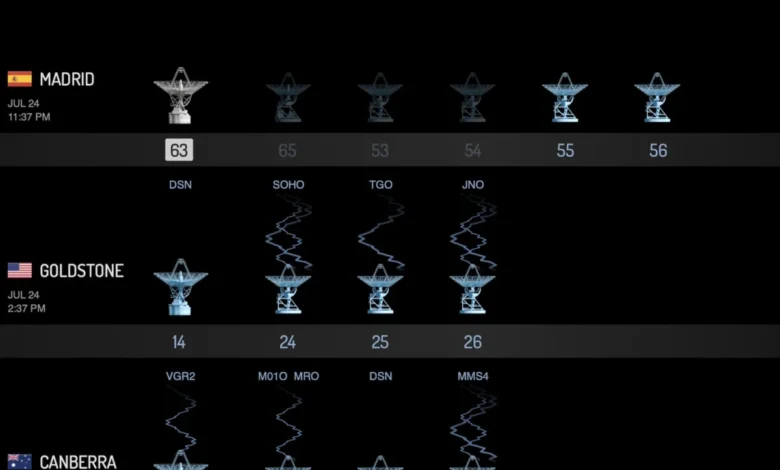
The Madrid Deep Space Communications Complex (MDSCC), a vital component of NASA’s Deep Space Network (DSN), ceased operations on Friday afternoon, July 24, 2026, due to severe wildfires raging through the mountains west of Madrid. This unexpected shutdown places unprecedented strain on the DSN, which is already operating under reduced capacity following an accident that rendered its primary 70-meter antenna at the Goldstone complex in California inoperoperable last year. With two of its three global sites now compromised, NASA’s ability to maintain continuous, high-bandwidth communication with its far-flung robotic explorers, including the interstellar Voyager 2 and Jupiter-orbiter Juno, is severely challenged, forcing a reliance on the sole operational 70-meter antenna in Canberra, Australia. The situation underscores the vulnerability of critical space infrastructure to terrestrial events, particularly in an era of escalating climate-related disasters.
The Global Lifeline to Deep Space: Understanding the DSN
The Deep Space Network is the largest and most sensitive scientific telecommunications system in the world, essential for navigating and communicating with uncrewed spacecraft exploring the solar system and beyond. Established in 1963, the DSN comprises three strategically located complexes, each roughly 120 degrees of longitude apart, ensuring continuous communication with spacecraft as Earth rotates. These complexes are situated in Goldstone, California (USA); near Madrid, Spain; and near Canberra, Australia. This geographical distribution allows for uninterrupted data reception and transmission, a critical requirement for missions that can last decades and send data from billions of kilometers away. Each complex houses multiple antennas, ranging from smaller 34-meter dishes to the colossal 70-meter dishes, which are the workhorses for deep space communication, capable of detecting faint signals from the farthest reaches of space.
The 70-meter antennas are particularly crucial. With their immense size and sensitivity, they are the only dishes capable of tracking and receiving data from the most distant missions, such as the Voyager probes, which are now in interstellar space, or New Horizons, which is exploring the Kuiper Belt. Their high gain allows them to both transmit powerful commands to spacecraft and capture extremely weak signals returning from the solar system’s frontiers. The DSN’s operational capacity is paramount for mission success, enabling spacecraft health monitoring, command uploads, software updates, and the downlink of invaluable scientific data, from high-resolution images of distant planets to atmospheric readings and gravitational field measurements.
Wildfires Force Evacuation of Madrid Complex
The Madrid Deep Space Communications Complex (MDSCC), also known as Robledo de Chavela, is located approximately 60 kilometers west of Madrid, nestled within a region prone to summer wildfires. On Friday afternoon, July 24, 2026, local authorities, responding to rapidly spreading blazes, issued evacuation orders for communities surrounding the complex, prompting NASA to cease all activity and ensure the safety of its personnel. A NASA website providing real-time status updates on DSN complexes quickly reflected the shutdown, showing no activity at the Madrid site, while its counterparts in California and Australia continued to operate.
"The safety and well-being of our personnel is our highest priority and our thoughts are with the families and neighbors who are also experiencing the impact of the wildfires in the surrounding communities," NASA stated in an official release. "We will provide updates as conditions evolve." This statement underscores the immediate humanitarian concern driving the complex’s closure, prioritizing human life over operational continuity. The decision to evacuate was a direct response to the encroaching firelines, which posed an imminent threat to staff and infrastructure.
A Region Under Siege: The Wildfire Crisis in Spain
The wildfires gripping central Spain are part of a broader, intensifying crisis across Southern Europe, fueled by a combination of extreme heatwaves and chronic drought conditions. The summer of 2026 has seen record-breaking temperatures across the Iberian Peninsula and France, creating tinderbox conditions in forests and scrublands. Reuters reported on Friday that Spanish authorities had ordered the evacuation of more than 19,000 people from towns in the mountains west of Madrid alone, highlighting the scale of the emergency. The fires have forced thousands to abandon their homes, causing widespread disruption and significant property damage.
The emergency response has been massive, with over 2,000 personnel, including firefighters, military units, and emergency medical teams, deployed to combat the infernos. More than 10 aircraft, including water-bombing planes and helicopters, have been continuously operating to douse the flames and create firebreaks. However, strong winds and the rugged terrain have made containment exceedingly difficult. Experts point to climate change as a significant exacerbating factor, leading to longer and more intense heatwaves, reduced rainfall, and increased aridity, all of which contribute to a heightened risk and severity of wildfires. This current crisis is not an isolated incident but rather a continuation of a worrying trend of increasing wildfire frequency and intensity observed across the Mediterranean region in recent years.
ESA’s Estrack Network Also Affected
Adding to the regional impact on space communication infrastructure, a separate deep space tracking station owned and operated by the Spanish government and the European Space Agency (ESA) was also evacuated due to the wildfires. The Cebreros tracking station, an integral part of ESA’s Estrack network, is located just a few miles from NASA’s DSN facility. Spanish news reports confirmed the evacuation, illustrating the widespread threat posed by the wildfires to critical scientific installations in the region.
The Estrack network, much like NASA’s DSN, provides essential communication links for ESA’s missions, including Mars Express, BepiColombo (Mercury), and Gaia (astrometry mission). The temporary shutdown of Cebreros, coupled with the Madrid DSN complex, represents a significant, albeit localized, curtailment of Europe’s and the world’s deep space communication capabilities. While both agencies possess other stations in their respective networks, the loss of these two key facilities in close proximity underscores the vulnerability of such crucial infrastructure to environmental hazards.
Compounding Challenges: The Goldstone Outage
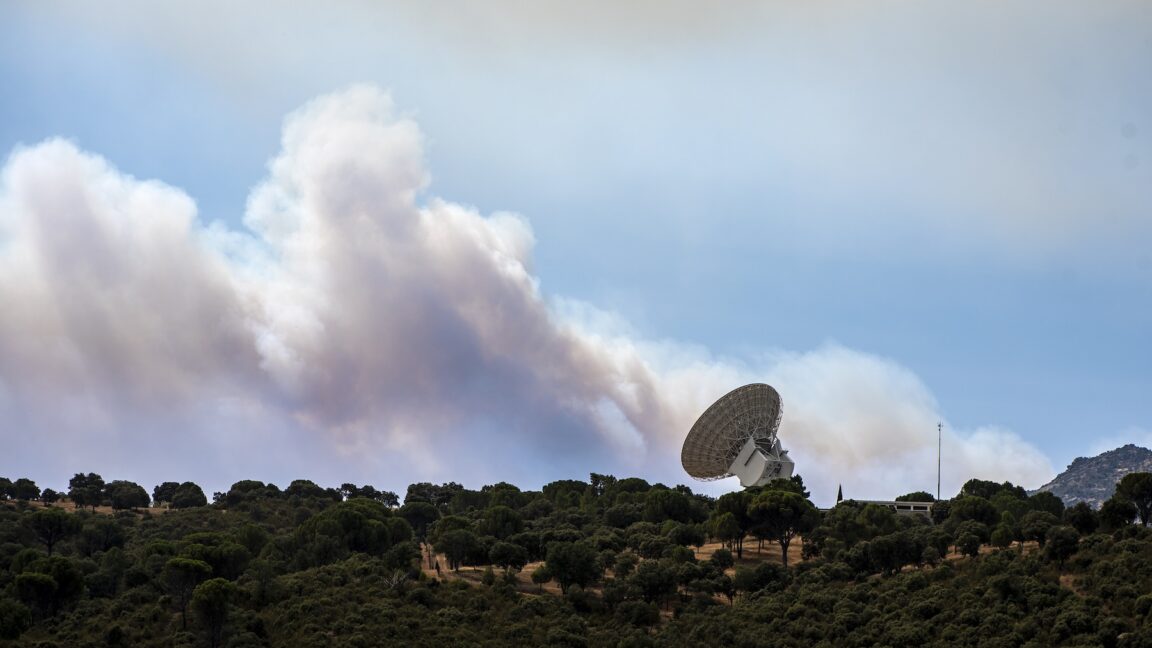
The operational crisis at Madrid comes at a particularly challenging time for the Deep Space Network. The 70-meter radio antenna at the Goldstone complex in California, known as DSN-14, has been offline since last year following a severe incident. The antenna, a massive structure weighing hundreds of tons, suffered an "over-rotation" during routine operations. This mechanical malfunction caused significant damage to critical internal components, including numerous cables and water lines essential for its cooling and operation.
The incident resulted in a substantial leak, flooding the base of the antenna with approximately 200,000 gallons of water containing glycol, a chemical coolant and an environmental hazard. The cleanup operation alone was complex and time-consuming, requiring careful mitigation of the glycol contamination. NASA officials have estimated the cost of cleanup and repair to be between $4.1 million and $4.6 million. Recognizing the opportunity, NASA has decided to combine these necessary repairs with already-planned upgrades to the antenna’s systems, aiming to enhance its longevity and performance. However, this integrated approach means the DSN-14 antenna is projected to remain offline well into 2028, significantly longer than a simple repair might have taken. The loss of Goldstone’s 70-meter dish has already placed a heavier burden on the remaining two 70-meter antennas in Madrid and Canberra, making the current Madrid shutdown particularly critical.
A Severely Constrained Network: Implications for Space Missions
With both the Madrid and Goldstone 70-meter antennas currently unavailable, the Deep Space Network is down to a single operational 70-meter antenna: DSN-43 at the Canberra Deep Space Communication Complex (CDSCC) in Australia. This situation severely compromises the DSN’s inherent redundancy and creates an unprecedented operational bottleneck for NASA’s deep space missions.
-
Operational Strain: The DSN is designed for redundancy, with three sites ensuring continuous coverage and the ability to hand off tracking responsibilities as Earth rotates. The loss of two 70-meter dishes means mission planners must now meticulously schedule communication windows, often relying on the smaller 34-meter antennas at the remaining sites. While these smaller dishes are highly capable, they lack the sensitivity and power of their 70-meter counterparts, particularly for the most distant spacecraft. This could lead to reduced data rates, shorter communication sessions, and potential delays in critical command uploads or scientific data downloads.
-
Key Missions at Risk/Impacted: Several flagship missions rely heavily on the 70-meter antennas for robust communication:
- Voyager 2: Currently exploring interstellar space over 20 billion kilometers from Earth, Voyager 2’s signals are incredibly faint. It requires the immense sensitivity of the 70-meter dishes for reliable contact. The loss of Madrid’s 70-meter antenna means fewer opportunities for contact and reduced data transmission rates, potentially impacting its ongoing interstellar science.
- Juno: Orbiting Jupiter, Juno sends back high-resolution images and data about the gas giant’s atmosphere, magnetosphere, and interior. While closer than Voyager, the sheer volume of data often necessitates the higher bandwidth of the 70-meter dishes.
- New Horizons: Having explored Pluto and the Kuiper Belt object Arrokoth, New Horizons continues its journey into the outer solar system. Its data transmission rates are already slow due to distance, and further limitations could extend the time required to downlink its valuable findings.
- Mars Missions: While many Mars orbiters and rovers can utilize 34-meter antennas, the Mars Reconnaissance Orbiter (MRO) and the upcoming Mars Sample Return missions often leverage the 70-meter dishes for high-volume data relays and critical command sequences.
- Parker Solar Probe and Solar Orbiter: These missions studying the Sun also periodically require DSN support, particularly for large data downloads.
-
Mission Prioritization and Workarounds: In this constrained environment, NASA will undoubtedly implement a rigorous prioritization schedule. Critical spacecraft health checks and urgent command uploads will take precedence. Non-essential science data downloads may be deferred or conducted at lower data rates using 34-meter antennas or during less optimal tracking windows. Engineers may also explore creative solutions, such as concatenating data over longer periods or temporarily adjusting spacecraft operating modes to conserve data or reduce bandwidth requirements. However, these are temporary fixes and cannot fully compensate for the loss of primary communication links.
The Demands of Human Spaceflight: Artemis Program
The current DSN crisis also casts a shadow over the future of NASA’s Artemis program, which aims to return humans to the Moon. Human spaceflight missions place exceptionally high demands on the DSN, far exceeding those of robotic probes. The requirements for real-time telemetry, continuous voice communications, high-definition video downlinks, and critical command uploads for crewed spacecraft are paramount for crew safety and mission success. The DSN must provide near-constant, high-fidelity communication links to support astronauts beyond Earth orbit.
The good news for DSN, in the immediate term, is that the next Artemis mission, Artemis II, is still at least a couple of years away. This mission, which will send a crewed Orion capsule on a lunar flyby, is currently targeted for late 2027 or early 2028. Artemis III, originally planned as the first lunar landing with astronauts, has been re-scoped to fly in low-Earth orbit to test the Orion capsule with commercial Moon landers from SpaceX and Blue Origin. The program’s first planned lunar landing with astronauts, Artemis IV, is now targeted for no earlier than 2028.
While these revised timelines might offer a temporary reprieve, allowing for the eventual return of the Goldstone 70-meter antenna to service, the Madrid outage highlights a persistent vulnerability. Should a similar event occur closer to an Artemis launch or during a critical phase of a crewed mission, the consequences could be severe, impacting mission safety and operational flexibility. The DSN’s full capacity and redundancy are absolutely critical for human deep space exploration.
NASA’s Response and Future Outlook
NASA’s immediate response to the Madrid complex shutdown has rightly focused on the safety of its personnel and providing updates as the wildfire situation evolves. Beyond the immediate crisis, the dual outages at Goldstone and Madrid will undoubtedly trigger a thorough review of DSN operational resilience and contingency planning.
This situation underscores the growing impact of climate change on critical infrastructure globally. As extreme weather events become more frequent and intense, facilities like the DSN, often located in remote areas ideal for radio quiet but also susceptible to natural hazards, face increasing risks. Long-term strategies might include investing in more robust fire suppression systems for ground stations, exploring alternative communication technologies (such as optical communications which could supplement radio links), and potentially diversifying communication pathways. The global nature of the DSN provides some inherent resilience, but the simultaneous loss of two key 70-meter antennas pushes that resilience to its limits.
The Deep Space Network is more than just a collection of antennas; it is humanity’s ears and voice in the cosmos. Its uninterrupted operation is fundamental to our understanding of the universe and our aspirations for space exploration. As the Madrid wildfires continue to burn and the Goldstone repairs proceed, the world watches, hoping for the swift return to full capacity of this indispensable lifeline to the stars. The events of July 2026 serve as a stark reminder of the delicate balance between our terrestrial challenges and our extraterrestrial ambitions.