Forbidden cosmic merger reinterpreted as an optical illusion caused by gravitational lensing

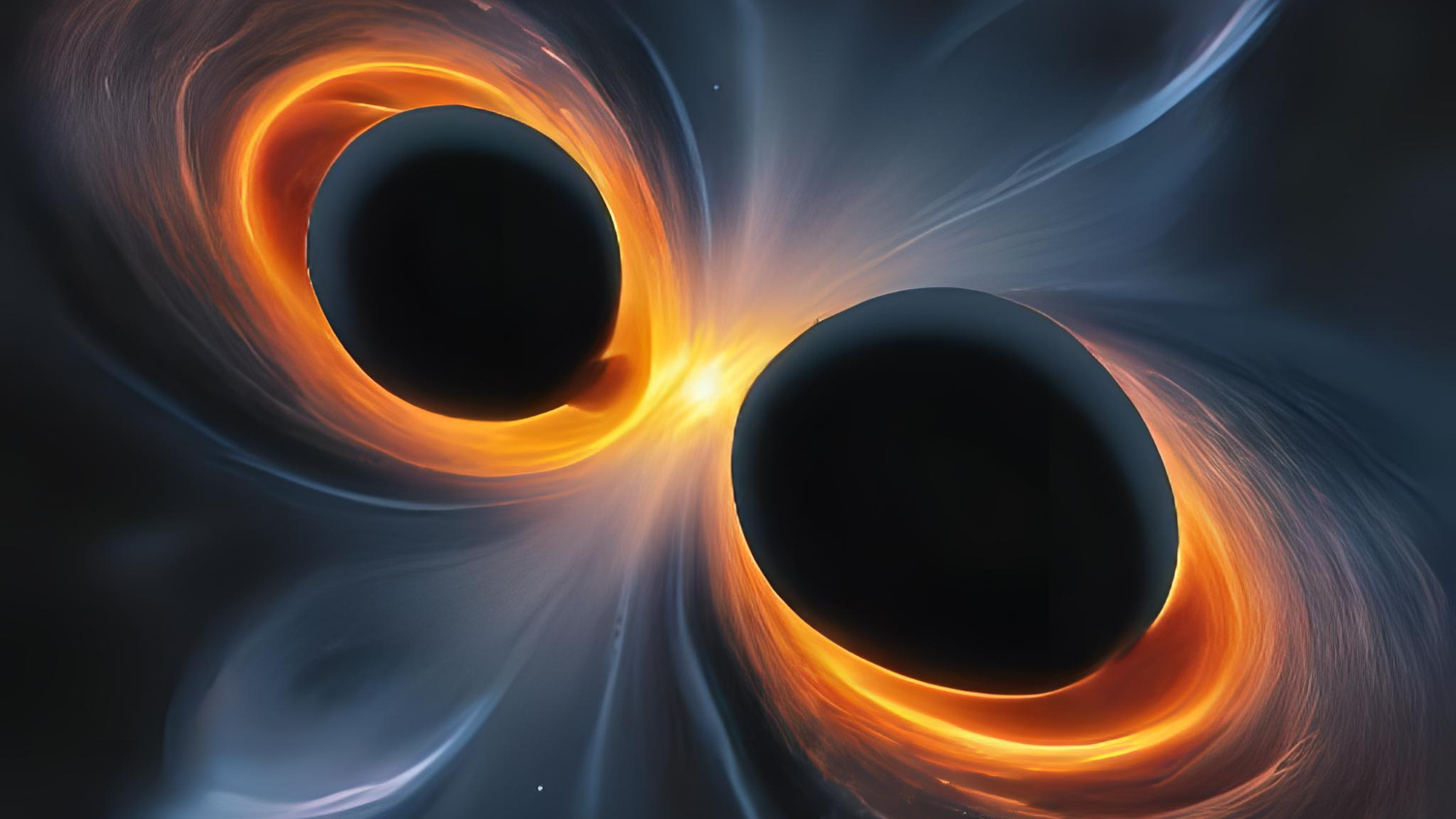
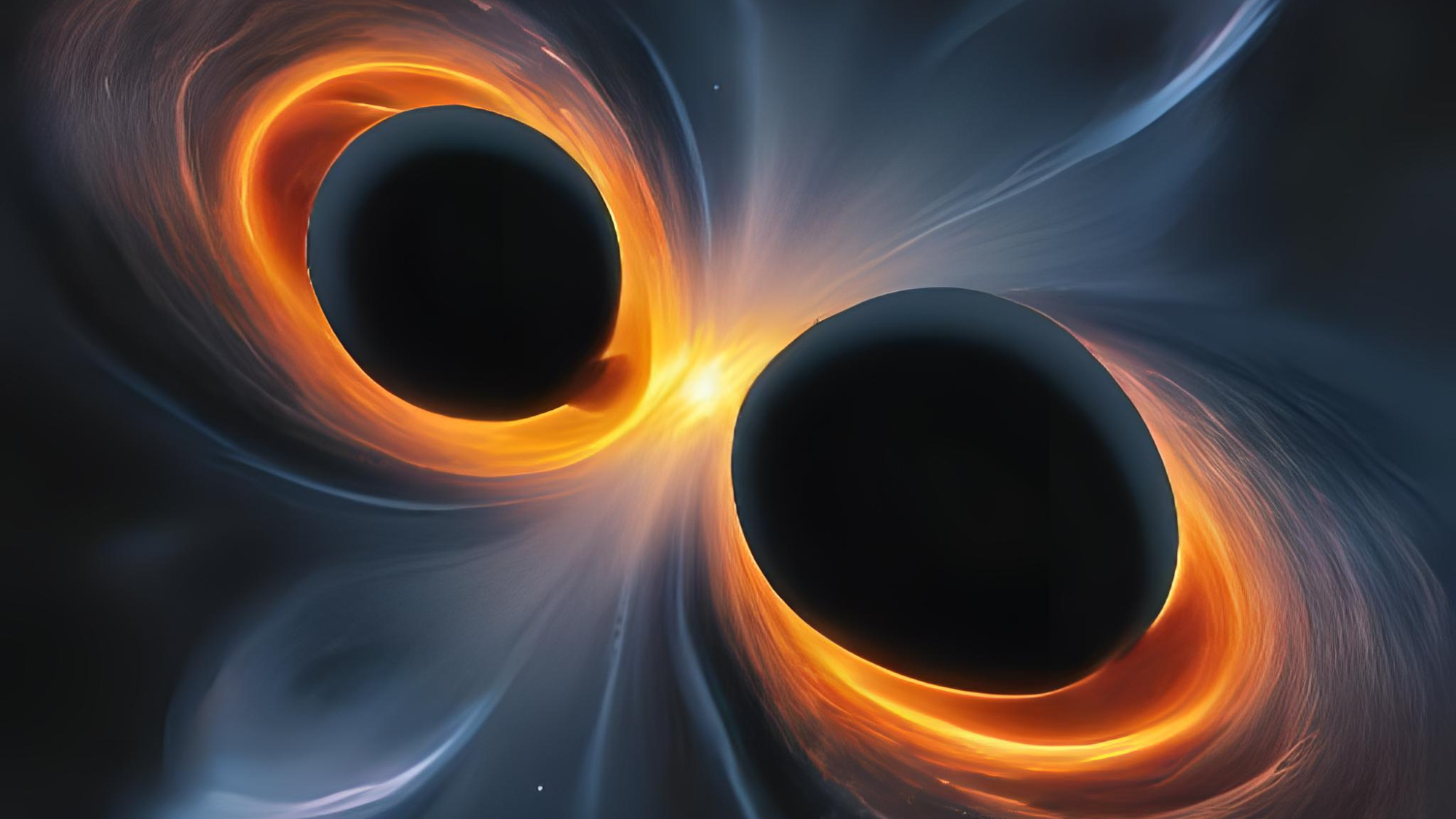
On November 23, 2023, the global scientific community was set abuzz by a detection from the Laser Interferometer Gravitational-Wave Observatory (LIGO) that seemed to defy the fundamental laws of stellar evolution. The signal, cataloged as GW231123, represented a titanic collision between two massive black holes—a cataclysmic event that released ripples in the fabric of spacetime. Initially, the data suggested that this merger involved objects of 140 and 100 solar masses, respectively. Such behemoths are considered "forbidden" by contemporary astrophysics because current stellar evolution models struggle to account for the formation of black holes of this magnitude, particularly those exhibiting the high rotational speeds observed in this specific event. However, a groundbreaking study published on August 25 in the Astrophysical Journal Letters offers a compelling new explanation: the entire event may be a sophisticated cosmic optical illusion known as gravitational lensing.
The Problem with GW231123
To understand why the original data caused such a stir, one must look at the constraints imposed by the pair-instability supernova theory. In standard models of stellar life cycles, stars that reach a certain mass threshold—typically between 65 and 120 times the mass of the sun—are thought to be completely obliterated by a pair-instability supernova, leaving behind nothing. Consequently, it is theoretically difficult to produce "remnant" black holes in the 65 to 120 solar mass range. When LIGO detected GW231123, the calculated masses of the merging objects fell squarely into this "mass gap" or exceeded it significantly.
The scientific community faced a dilemma: either our fundamental understanding of stellar death and black hole formation was deeply flawed, or there was a systematic error in how the gravitational wave signal was being interpreted. The high spin rates attributed to these objects only added to the mystery, as massive, fast-spinning black holes are notoriously difficult to create through traditional stellar collapse.
Gravitational Lensing: Nature’s Magnifying Glass
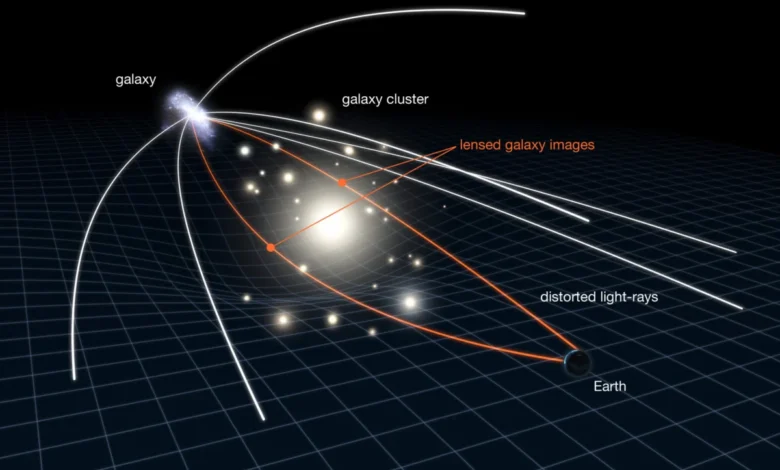
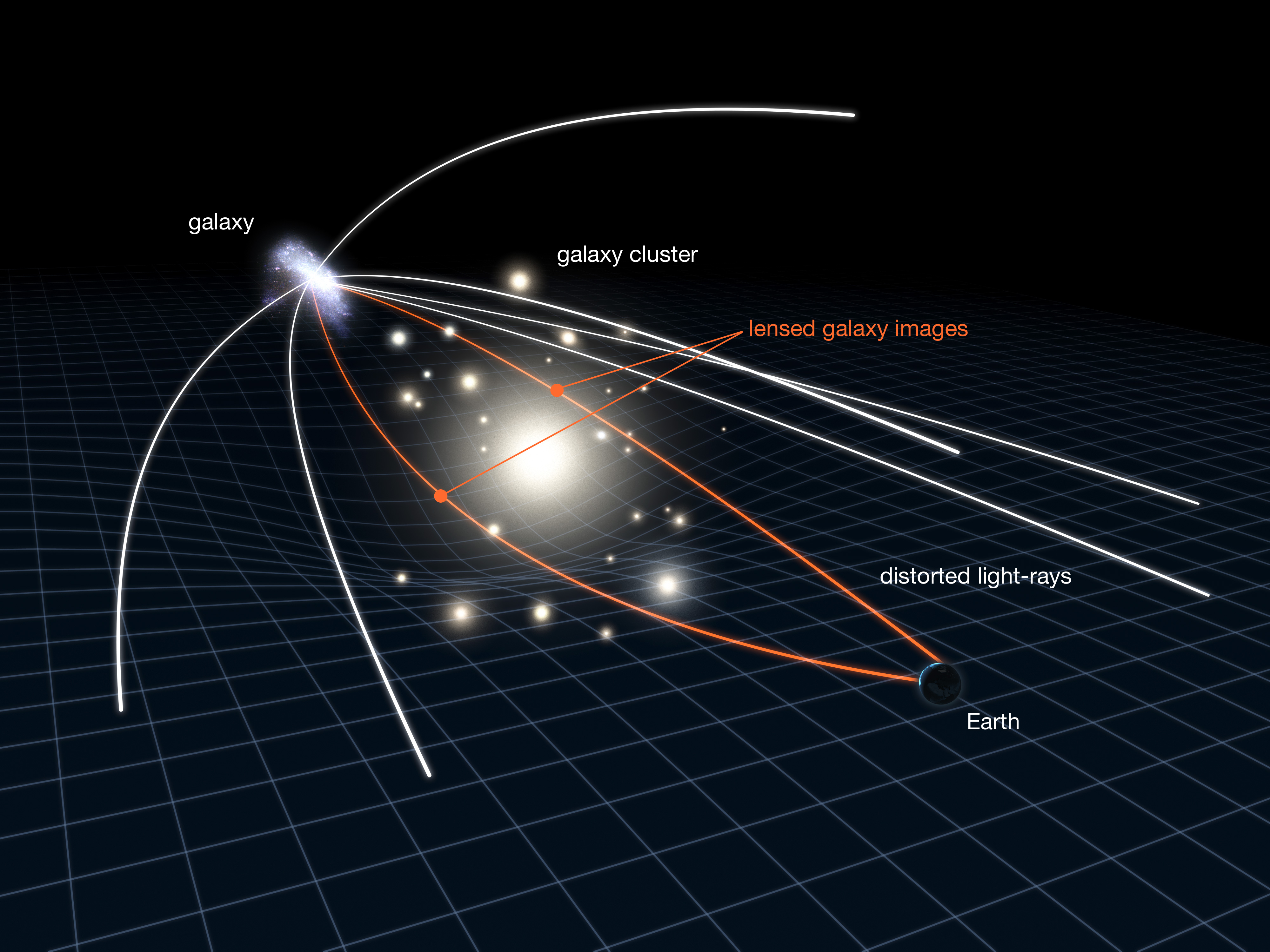
The research team, led by experts at the Albert Einstein Institute (AEI), posits that the "impossible" mass of these black holes is an artifact of gravitational lensing. This phenomenon, rooted in Albert Einstein’s 1915 theory of general relativity, describes how massive objects curve the fabric of spacetime. When light—or, in this case, gravitational waves—travels from a distant source toward Earth, it must pass through the warped spacetime created by intermediate, massive objects.
Just as a glass lens bends light to magnify or distort an image, a massive object (or a collection of them) positioned between the source and the observer can deflect and amplify gravitational waves. This lensing effect can stretch the signal in ways that make a distant, smaller merger appear as a much closer, more massive event. By applying sophisticated mathematical models to the GW231123 signal, the researchers demonstrated that if the waves were lensed by a compact object of approximately 190 to 850 solar masses, or even an extended structure like a dense globular cluster, the perceived mass of the black holes would be artificially inflated.
Re-evaluating the Data
By factoring in the potential for lensing, the team successfully reconciled the observations with established astrophysical models. When the lensing effect was accounted for, the "impossible" 240-solar-mass system (combined) was recalculated to a more plausible 140-solar-mass system. Furthermore, this revised interpretation removes the requirement for the black holes to have possessed unnaturally high spins, bringing the event back into alignment with the standard parameters of stellar binary systems.
"Like light, gravitational waves can also be deflected, magnified and split into multiple signals by massive objects," stated Miguel Zumalacárregui, a group leader at the AEI and a key contributor to the research. "For gravitational waves, diffraction and interference effects give us an additional way to identify and study lensed signals."
The Mystery of the Lens
While the lensing hypothesis solves the "forbidden mass" problem, it introduces a new scientific curiosity: what exactly is the lens? A single compact object of 100 to 1,000 solar masses is a rare find in the cosmos. These are often referred to as intermediate-mass black holes, a class of objects that astronomers have spent decades trying to confirm. If GW231123 was indeed lensed by such an object, it provides a rare opportunity to study a class of black hole that remains largely elusive.
Alternatively, the lens might not be a single, massive object, but rather a "macro-lens"—a cluster of smaller objects, such as a dense population of stars within a globular cluster, acting in concert to distort the gravitational waves. The research team notes that future investigations will focus on determining whether such lenses are common enough to explain the frequency of these high-mass detections, or if this remains a singular, anomalous occurrence.
Broader Implications for Gravitational Wave Astronomy
This study underscores the maturation of gravitational wave astronomy as a discipline. As LIGO and other detectors like Virgo and KAGRA become more sensitive, the ability to distinguish between raw signals and those altered by the environment of the universe becomes paramount. The discovery of lensed gravitational waves would not only help clear up anomalies in black hole mass distributions but would also open a new window into the distribution of matter in the universe.
Gravitational lensing allows scientists to probe the "dark" side of the universe—objects that do not emit light but possess significant mass. If gravitational wave detectors can consistently identify lensed signals, they could be used to map the presence of hidden, intermediate-mass black holes or dark matter concentrations that are otherwise invisible to traditional optical and radio telescopes.
A New Era of Precision
The transition from identifying the source of a ripple in spacetime to understanding the journey that ripple took before reaching our detectors marks a significant leap in complexity. The team behind the GW231123 study has developed specialized software capable of modeling these lensing events at high speeds, a necessity given the massive amount of data processed by modern interferometers.
While the scientific community remains cautious, the lensing explanation for GW231123 is currently viewed as a robust alternative to the previous theory that the laws of stellar evolution were being violated. As the sensitivity of gravitational wave observatories continues to improve, the ability to confirm or refute these lensing events will increase. If confirmed, this would represent the first time that gravitational waves have been used to perform "precision optics" on a cosmic scale, effectively using the geometry of the universe itself as a tool for deeper exploration.
Ultimately, the case of the "forbidden" merger serves as a poignant reminder that in the realm of high-energy astrophysics, the most extraordinary claims often require the most innovative explanations. By looking at the distortion of the signal rather than just the signal itself, researchers have turned a potential crisis in physics into an opportunity to refine our understanding of how the universe structures itself—and how it hides its secrets in the shadows of gravity. The quest to understand GW231123 is far from over, but the path forward is clearer: the universe is not necessarily breaking its own rules; it is simply better at hiding the mechanisms behind its most dramatic displays than we previously realized.