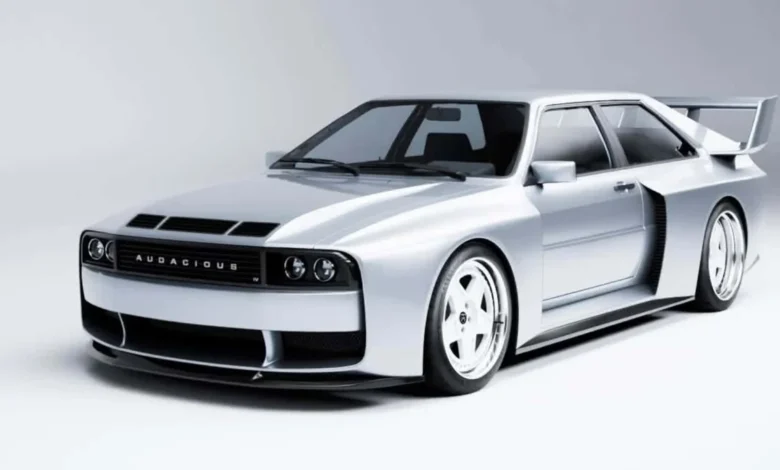
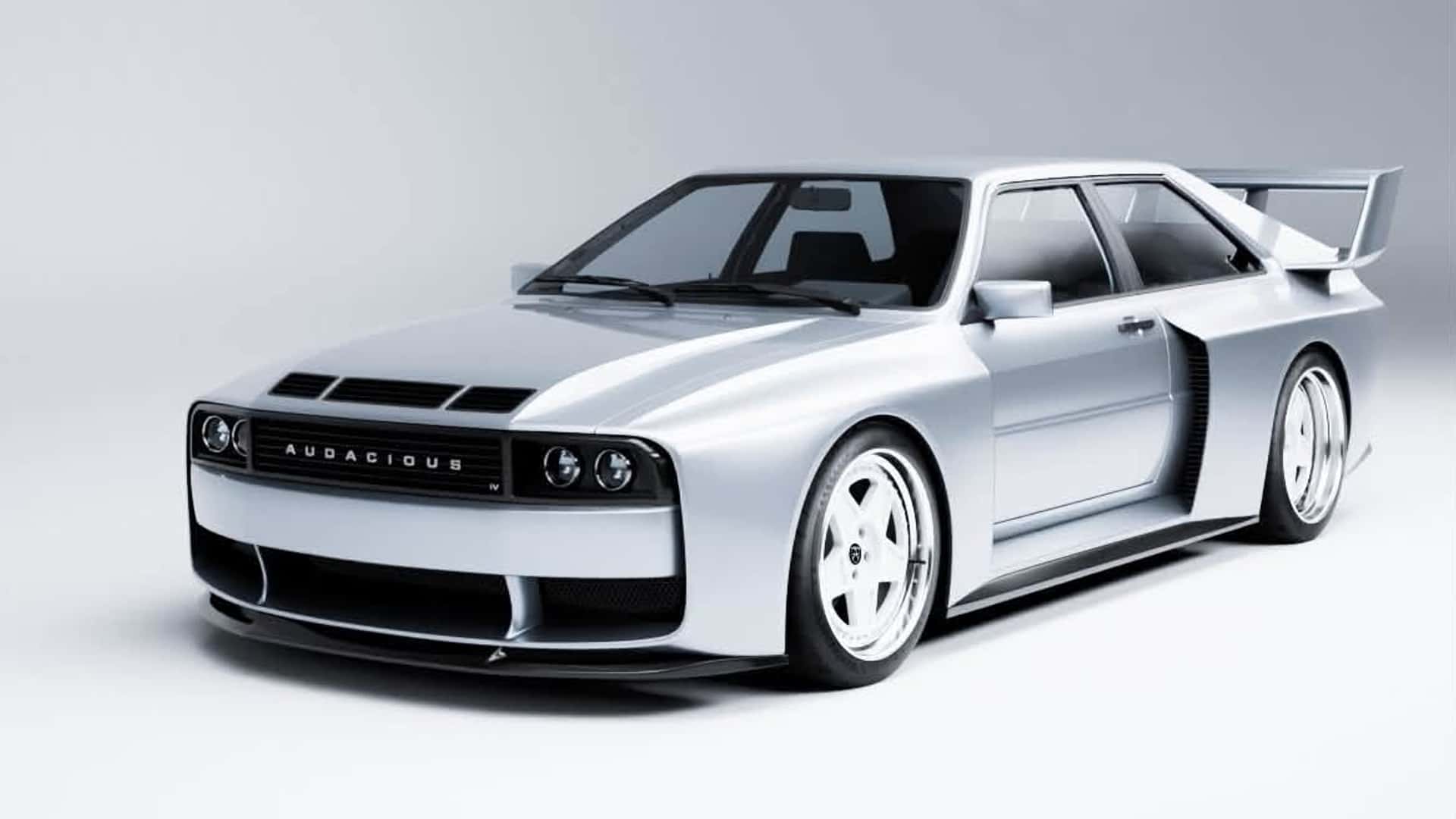
The automotive world has long held the original Audi Quattro in high esteem, not merely as a production vehicle, but as a technological pioneer that fundamentally altered the trajectory of international motorsport. By introducing the permanent all-wheel-drive system to the mass-market performance segment in the early 1980s, Audi established a legacy of traction and control that continues to define the brand’s identity today. Audacious Automotive, a UK-based engineering firm, is now attempting to honor that heritage through the Audacious IV—a bespoke project that serves as a bridge between the analog soul of the 1980s and the mechanical sophistication of the mid-2000s.
The Foundation of a Modern Classic
The Audacious IV project is built upon a dual-donor architecture, requiring clients to provide both an original Ur-Quattro chassis and a B7-generation Audi RS4. The choice of the B7 RS4 as the technical "donor" is significant; it represents one of the final chapters of naturally aspirated, high-revving V8 performance in the Audi lineage. By harvesting the RS4’s 4.2-liter FSI V8 engine, its six-speed manual transmission, and its sophisticated all-wheel-drive system, the builders ensure that the Audacious IV is more than just a visual homage—it is a functional, modern performance machine.
The integration process involves a meticulous re-engineering of the Quattro’s original unibody to accommodate the more complex electronic architecture and the wider track width of the RS4 platform. The firm retains the original suspension geometry of the RS4, which has been tuned to provide a balance between the raw feedback of a vintage rally car and the refined handling dynamics of a modern sports sedan. The braking system, derived from the RS4, is further upgraded to handle the increased performance potential of the modified engine.
Powertrain Evolution and Performance Benchmarks
At the heart of the Audacious IV is the 4.2-liter V8 engine, which, in its standard configuration, produces a robust 592 horsepower. For those seeking even greater performance, Audacious Automotive offers a forced-induction variant equipped with a TSS supercharger, elevating the output to an impressive 740 horsepower. This power is managed through a reinforced six-speed manual gearbox, a deliberate choice by the engineers to preserve the driver-focused engagement that defines the restomod experience.
The engineering team is currently finalizing a third, highly specialized powertrain option: a high-revving iteration of the V8 designed to scream to a 10,000-rpm redline. While output figures for this specific engine remain undisclosed, the focus here is on throttle response and the mechanical harmonics of a high-displacement, high-RPM internal combustion engine. This variant will be available both in naturally aspirated form and with the optional supercharger, providing a total of four distinct powertrain paths for prospective owners.
In terms of real-world performance, the company estimates that the Audacious IV can achieve a 0-60 mph sprint in approximately 3.4 seconds. Furthermore, with the appropriate gearing and aerodynamic refinements, the vehicle is projected to reach a top speed of 200 mph. These figures place the Audacious IV in direct competition with contemporary supercars, yet it retains a silhouette that remains unmistakably rooted in the boxy, aggressive design language of the 1980s.
Interior Craftsmanship and Customization
The cabin of the Audacious IV is a study in preservation and modernization. The design philosophy centers on a "retro-inspired" aesthetic, where the tactile elements of the B7 RS4—such as the steering wheel, instrument cluster, and switchgear—are seamlessly integrated into the dashboard of the original Quattro. This approach allows the driver to experience the ergonomics of a 2000s-era performance car while enveloped in the iconic glasshouse of the 1980s design.
Every interior is subject to the client’s specifications, with bespoke leather, Alcantara, and carbon fiber trim options available. The goal is to provide a cockpit that feels period-correct in terms of its layout, but elevated in quality and materials to reflect the vehicle’s high-end market position.
Production Constraints and Financial Implications
Audacious Automotive has announced a strictly limited production run of only 50 units. To maintain the structural integrity and aesthetic standards required for such a build, the production will be split between two construction methods: 40 units featuring full carbon-fiber bodywork and 10 units utilizing traditional metal-finishing techniques.
The financial commitment for such a project is substantial. The base price is set at £350,000 (approximately $468,000 USD at current exchange rates). This figure, however, does not include the cost of the two donor vehicles that the customer is required to supply. When factoring in the acquisition of a pristine Ur-Quattro and a B7 RS4, the total investment for a single Audacious IV is expected to comfortably exceed half a million dollars.
The build timeline is equally rigorous, with a duration of approximately three years from the initial commission to the final delivery. This extended timeframe reflects the complexity of the restoration and the custom-fabrication nature of the engineering involved.
Industry Context and the Rise of the Restomod
The Audacious IV emerges during a period of significant growth for the restomod sector. As automotive enthusiasts grow increasingly weary of the sterilized, software-heavy nature of modern electric and hybrid performance vehicles, there is a renewed appreciation for the raw, mechanical engagement provided by internal combustion engines from the late 20th century.
Companies like Audacious Automotive, alongside other boutique builders focusing on icons like the Porsche 911 or the Mazda Miata, are capitalizing on the "emotional value" of vintage design combined with modern reliability. By using the B7 RS4 as a donor, Audacious is specifically targeting a demographic that appreciates the "Golden Era" of Audi’s performance division—the period before the total digitalization of the driving experience.
The implications for the donor car market are also notable. With the supply of original Ur-Quattros dwindling and their value rising, the conversion of these cars into restomods is a point of contention among some purists. However, supporters argue that by utilizing donor parts and modern engineering, Audacious is not destroying history, but rather ensuring these vehicles remain relevant and drivable on modern roads, preventing them from becoming static museum pieces.
Broader Impact on the Automotive Landscape
From an engineering perspective, the Audacious IV represents a successful case study in "modular" car building. By utilizing a common chassis and drivetrain platform (the RS4) and applying it to a different aesthetic shell, the firm can achieve a level of testing and reliability that is often lacking in smaller, one-off custom projects.
Furthermore, the commitment to developing a 10,000-rpm V8 underscores a continued interest in the high-revving internal combustion engine, even as the global automotive industry shifts toward electrification. The ability to refine these engines to meet modern standards of reliability while significantly increasing their power output is a testament to the advancements in aftermarket engineering.
As the first units move through the three-year production cycle, the automotive community will be watching closely to see if the Audacious IV can deliver on its ambitious performance claims. If it succeeds, it may well set a new standard for how classic performance cars are preserved and updated for the 21st century. The project serves as a reminder that the appeal of the Audi Quattro—the grip, the power, and the iconic profile—is timeless, regardless of what lies beneath the hood.