Deepest Animal Communities Ever Recorded Discovered in Mariana Trench by Chinese Submersible Fendouzhe

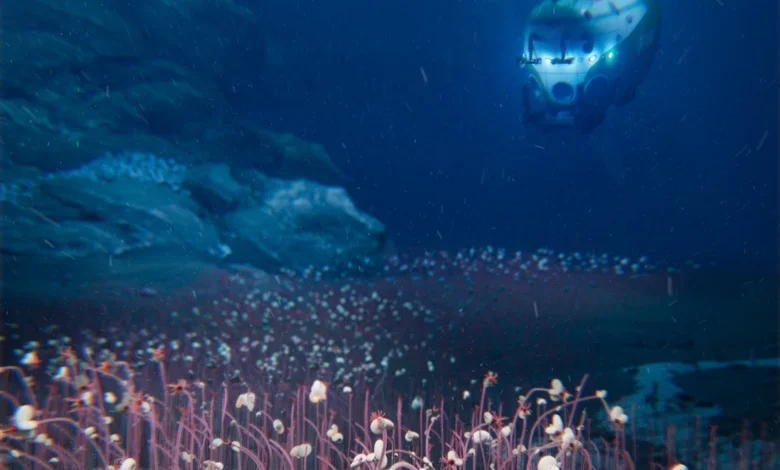
In a landmark achievement for deep-sea exploration and marine biology, researchers utilizing the Chinese manned submersible Fendouzhe have documented the deepest and most extensive animal colonies ever observed on Earth. Located nearly six miles below the surface in the Mariana Trench, as well as the Kuril–Kamchatka and western Aleutian Trenches, these vibrant ecosystems thrive in the "hadal zone"—a region of the ocean floor once thought to be largely desolate. The discovery, published recently in the journal Nature, challenges long-standing models of deep-ocean carbon cycling and provides critical new evidence regarding the resilience of life in extreme environments.
The research team, led by the Institute of Deep-sea Science and Engineering (IDSSE) under the Chinese Academy of Sciences, identified thousands of mollusks, tubeworms, and other complex invertebrates living at depths ranging from 3.6 to 5.92 miles (approximately 5,800 to 9,500 meters). These communities do not rely on sunlight for energy but are instead sustained by a process known as chemosynthesis, where organisms derive nutrients from chemical reactions involving methane and hydrogen sulfide. The sheer scale of these colonies, which span a distance of over 1,550 miles across various trench systems, suggests that such "vibrant oases" may be far more common in the deep ocean than previously suspected by the scientific community.
The Hadal Zone and the History of Deep-Sea Exploration
The hadal zone, named after the Greek god of the underworld, Hades, refers to the deepest parts of the ocean, specifically those located within oceanic trenches at depths exceeding 6,000 meters. These environments are characterized by near-freezing temperatures, total darkness, and immense hydrostatic pressure—at 11,000 meters, the pressure is roughly 1,100 times that at sea level, equivalent to an elephant standing on a person’s thumb.
Historically, exploration of these depths has been exceptionally rare due to the extreme technical challenges involved. The first successful manned mission to the bottom of the Mariana Trench occurred in 1960, when Jacques Piccard and Don Walsh descended in the bathyscaphe Trieste. They spent only 20 minutes on the seafloor and reported seeing very little life. In 2012, filmmaker James Cameron conducted the first solo dive to the Challenger Deep, the trench’s lowest point. Cameron famously described the environment as "desolate" and "alien," a stark contrast to the thriving biological hubs recently identified by the IDSSE team.
The shift in perspective from a barren wasteland to a flourishing ecosystem is largely due to the technological advancements of the Fendouzhe (meaning "Striver"). This Chinese-built manned submersible is designed to withstand the crushing pressures of the deepest trenches and has conducted dozens of dives into the Mariana Trench over the last several years. During 23 separate dives in 2023 alone, the Fendouzhe allowed scientists to observe and sample these communities in situ, providing a level of detail that was previously impossible.
The Mechanics of Chemosynthesis: Life Without Sunlight
The most significant finding of the study is the mechanism by which these deep-sea animals survive. In most of the ocean, life is driven by photosynthesis, where plants and algae convert sunlight into energy, forming the base of the food chain. However, because sunlight cannot penetrate beyond the first few hundred meters of water, the deep sea was traditionally thought to rely on "marine snow"—organic debris that drifts down from the surface.
The communities discovered by the Fendouzhe operate on a different principle. They are chemosynthesis-based, meaning they extract energy from inorganic chemicals. According to the study’s lead author, Xiatong Peng, these animals cluster around "cold seeps" where fluids rich in methane and hydrogen sulfide emerge from the seafloor. Isotopic analysis conducted by the team revealed that this methane is produced microbially within the deep sediment layers of the trenches.
Geological faults traversing the trenches act as conduits, transporting these chemical-rich fluids from deep within the Earth’s crust to the surface of the seafloor. These fluids support "snow-like" microbial mats, which in turn provide the foundation for a complex food web. The researchers observed large fields of siboglinid tubeworms—creatures that lack a traditional mouth or digestive tract and instead host symbiotic bacteria that convert chemicals into food for their host. Alongside these worms, the team found mounds of bivalves, clams, and various other invertebrates, creating a self-sustaining ecosystem independent of the surface world.
Diversity and Abundance of Deep-Sea Fauna
The diversity of life recorded during the expedition has surprised even the most seasoned marine geochemists. Beyond the primary colonies of tubeworms and mollusks, the researchers documented a wide array of free-floating and bottom-dwelling species. This includes spiky crustaceans, sea lilies (crinoids), sea cucumbers, and various types of polychaete worms.
"What makes our discovery groundbreaking is not just its greater depth—it’s the astonishing abundance and diversity of chemosynthetic life we observed," said study co-author Mengran Du, a marine geochemist with the IDSSE. Du noted that unlike the isolated pockets of life found in other deep-sea environments, these trench communities were expansive and densely populated. Some tubeworms were observed growing up to a foot in length, a remarkable size for an organism living under such extreme pressure.

The study suggests that the geological similarities between different hadal trenches mean these communities are likely widespread across the globe’s subduction zones. This realization forces a rethink of the "desolate" narrative of the deep sea and implies that the global biomass of the hadal zone may be significantly higher than current estimates.
Implications for Carbon Cycling and Global Climate Models
The discovery of these extensive communities has profound implications for our understanding of the global carbon cycle. Carbon cycling refers to the process by which carbon is exchanged between the Earth’s atmosphere, oceans, and geosphere. In the deep ocean, this process is a critical component of the planet’s ability to regulate climate, as the seafloor acts as a long-term storage site for carbon.
The presence of large-scale chemosynthetic communities suggests that the deep-sea carbon cycle is more active and complex than previously modeled. By converting methane—a potent greenhouse gas—into biological matter at the bottom of the ocean, these ecosystems may play a role in preventing methane from reaching the upper layers of the ocean or the atmosphere. Furthermore, the discovery that microbes are actively producing methane from organic matter deposited in trenches suggests that these deep-sea "sinks" are also sites of significant chemical transformation.
"These findings challenge the current models of deep-ocean carbon cycling and life at extreme limits," the authors stated in their report. By providing a more accurate picture of how carbon is processed in the hadal zone, scientists can better predict how the oceans will respond to future environmental changes.
The Controversy of Deep-Sea Mining
The timing of this discovery is particularly relevant as the international community grapples with the ethics and legality of deep-sea mining. Several nations and private corporations are currently eyeing the ocean floor as a source of valuable minerals, including cobalt, nickel, and manganese, which are essential for the production of electric vehicle batteries and other green technologies.
However, the International Seabed Authority (ISA), the UN-affiliated body tasked with regulating the industry, has faced intense pressure from scientists and environmental advocates to delay the start of mining operations. The discovery of vibrant, complex ecosystems at such extreme depths provides a powerful argument for the "precautionary principle."
Ocean scientists warn that the plumes of sediment and chemical disturbances caused by mining could irreparably damage these fragile habitats before they are even fully understood. If these chemosynthetic communities are as widespread and biologically significant as the Fendouzhe study suggests, the environmental cost of deep-sea mining could be far higher than previously estimated. The "vibrant oases" described by the Chinese researchers represent some of the last untouched wildernesses on the planet, and their destruction could have unforeseen consequences for marine biodiversity and global carbon sequestration.
Timeline of Significant Discoveries in the Mariana Trench
To understand the context of the Fendouzhe’s findings, it is helpful to look at the timeline of human interaction with the Mariana Trench:
- 1875: The HMS Challenger first records the depth of the trench using a weighted sounding line, identifying it as the deepest point in the ocean.
- 1951: The HMS Challenger II returns to the trench and uses sonar to record a depth of nearly 11,000 meters, naming the area the "Challenger Deep."
- 1960: Jacques Piccard and Don Walsh reach the bottom in the Trieste. They observe "flatfish," though the sighting was later debated by scientists who believed it may have been a sea cucumber.
- 2012: James Cameron descends in the Deepsea Challenger, capturing high-definition video of a stark, silty environment.
- 2019: Victor Vescovo completes multiple dives in the Limiting Factor, finding plastic waste at the bottom of the trench, highlighting the reach of human pollution.
- 2020–2023: The Fendouzhe conducts a series of missions, focusing on biological sampling and geomorphology, leading to the discovery of the deepest chemosynthetic animal communities.
Conclusion: A New Frontier in Marine Science
The discovery of flourishing life six miles beneath the waves marks a new chapter in the study of the Earth’s oceans. It reinforces the idea that life is not merely a passenger on this planet but an active participant in its geological and chemical processes. The work of the Chinese Academy of Sciences and the crew of the Fendouzhe has turned a "desolate" abyss into a theater of biological innovation.
As exploration continues, the focus will likely shift from merely reaching these depths to understanding the intricate relationships between the geology of the trenches and the life they support. "Diving in the submersible was an extraordinary experience—like traveling through time," said Mengran Du. "Each descent transported me to a new deep-sea realm, as if unveiling a hidden world and unraveling its mysteries."
For the scientific community, the mystery now lies in how many more of these oases exist and how they connect to the broader health of the global ocean. For policymakers, the challenge will be balancing the hunger for resources with the responsibility to protect an ecosystem that has survived in the dark for millions of years, only to be discovered at the dawn of a new industrial age.
Related posts: