Erica Schwartz’s Nomination as CDC Director Ignites Fierce Debate Over Autonomy, Science, and Vaccine Policy

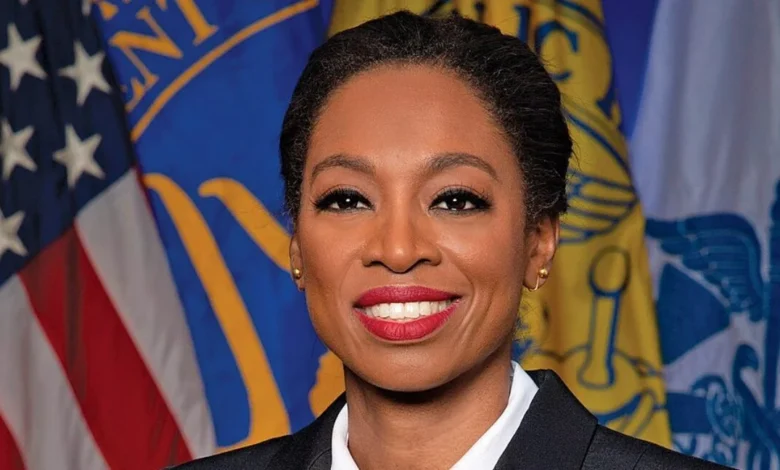
The nomination of Dr. Erica Schwartz as the next Director of the Centers for Disease Control and Prevention (CDC) by former President Donald Trump has immediately plunged the nation’s premier public health agency into a maelstrom of political controversy, reigniting long-standing debates about scientific independence, governmental oversight, and the role of vaccines in public health. Announced via social media, the appointment of Dr. Schwartz, alongside three other key agency nominations, has been heralded by Trump as a move to restore "the GOLD STANDARD OF SCIENCE" at the CDC. However, the decision has simultaneously drawn sharp criticism from former public health officials concerned about political interference and vehement opposition from anti-vaccine advocates who view Schwartz’s past record as a "disaster."
A Contentious Choice for a Pivotal Role
On Wednesday, former President Donald Trump took to his social media platform, Truth Social, to unveil his slate of nominees for critical positions within the CDC, including Dr. Erica Schwartz as Director. Trump lauded Schwartz as "a STAR" and expressed confidence that she, along with the other selected "Highly Respected Doctors of Medicine," possess the requisite "knowledge, experience, and TOP degrees" to re-establish the agency’s scientific credibility. This announcement comes at a time when the CDC, an institution traditionally revered for its scientific rigor and non-partisan approach to public health, has faced unprecedented scrutiny and challenges to its autonomy, particularly during and after the COVID-19 pandemic. The agency’s ability to operate free from political influence is a recurring theme that has defined much of its recent history and continues to dominate discussions surrounding its leadership.
The CDC Director’s role is arguably one of the most vital in the federal government, overseeing an agency with an annual budget exceeding $12 billion and a workforce of over 15,000 employees. This vast apparatus is responsible for protecting Americans from health, safety, and security threats, both foreign and domestic. Its mission encompasses everything from tracking infectious diseases and conducting groundbreaking research to developing public health guidelines and responding to global health emergencies. The director serves as the nation’s chief public health spokesperson, a role that demands scientific acumen, political savvy, and unwavering commitment to evidence-based policy. Historically, the CDC has maintained a reputation as a beacon of scientific authority, guiding national and international responses to everything from polio and HIV/AIDS to Ebola and Zika. The current political climate, however, has placed this authority under unprecedented strain.
Warnings from Within: Concerns Over Political Autonomy
The immediate aftermath of Dr. Schwartz’s nomination saw former CDC officials voice profound concerns about the potential for continued political interference within the agency. Debra Houry, who previously served as the CDC’s chief medical officer before resigning in protest over alleged political meddling during a prior administration, articulated these fears pointedly. "We saw what happened with Susan," Houry reportedly told Stat News, alluding to a hypothetical previous director who, in her view, "couldn’t make staffing or policy decisions." Houry’s rhetorical question, "What has changed? Kennedy hasn’t changed," underscored a persistent worry that the underlying dynamics of political pressure remain intact, regardless of the specific nominee. This implies a continuity of political influence, potentially referencing Robert F. Kennedy Jr.’s speculated role as Secretary of Health and Human Services in a future administration.
Houry’s comments resonate with a pattern of tension between scientific agencies and political administrations that became particularly pronounced during the COVID-19 pandemic. During that period, the CDC and other federal health bodies faced accusations of having their recommendations altered, delayed, or outright suppressed by political appointees. This included disputes over testing guidelines, mask mandates, vaccine distribution strategies, and the public communication of scientific data. Critics argued that such interference not only undermined the public’s trust in health institutions but also hampered the national response to a devastating global crisis. The memory of these struggles looms large over any new leadership appointment at the CDC, particularly one made by an administration known for its assertive approach to federal agencies. Public confidence in the CDC, which stood at a high of 84% in early 2020, reportedly declined to 48% by late 2022 among Republicans, and showed a general erosion across the political spectrum, according to surveys by the Kaiser Family Foundation.
Further fueling these anxieties, reporting by The Washington Post indicated that the search for a new CDC director had encountered significant hurdles. According to sources familiar with the selection process, several "well-qualified candidates" had sought explicit assurances of autonomy—specifically, the unfettered ability to hire and fire staff and to shield scientific findings and policy recommendations from political influence. These critical conditions, essential for maintaining the CDC’s integrity and effectiveness, were reportedly not met, leading to those candidates being overlooked. This suggests a deliberate choice by the incoming administration to prioritize nominees who may be perceived as more aligned with political objectives, rather than those who demand absolute scientific independence. The unselected candidates’ insistence on such guarantees highlights the depth of concern within the public health community regarding the erosion of the CDC’s traditional non-partisan stance.
A "Disaster" Predicted by Anti-Vaccine Advocates
Paradoxically, while public health veterans worried about political influence, a prominent voice from the anti-vaccine movement, Aaron Siri, predicted a "disaster" under Dr. Schwartz’s leadership, albeit for entirely different reasons. Siri, a close ally and former personal lawyer of "SecKennedy" (widely understood to be Robert F. Kennedy Jr., a vocal critic of mainstream vaccine policy and likely a high-ranking official in the hypothetical incoming administration), launched a scathing critique of Schwartz’s professional history.
In a social media post, Siri condemned Schwartz’s "long track record of directly issuing rights-crushing civilian and military vaccine mandates." He specifically cited her involvement in mandating "injection of smallpox, anthrax, and flu vaccines into US Forces, and disciplining those that refused." For Siri, this history reflects a profound lack of "basic ethics and morals to lead the CDC." He further asserted that her "prior promotion, let alone mandates, of nearly a dozen different vaccines leave little hope she will objectively oversee CDC’s vaccine program."
Siri’s forceful denunciation underscores the highly polarized landscape surrounding vaccine policy. The anti-vaccine movement, which gained significant traction and political influence during the COVID-19 pandemic, often frames vaccine mandates as infringements on individual liberty and personal autonomy. This perspective frequently dismisses established scientific consensus on vaccine safety and efficacy, instead promoting alternative theories and skepticism about pharmaceutical companies and government health agencies. It also aligns with a broader distrust of institutional authority. The appointment of Dr. Schwartz, with her military background and involvement in vaccine deployment, is therefore seen by this faction as a direct affront to their agenda and a continuation of policies they vigorously oppose. Her experience as a career military officer and a leader in public health, which would typically be viewed as qualifications, is reinterpreted by Siri as evidence of a problematic allegiance to mandatory vaccination protocols, thereby signaling a clash with the anti-vaccine stance championed by "SecKennedy" and his allies.
The "Kennedy" Factor: A Measured Yet Significant Response
Amidst the swirling controversy, "SecKennedy" himself (referring to Robert F. Kennedy Jr., likely in a cabinet-level position such as Secretary of Health and Human Services in this future scenario) offered a notably more measured response than his ally, Aaron Siri. Via his own social media platform, Kennedy extended congratulations to Dr. Schwartz and the new CDC leadership team. His message focused on a shared objective: "I look forward to working together to restore trust, accountability, and scientific integrity at the CDC so we can return it to its core mission and Make America Healthy Again."
This statement is significant for several reasons. While Kennedy has been a prominent figure in the anti-vaccine movement for years, often amplifying skepticism about vaccine safety and regulatory oversight, his public response to Schwartz’s nomination avoids Siri’s outright condemnation. Instead, it frames the appointment within a broader narrative of reforming and improving the CDC, using language that resonates with both his base and a desire for institutional change. The phrase "Make America Healthy Again" echoes the political slogan of the former President, subtly linking the public health agenda to the broader political movement.
However, the presence of a figure like Robert F. Kennedy Jr. in a high-ranking health-related position, coupled with the nomination of a CDC director whose past actions are anathema to Kennedy’s long-standing allies, creates an incredibly complex dynamic. It suggests a potential internal tension within the incoming administration regarding public health policy, particularly on vaccines. Will Kennedy’s influence lead to a softening of traditional vaccine advocacy within the CDC, or will Schwartz’s proven track record lead to clashes? This internal contradiction could prove to be one of the most challenging aspects of the new CDC leadership’s tenure. It raises questions about how scientific integrity, as championed by Trump, will be reconciled with the stated goals of restoring "trust" and "accountability" by a figure like Kennedy, who has frequently challenged established public health narratives and the scientific consensus on vaccine safety.
Dr. Erica Schwartz: A Profile in Public Health and Military Service
Dr. Erica Schwartz brings a distinguished background to her proposed role, though it is precisely this background that has become a flashpoint for debate. Her career has been marked by extensive service in the uniformed services, particularly within the U.S. Public Health Service Commissioned Corps, where she attained the rank of Rear Admiral. Prior to her nomination, she served as the Deputy Surgeon General of the United States, a role that placed her at the forefront of national public health initiatives.
Her professional experience includes significant involvement in emergency preparedness and response, as well as a deep understanding of federal health programs. Crucially, as noted by Aaron Siri and others, Dr. Schwartz played a key role in the nationwide COVID-19 vaccine deployment, a monumental logistical undertaking involving the distribution of hundreds of millions of doses across the country. This experience would have involved coordinating logistical challenges, communicating with the public, and working within the complex federal framework to ensure the rapid and equitable distribution of vaccines. Her work also included the development and implementation of health policies within the military, which often involve mandatory vaccination requirements for service members against a range of infectious diseases, including smallpox, anthrax, and influenza, to ensure force readiness and protect public health. The military’s long-standing policy of mandatory vaccination is rooted in protecting troop health and preventing outbreaks in close-quarter environments, a practice supported by decades of epidemiological data.
Supporters would point to her military discipline, leadership experience in high-stakes environments, and direct involvement in major public health campaigns as ideal qualifications for leading the CDC. Her proponents would argue that her background instills a pragmatic, results-oriented approach necessary to navigate complex public health challenges. The former President’s description of her as a "STAR" likely stems from this perception of her as a highly capable and experienced leader, someone who can bring a sense of order and directness to an agency that Trump previously criticized as cumbersome and politically biased. However, it is these very experiences that critics on the anti-vaccine spectrum cite as disqualifying, viewing her past actions as antithetical to their concept of individual medical freedom.
Historical Precedent: The CDC and Political Intervention
The current debate over Dr. Schwartz’s nomination is not an isolated incident but rather the latest chapter in a long-standing tension between scientific expertise and political imperatives. The CDC, founded in 1946, was designed to be a science-driven institution, providing unbiased data and recommendations to protect the health of the American public. Its reputation was built on rigorous epidemiological work, disease surveillance, and the development of evidence-based guidelines.
However, throughout its history, the agency has periodically faced pressure from political administrations. These pressures intensified significantly during the COVID-19 pandemic under the previous Trump administration. Numerous reports and testimonies from former CDC scientists and officials detailed instances where scientific reports were allegedly suppressed or altered, public health guidance was contradicted by political figures, and career staff were sidelined. For example, guidance on mask-wearing, testing protocols, and the duration of isolation periods were subjects of public disagreement between CDC scientists and White House officials. This perceived politicization led to a significant decline in public trust in the CDC, particularly among certain political demographics.
This historical context provides crucial background for Debra Houry’s concerns. Her reference to "Kennedy’s political interference" implies a continuity of this pattern, suggesting that the challenges to scientific autonomy are not merely a relic of past administrations but an ongoing structural issue. The refusal to guarantee autonomy to other qualified candidates, as reported by The Washington Post, further strengthens the argument that the incoming administration may prioritize alignment with its political agenda over unbridled scientific independence at the CDC. The enduring question for the CDC remains how to effectively communicate scientific findings and implement public health policies in an environment where scientific consensus itself has become a subject of political dispute.
Implications for Public Health Policy and Trust
The confirmation of Dr. Erica Schwartz as CDC Director, particularly within an administration that includes figures like Robert F. Kennedy Jr. in key health roles, carries significant implications for future public health policy and the public’s trust in scientific institutions.
Firstly, her appointment will likely intensify the debate around vaccine policy. If confirmed, Dr. Schwartz would be tasked with overseeing the very vaccine programs that her critics condemn. How she navigates the conflicting demands from scientific consensus, which strongly supports vaccine efficacy and safety, and the powerful anti-vaccine lobby, which has the ear of her presumed Secretary, will be a critical test. Any perceived softening of vaccine recommendations or changes to the CDC’s long-standing pro-vaccine stance could have profound consequences for public health, potentially leading to decreases in vaccination rates and resurgences of preventable diseases like measles, mumps, and polio, which have seen occasional localized outbreaks in recent years due to declining vaccination coverage. Conversely, a firm adherence to scientific principles could lead to ongoing friction with politically influential figures within the administration.
Secondly, the emphasis on "restoring trust" and "scientific integrity" by both Trump and Kennedy, while ostensibly positive, could be interpreted in different ways. For some, it may mean a return to unbiased, evidence-based science. For others, particularly those who distrust established science, it might imply a reevaluation of current public health paradigms and a greater openness to alternative viewpoints, including those not supported by mainstream scientific evidence. This ambiguity risks further fracturing public confidence in health recommendations, as different segments of the population will interpret the CDC’s direction through their own political and ideological lenses, making unified public health messaging increasingly difficult.
Thirdly, the broader impact on the CDC’s workforce and its global standing is considerable. The agency’s ability to attract and retain top scientific talent depends heavily on its reputation for scientific independence and its capacity to pursue research free from undue influence. If political interference continues or is perceived to escalate, it could lead to a brain drain, weakening the CDC’s capacity to respond to future health crises, conduct essential research, and maintain its leadership role in global health. The CDC plays a crucial role in international disease surveillance, outbreak response, and health initiatives, collaborating with organizations like the World Health Organization; any internal instability could ripple across global health efforts, potentially diminishing America’s influence in global health security.
The Road Ahead: Confirmation and Challenges
Dr. Erica Schwartz’s nomination will now proceed to the Senate for confirmation. This process is expected to be contentious, given the highly polarized reactions already observed. Senators will likely scrutinize her past record, her views on vaccine policy, and her commitment to scientific independence. Public health organizations, medical associations, and advocacy groups on both sides of the debate will undoubtedly weigh in, lobbying senators to either support or oppose her confirmation. The Senate Committee on Health, Education, Labor, and Pensions (HELP) will play a critical role, conducting hearings where Dr. Schwartz will face tough questions about her vision for the CDC and how she intends to navigate the complex political and scientific landscape.
If confirmed, Dr. Schwartz will face the immense challenge of leading an agency that is not only central to national security but also deeply embroiled in the nation’s culture wars. She will need to navigate the complex interplay between scientific evidence, public perception, and political directives. Her success, and indeed the future credibility of the CDC, will hinge on