Koenigsegg Issues Rare Recall for Seven CC850 Supercars Due to Electronic Parking Brake Software Anomaly

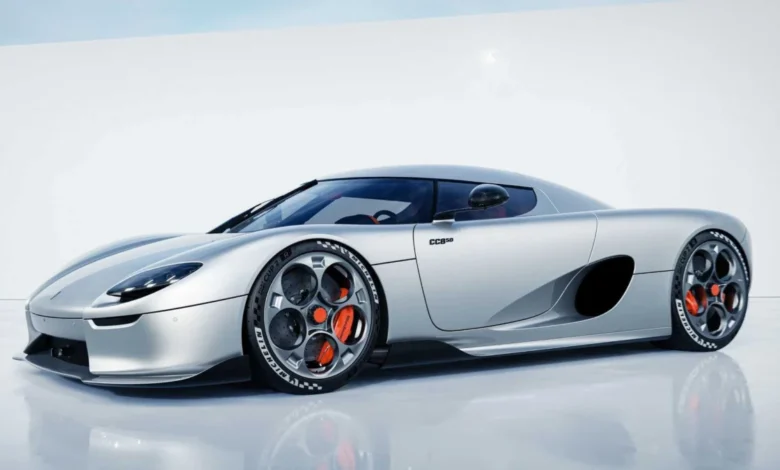
In the rarefied atmosphere of hypercar manufacturing, recalls are exceptionally rare occurrences, often involving fleets that could be counted on a single hand. The Swedish automaker Koenigsegg Automotive AB has recently initiated a safety recall involving a specific batch of its highly exclusive CC850 model. According to documentation filed with the National Highway Traffic Safety Administration (NHTSA), the recall affects exactly seven vehicles produced for the United States market for the 2025 and 2026 model years. While the scale of the recall is statistically microscopic compared to the millions of vehicles typically swept up in mass-market automotive safety campaigns, the technical nature of the issue highlights the complexities inherent in modern, software-defined vehicle architectures.
The Technical Nature of the Recall
The recall centers on a potential malfunction within the vehicle’s electronic parking brake (EPB) system. The NHTSA safety recall report, identified by campaign number 26V694, details an issue where the electronic parking brake may fail to engage under specific operational parameters. The system, which is designed to hold the vehicle stationary when parked, relies on an intricate handshake between the transmission’s control unit and the braking actuator.
The impetus for the investigation was a real-world report from a vehicle owner. According to the filed documentation, the incident occurred when the driver attempted to engage the parking brake while the engine was running and the transmission was set in reverse. Upon exiting the vehicle, the owner observed that the car began to roll, indicating that the parking brake had not successfully achieved the necessary clamping force on the rear discs. While the incident resulted in no injuries or property damage, the potential for a rollaway event triggered an immediate review of the software logic governing the EPB.
Chronology and Regulatory Oversight
The discovery of the anomaly prompted a swift internal investigation by Koenigsegg’s engineering team in Ängelholm, Sweden. The chronology of the event suggests that once the owner reported the behavior, the automaker’s diagnostic engineers analyzed the vehicle’s Event Data Recorder (EDR) and the electronic control unit (ECU) logs.
By comparing the software code against the physical sequence of events described by the owner, Koenigsegg determined that under a very narrow set of conditions—specifically involving the transition between reverse gear and the activation of the electronic parking brake—the software could inhibit the brake from fully deploying. Because safety regulations mandate that a parking brake must be capable of holding a vehicle on an incline regardless of the transmission state, the manufacturer elected to formalize the fix through a standard safety recall process rather than a silent service update.
The Engineering of the CC850
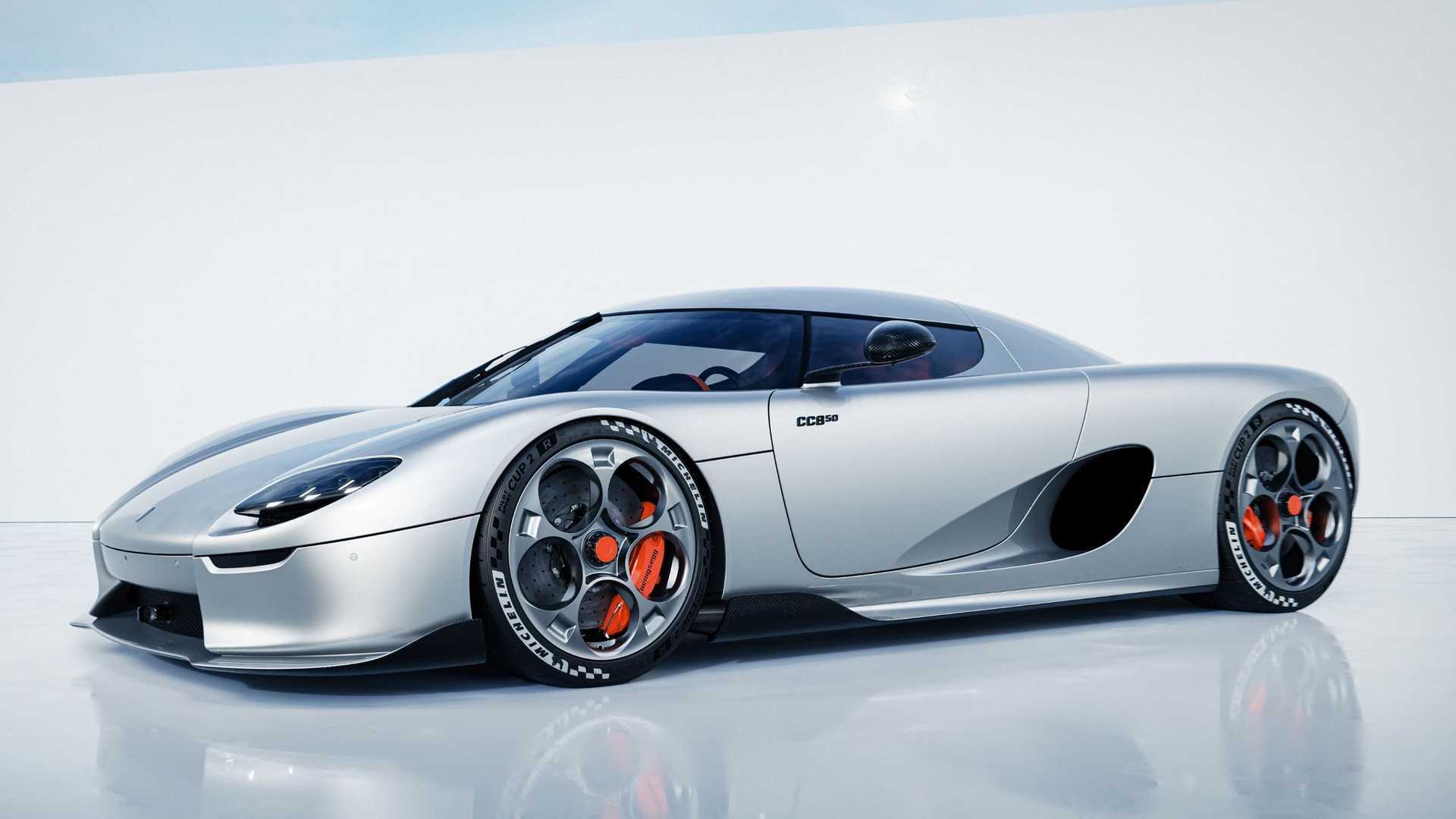
To understand the complexity of the software involved, one must consider the nature of the CC850 itself. Unveiled as a tribute to the original Koenigsegg CC8S, the CC850 features the proprietary "Engage Shift System" (ESS). This transmission is widely regarded as one of the most complex mechanical systems ever put into a production car, as it functions as both a true six-speed manual gearbox with a clutch pedal and a nine-speed automatic transmission.
Because the vehicle relies heavily on "shift-by-wire" technology to manage these dual personalities, the integration between the driver’s inputs, the transmission sensors, and the braking system is absolute. The electronic parking brake is not merely a mechanical lever but a software-controlled actuator that must communicate with the ESS to ensure the vehicle is secured. The current recall is an indication that the software logic was overly cautious in certain states, preventing the brake from engaging if it sensed the transmission had not yet reached a neutral state or if it perceived a conflict in the gear selection process.
Mitigation and Over-the-Air Solutions
In response to the safety notice, Koenigsegg has developed a software patch designed to refine the communication protocol between the transmission control module and the parking brake actuator. In a move that reflects the modern era of automotive maintenance, this remedy will be deployed via an over-the-air (OTA) update.
Owners of the seven affected vehicles are not required to transport their cars to a service center. Instead, the update can be pushed directly to the vehicle’s onboard systems, provided the car is connected to the manufacturer’s network. For those who prefer a traditional approach, authorized Koenigsegg service centers are fully equipped to apply the update manually. This approach minimizes the inconvenience to the owners of these multi-million-dollar machines, while ensuring that the vehicle’s safety systems are brought into full compliance with federal standards.
Implications for Boutique Automakers
The CC850 recall serves as a case study for the evolving challenges faced by low-volume, high-performance manufacturers. As boutique brands move away from purely mechanical systems toward digital integration, they are increasingly subject to the same regulatory oversight as mass-market giants like Ford or Toyota. The requirement to report a seven-vehicle recall to the NHTSA underscores that safety standards remain universal, regardless of a car’s price point or production rarity.
For Koenigsegg, the incident is unlikely to damage the brand’s reputation. In the world of ultra-luxury vehicles, transparency is often viewed as a hallmark of maturity. By proactively addressing the parking brake anomaly, the company is ensuring that its vehicles remain compliant with global safety mandates. Furthermore, the use of an OTA update demonstrates that even the most specialized manufacturers are leveraging the latest in digital infrastructure to improve the ownership experience.
Industry Context and Safety Standards
It is important to place this event within the broader context of automotive safety. While the average American driver may be accustomed to massive recalls involving hundreds of thousands of vehicles due to faulty airbags or engine fires, the Koenigsegg case highlights the "long tail" of vehicle safety compliance. The NHTSA’s involvement ensures that even the most obscure or expensive vehicles are held to the same rigorous testing and reporting standards as common commuters.
The parking brake, often overlooked in the excitement of reviewing hypercar specifications, remains one of the most critical safety features in any vehicle. A failure in this system, regardless of the cause, is treated with the highest level of urgency by regulators. The fact that the issue was identified and rectified before any safety-critical failures occurred on public roads is a testament to both the vigilance of the owner and the responsiveness of the manufacturer.
Conclusion
The recall of the 2025–2026 Koenigsegg CC850 is a reminder that in the automotive industry, innovation often brings new types of technical challenges. While the "jetfighter for the road" is a marvel of engineering, the integration of its advanced gearbox and electronic parking systems requires constant refinement. The swift resolution through a software update highlights the transition of the automotive industry toward a digital-first model, where issues that might have previously required a physical recall can now be solved through a secure data transmission.
For the seven owners of the affected CC850s, the recall is a minor footnote in the ownership experience of a vehicle that produces 1,385 horsepower and represents the pinnacle of modern Swedish automotive engineering. The incident confirms that even at the highest levels of performance, the fundamental principles of vehicle safety remain paramount, and the regulatory framework governing the industry continues to function effectively, ensuring that every vehicle on the road—whether one of millions or one of seven—meets established safety requirements. As Koenigsegg continues to push the boundaries of what is possible in the automotive world, it will undoubtedly continue to navigate these regulatory landscapes with the same precision that it applies to its engineering.