Empowering the Front Lines: How BRAC Is Redefining Climate Adaptation Through Community-Led Innovation

As the global community grapples with the accelerating physical and economic tolls of climate change, international development organizations are increasingly forced to reevaluate long-standing paradigms of aid and intervention. Traditional climate finance and technical frameworks have historically prioritized top-down solutions—pouring billions of dollars into large-scale infrastructure projects, high-tech forecasting systems, and industrialized agricultural technologies. While these measures remain crucial to planetary resilience, a significant gap often persists between high-level policy design and the daily realities of vulnerable populations. Enter BRAC, one of the world’s largest and most influential development organizations, which is advancing a deceptively simple yet transformative thesis: effective climate adaptation must begin by listening to, and partnering with, the individuals who have spent decades living on the front lines of environmental degradation.
Founded more than half a century ago in the wake of Bangladesh’s war of independence, BRAC has evolved from a localized relief effort into a sprawling, multidimensional development powerhouse operating across Asia and Africa. Over its fifty-year history, the organization has consistently prioritized grassroots mobilization, pioneering microfinance, non-formal education, and community healthcare models that challenge traditional philanthropic hierarchies. Today, as global temperatures rise and weather anomalies multiply, BRAC is applying this foundational philosophy to the climate crisis. Drawing on decades of field experience in Bangladesh—a nation widely recognized as ground zero for climate vulnerability—the organization is championing a model that treats local communities not merely as beneficiaries of aid, but as co-designers of their own survival.
The Imperative of Hyper-Local Adaptation
To understand the necessity of this shift, one must first recognize the fundamental paradox of the climate crisis: while carbon emissions are a global macro-problem driven by industrial economies, the manifestations of climate change are intensely local and highly fragmented. A sweeping international treaty or a state-of-the-art satellite monitoring system does little, on its own, to help a smallholder farmer navigate the creeping salinity of groundwater in coastal Bangladesh or sudden, unseasonal flooding in an inland agrarian district.
Climate adaptation is fundamentally distinct from emissions mitigation. Whereas mitigation demands synchronized, globalized reductions in greenhouse gases, adaptation requires granular, context-specific responses. It hinges on intimate familiarity with local microclimates, soil chemistry, hydrological cycles, and indigenous agricultural practices. Farmers make daily operational choices based on shifting rainfall patterns and rising temperatures, even if they do not explicitly frame these decisions through the academic lexicon of "climate adaptation."
According to Md Liakath Ali, Director of BRAC’s Climate Change Program, bridging the divide between institutional science and traditional knowledge is critical for designing scalable, functional interventions. BRAC’s operational framework consciously pairs cutting-edge meteorological data and climate science with the lived experiences of rural farmers. The objective is not to supplant indigenous knowledge with top-down scientific prescriptions, but rather to synthesize the two, creating a hybrid framework that is simultaneously empirically rigorous and culturally resonant.
The Chronology of a Grassroots Paradigm Shift
The evolution of BRAC’s climate strategy reflects a broader historical maturation within the international development sector regarding environmental vulnerability.
During the late 20th century, international disaster management and development frameworks were largely reactive. When floods, cyclones, or droughts struck regions like the deltaic floodplains of Bangladesh, international actors and domestic agencies deployed emergency relief: food aid, temporary shelter, and post-disaster reconstruction funds. By the turn of the 21st century, however, the frequency and severity of extreme weather events made it glaringly obvious that reactive humanitarianism was economically and socially unsustainable.
In the 2000s and 2010s, international climate funds began flowing toward structural defenses—embankments, cyclone shelters, and drought-resistant seed varieties. Yet, development economists and sociologists increasingly noted a persistent "adoption gap." Advanced technologies and scientific advisories frequently failed to achieve high uptake rates among smallholder farmers because the dissemination models ignored local socioeconomic structures, information channels, and trust networks.
Recognizing these systemic friction points, BRAC began institutionalizing its community-based adaptation model over the past decade. The organization established specialized institutional mechanisms, most notably its adaptation clinics, designed to bring meteorological forecasts, agricultural advisories, and risk-mitigation strategies directly to rural communities. By decentralizing access to information, BRAC effectively shortened the distance between macro-level climate data and micro-level agricultural execution.
Anatomy of Locally Led Intervention: BRAC’s Adaptation Clinics
At the operational core of BRAC’s current climate strategy are the adaptation clinics deployed across vulnerable rural zones in Bangladesh. These centers serve as localized hubs where smallholder farmers can access actionable, real-time guidance tailored to their specific agro-ecological zones.
For an independent farmer operating on thin margins, a generalized long-range weather forecast holds limited utility. The pressing questions are immediate and operational: Should crops be sown today or delayed by a week? Is an unseasonal deluge imminent? Do irrigation schedules need to be adjusted in response to rising evaporation rates? Is a historically reliable staple crop becoming fundamentally unviable under current soil salinity levels?

BRAC’s adaptation clinics are engineered to answer these questions by translating complex, computerized meteorological outputs into accessible, context-driven advice. This translation process relies on community facilitators who speak the local dialects, understand regional agrarian calendars, and possess established credibility among local populations. By embedding climate science within familiar community structures, the model overcomes the literacy, technological, and institutional barriers that frequently isolate marginalized farmers from institutional resources.
Re-Centering the Discourse: Farmers as Climate Experts
A persistent shortcoming in traditional international development has been the tendency to characterize populations in climate-vulnerable regions primarily through the prism of deficit—focusing exclusively on what they lack, whether that be capital, advanced technology, institutional infrastructure, or formal education.
This deficit-based framing obscures a profound reality: communities that have worked the same marginal land for generations possess deep, empirical repositories of ecological intelligence. A farmer who has cultivated a specific plot for decades can often detect subtle alterations in soil degradation, weed proliferation, and pest dynamics long before those shifts register on macro-level scientific monitors. Furthermore, local populations possess an innate understanding of which interventions are socio-economically viable and culturally acceptable within their communities. A technological solution that appears flawless in a laboratory setting or a donor boardroom will inevitably fail if it violates local social norms, disrupts communal labor dynamics, or requires unaffordable maintenance inputs.
Locally led adaptation does not imply that vulnerable communities should be left to fend for themselves without external support. On the contrary, governments, multilateral financial institutions, scientific bodies, and philanthropic organizations play an indispensable role in providing climate finance, heavy infrastructure, and advanced data modeling. The critical distinction lies in the direction of the process: resources and technologies should be deployed in response to locally articulated priorities, rather than imposed from above as static, one-size-fits-all mandates.
Scaling the Impact: The Strategic Focus on Women Smallholders
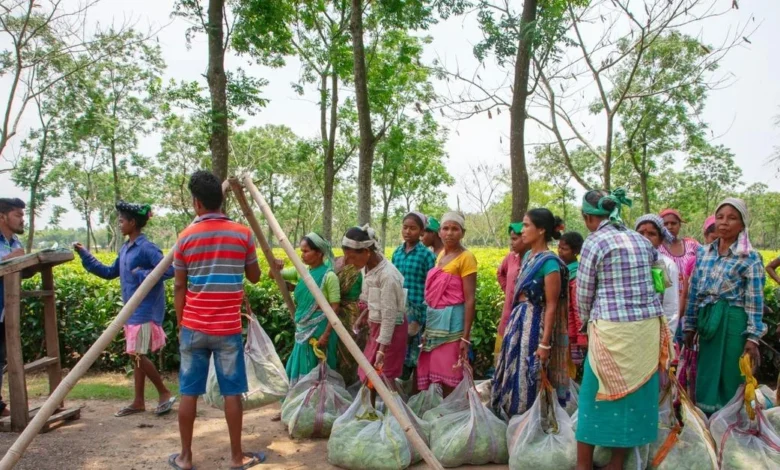
Building upon decades of localized implementation, BRAC is currently executing its most ambitious scaling initiative to date. The organization has set a strategic target to reach nearly two million women smallholder farmers residing in high-risk climate zones across its operational footprint.
This explicit emphasis on women is both a strategic imperative and a recognition of systemic socioeconomic inequality. In many of the world’s most climate-vulnerable agrarian societies, women are the primary anchors of food production, natural resource management, and household economic resilience. Yet, they simultaneously experience disproportionate marginalization regarding land ownership, access to formal credit, extension services, and agricultural technology.
When structural barriers restrict women’s access to resources, the vulnerabilities ripple outward, undermining household food security, children’s nutritional health, and overall community recovery capacity. Conversely, when women farmers are equipped with actionable climate data, resilient agricultural inputs, and financial literacy, the multiplier effects are profound. Empirical studies across development economics consistently demonstrate that resource investments directed toward women yield higher returns in household well-being, poverty reduction, and long-term community adaptability than equivalent investments directed elsewhere.
BRAC’s scaling initiative aims to move far beyond the mere distribution of physical commodities or the rote instruction of prescribed farming techniques. The underlying objective is capacity building—enhancing the cognitive and operational autonomy of women farmers so they can dynamically adjust their agricultural strategies as environmental conditions continue to shift unpredictably.
Fact-Based Analysis of Implications and Future Outlook
The scale of the global climate adaptation challenge over the coming decades is staggering. According to estimates from the United Nations Environment Programme (UNEP), adaptation costs in developing countries are rising dramatically, reaching hundreds of billions of dollars annually. As capital flows into climate finance architectures, policymakers and institutional donors face critical choices regarding allocation efficiency.
The structural implication of BRAC’s community-led model offers a valuable empirical test for the broader international development community. It suggests that financial investments in climate resilience yield higher durability and cost-effectiveness when paired with decentralized institutional frameworks. Traditional metrics of development success—often quantified purely in terms of infrastructure constructed or units of technology distributed—are increasingly recognized as insufficient if the end-users lack the agency and local knowledge required to maintain and adapt those systems over time.
Critics of highly decentralized models sometimes point to challenges regarding scalability, standardization, and the difficulty of measuring long-term impact across disparate cultural and geographic landscapes. However, organizations like BRAC demonstrate that standardization and localization are not mutually exclusive. By establishing standardized institutional support systems—such as adaptation clinics and data-sharing networks—while empowering local actors to execute solutions based on indigenous expertise, it is possible to achieve large-scale impact without sacrificing contextual relevance.
The broader lesson for global policymakers is clear: the future of climate adaptation cannot rely exclusively on technological determinism or top-down bureaucratic interventions. As historical weather patterns dissolve into unprecedented climatic volatility, the most resilient systems will be those that integrate rigorous scientific data with the adaptive wisdom of the people living on the front lines. The next generation of climate solutions will not be discovered solely in research laboratories; in many cases, they are already being forged, tested, and refined by communities who have no choice but to adapt.