How TSMC is Exporting Industrial Water Discipline From Taiwan’s Droughts to the Arid American Southwest

At first glance, a localized $115,000 municipal grant distributed between two public recreational spaces—Madison Park and Los Olivos Park—appears to be little more than a routine municipal infrastructure update. Yet, when traced backward, the capital for these community upgrades originates from a sprawling global supply chain rooted in Taiwan, with downstream consumer touchpoints on every continent. For Taiwan Semiconductor Manufacturing Company (TSMC), the world’s leading contract chipmaker, this modest financial contribution represents a localized extension of a rigorous corporate water-management philosophy developed over decades of acute ecological stress.
The City of Phoenix Parks and Recreation Department officially confirmed the water-efficiency grant from TSMC Arizona on July 8, 2026. The funds are earmarked for the installation of advanced Calsense smart irrigation controllers and high-precision flow sensors. These technologies are designed to dynamically interface with meteorological data, enabling maintenance crews to automatically suspend irrigation cycles during monsoon rain events and instantly isolate broken distribution lines before thousands of gallons of potable water are lost to sub-surface leaks. Municipal analysts in Phoenix estimate that each automatically skipped watering cycle preserves approximately 81,000 gallons of water. While the financial investment itself is modest relative to the multi-billion-dollar scale of semiconductor manufacturing, the underlying strategic pattern reflects a profound transformation in how hyper-thirsty high-tech industries approach natural resource constraints.
The Crucible of Conservation: Forging a Blueprint in Taiwan
TSMC did not arrive at its current water-management protocols by choice; rather, necessity and severe environmental pressure forced the company to innovate. The foundational blueprint for the firm’s conservation engineering was forged under intense domestic scrutiny in Tainan, Taiwan. In September 2022, TSMC launched the world’s first industrial-scale wastewater reclamation plant specifically engineered to purify municipal and industrial wastewater for direct reuse in advanced semiconductor manufacturing nodes. Constructed and operated on TSMC’s behalf by the prominent engineering conglomerate CTCI, this facility utilizes a multi-stage purification sequence involving biological treatment, advanced ultrafiltration, and high-pressure reverse osmosis to transform waste streams back into ultra-pure water suitable for chip fabrication.
The catalyst for this heavy capital expenditure was environmental volatility. In 2021, Taiwan confronted its worst drought in roughly half a century, coinciding precisely with the United States federal government declaring the first-ever official water shortage on the Colorado River system. Industry observers and supply chain analysts widely credited TSMC with maintaining uninterrupted operations across its vital Taiwanese fabrication facilities throughout that protracted dry spell. The company’s resilience was attributed to a meticulously staged water-shortage response plan, which included optimized recycling loops, reduced baseline consumption targets, and coordinated water-trucking logistics.
At the inauguration of the Tainan reclamation facility, CTCI Chairman John T. Yu emphasized the broader geopolitical and environmental stakes of the project, stating that utilizing reclaimed water as a primary resource is becoming indispensable for achieving global sustainable development. This milestone established an internal corporate benchmark that TSMC has aggressively maintained and exported to its international greenfield developments.
Replicating the Standard in the Sonoran Desert
When TSMC committed to constructing its massive semiconductor manufacturing campus in north Phoenix, Arizona, it brought this battle-tested playbook into the heart of the Sonoran Desert. Operating advanced fabrication plants—often referred to as fabs—demands millions of gallons of ultra-pure water daily to clean silicon wafers between microscopic lithography steps. In a region historically characterized by severe arid conditions and constrained water rights, the establishment of such a facility naturally sparked intense local debate regarding resource allocation and long-term sustainability.
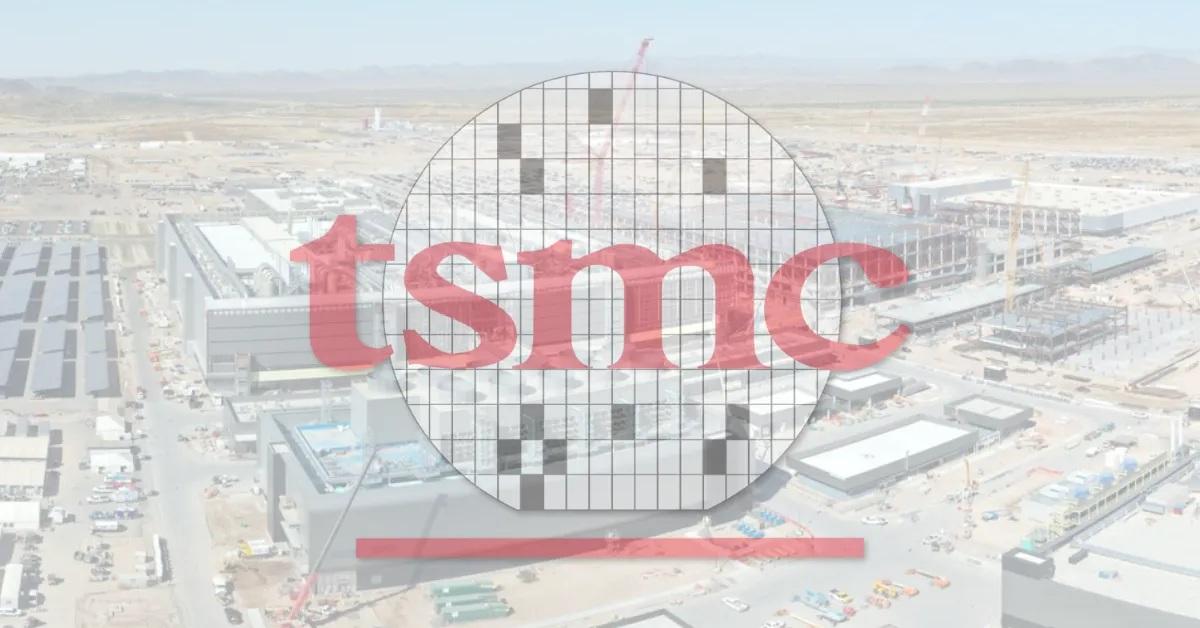
To mitigate these concerns, TSMC engineered its Arizona footprint around closed-loop recycling and maximum efficiency. The north Phoenix facility currently achieves a benchmark where approximately 65% of the water it draws is treated and reused on-site. Furthermore, the company has committed to scaling this reclamation rate toward 90% through the implementation of a dedicated 15-acre Industrial Reclamation Water Plant, which broke ground in August 2025 and is engineered to achieve near-zero liquid discharge.
The recent $115,000 parks grant fits logically within this overarching operational framework. By funding localized smart irrigation infrastructure in Phoenix, TSMC is effectively balancing its regional hydrological ledger. One side of the corporate strategy focuses inward, aggressively shrinking the water footprint of the manufacturing fab itself, while the other side reaches outward, helping the surrounding municipality eliminate waste within public infrastructure. Together, these initiatives illustrate a concerted corporate effort to minimize net stress on a shared municipal resource from both sides of the utility meter.
The Neighbor Test and Community Relations
In an era of heightened corporate social responsibility, heavy industrial stewardship is frequently judged by how effectively a company integrates into its host community. For decades, large-scale manufacturing facilities moving into semi-arid or ecologically sensitive regions faced skepticism regarding whether their economic contributions would outweigh their consumption of vital public resources. TSMC has sought to counter this skepticism through transparent public engagement and proactive community investment.
In Tainan, the pioneering industrial wastewater reclamation plant was designed with a dual purpose: alongside its heavy industrial output, the facility functions as a certified environmental education center. It regularly hosts free educational courses, technical workshops, and guided site tours for local schoolchildren, university students, and municipal water-resource planners.
In Phoenix, the municipal parks grant serves a parallel diplomatic and operational function. While neither the Tainan educational center nor the Phoenix smart-irrigation funding represents a massive capital outlay compared to the tens of billions of dollars poured into the fabs themselves, they directly address the fundamental question posed by host communities: Will the incoming industry take more than it gives back? By providing quantifiable resource savings at the municipal level, TSMC seeks to establish a collaborative social license to operate.
Broader Implications for the Global Semiconductor Industry
TSMC’s proactive stance on water management carries significant implications for the wider technology sector. As the undisputed titan of global semiconductor foundry services—manufacturing advanced processors for firms ranging from Apple and Nvidia to Qualcomm and AMD—TSMC occupies a critical chokepoint in the global digital economy. Consequently, its operational standards, environmental protocols, and risk-mitigation strategies are closely monitored by industry competitors, international regulators, and corporate clients alike.
The global semiconductor manufacturing landscape is expanding rapidly into regions facing severe water stress, driven by geopolitical imperatives to diversify supply chains away from single geographic concentrations. New fabrication plants are rising not only in the American Southwest and central Taiwan, but also across parts of Europe and Asia where water access is increasingly politicized and regulated.
A semiconductor manufacturer that arrives in a host country equipped with a proven industrial recycling methodology, a formalized drought-response playbook, and a documented history of funding local efficiency projects offers municipal and federal governments a fundamentally different value proposition than a firm that merely demands unrestricted access to local utility taps. By achieving high environmental benchmarks—such as early adoption of advanced industry standards and rapid cross-border deployment of closed-loop water systems—TSMC secures a distinct competitive advantage built on regulatory compliance and long-term supply chain security.
Ultimately, the impact of these corporate strategies extends far beyond public relations. As global demand for microelectronics accelerates, the industrial thirst of the semiconductor sector will continue to scale in tandem. The quiet water savings achieved at Madison Park and Los Olivos Park in Phoenix may seem imperceptible against the backdrop of global industrial output, but they signal a broader industrial evolution. They demonstrate that a multinational corporation headquartered an ocean away recognizes that sustainable manufacturing requires local stewardship, and that future industrial viability depends on treating water not as an infinite input, but as a shared, finite asset.