Navigating the Noise: How AI Voice Clones and Election Scams Threaten Voters During Peak Political Seasons

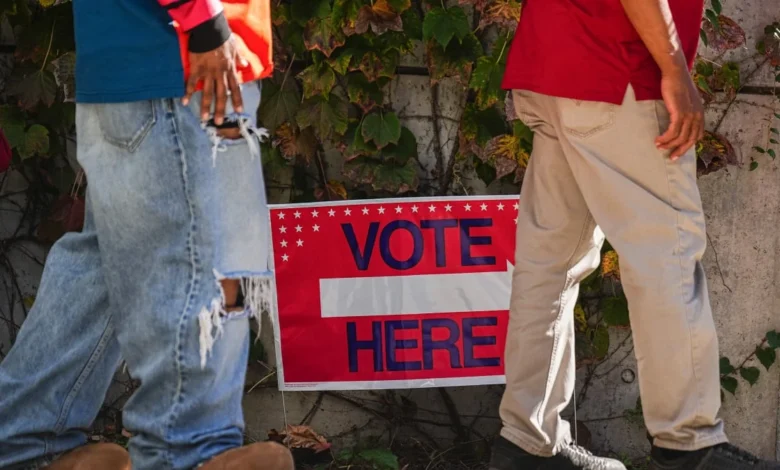
The 2026 midterm election cycle has transformed the American telecommunications landscape into a high-volume battleground of digital outreach. By the time the final ballots are tallied, voters nationwide are projected to receive an astonishing 60 billion political text messages—equating to an average of roughly 170 messages per individual. Concurrently, political campaigns have injected more than $11 billion into advertising, saturating television, radio, and digital channels. While this relentless barrage is a standard feature of modern American democracy, it has inadvertently constructed a smokescreen for malicious actors. Security experts and federal agencies warn that the sheer volume of legitimate political communication has created an ideal environment for fraudsters, who are increasingly leveraging sophisticated technologies to siphon money and steal personal data from unsuspecting citizens.
The Convergence of Politics and Cybercrime
The intersection of electoral politics and consumer fraud is not entirely new, but the mechanisms used by bad actors have evolved exponentially. According to Ron Kerbs, CEO of the artificial intelligence fraud prevention firm Kidas, fraudulent communications no longer stand out against the background noise of a contentious campaign season. When a voter is accustomed to receiving dozens of texts and calls daily from various political action committees, pollsters, and candidate representatives, their guard naturally drops.
This environment is further complicated by regulatory loopholes. Most political communications are legally exempt from the National Do Not Call Registry, the federal opt-out database designed to protect consumers from aggressive telemarketing. While campaigns must still navigate federal restrictions regarding automated and prerecorded calls under the Telephone Consumer Protection Act (TCPA)—particularly those made without prior consent—the exceptions leave consumers perpetually uncertain. Voters are often left guessing whether an aggressive caller or texter is an authentic campaign volunteer, a professional pollster, or an opportunistic criminal.
The Evolution of Threat Vectors: Texts, Deepfakes, and Spoofing
Fraudsters have diversified their tactics across multiple channels, exploiting both text messaging and voice telephony to achieve their goals. A public service announcement issued by the FBI highlights a surge in midterm-related scams where criminals appropriate the names, images, official logos, and slogans of candidates. These bad actors use stolen credentials to fraudulently solicit campaign contributions, market merchandise that is never fulfilled, or harvest personally identifiable information (PII) for broader identity theft schemes.
While fraudulent text messages remain a pervasive threat—often luring victims with malicious links hidden behind familiar-looking short codes—phone calls present a far more psychological and technical challenge. The advent of generative artificial intelligence has fundamentally altered the threat landscape by democratizing voice cloning technology.
"When someone hears a familiar voice, particularly a candidate or public official they recognize, they may be more inclined to trust what they’re hearing," Kerbs explains. "With AI, scammers can now recreate those voices convincingly, making it much harder for the average person to recognize when a call is fake."
Criminals routinely scour public domains for audio samples of politicians, utilizing readily available open-source AI tools to train algorithms that can synthesize speech matching a specific cadence, tone, and accent. When combined with caller ID spoofing—a technique that alters the information displayed on a recipient’s caller ID to disguise the origin of the call—scammers can make an illicit call appear to originate directly from a legitimate campaign headquarters or a known political organization.
A Chronology of Regulatory Crackdowns and AI Manipulation
The integration of artificial intelligence into political trickery is not merely a theoretical vulnerability; it has already manifested in high-profile attempts to disrupt democratic processes.
The watershed moment for public awareness regarding AI-generated election interference occurred during the 2024 presidential primary season. Ahead of the New Hampshire primary, thousands of voters received robocalls featuring an uncanny, AI-generated clone of then-President Joe Biden. The audio recording instructed recipients to stay home, falsely claiming that voting in the primary would preclude them from participating in the upcoming general election. The incident caused immediate alarm among election officials and cybersecurity researchers, demonstrating the tangible threat deepfakes pose to voter participation.
The fallout from the New Hampshire robocalls prompted swift federal action. The Federal Communications Commission (FCC) launched a comprehensive crackdown on unauthorized "junk calls," moving quickly to close regulatory loopholes. In a decisive unanimous ruling, the FCC expanded the scope of the Telephone Consumer Protection Act to officially classify AI-generated voices in robocalls as "artificial" under the law. This reclassification effectively rendered unsolicited AI robocalls illegal nationwide, giving state attorneys general and federal regulators stronger legal footing to prosecute bad actors who deploy voice cloning technology during election cycles.
Despite these regulatory guardrails, enforcement remains a game of cat-and-mouse. Because bad actors can easily mask their locations using Voice over Internet Protocol (VoIP) services and decentralized international networks, tracking down the perpetrators of AI-driven election fraud requires unprecedented cross-agency collaboration between the FCC, the FBI, and state election boards.
Motivations and Common Tactics of Election Fraudsters
Cybersecurity analyses conducted by organizations such as the National Association of Secretaries of State (NASS) and private fraud prevention firms categorize election-related scams into distinct operational frameworks. While some bad actors are motivated by geopolitical goals—seeking to suppress voter turnout, sow public distrust, or tamper with electoral outcomes—a significant portion of scammers are driven by purely financial incentives.
These fraudsters typically rely on three primary methodologies:
- Phishing for Personal Data: Convincing voters to surrender sensitive information, such as Social Security numbers, driver’s license numbers, or banking details, under the guise of verifying voter registration statuses or confirming provisional ballots.
- Direct Financial Extortion: Soliciting donations for fake political entities, political action committees (PACs), or non-existent candidate funds, often demanding payment through irreversible methods like cryptocurrency, wire transfers, or gift cards.
- E-Commerce Fraud: Selling unauthorized campaign merchandise, tickets to political rallies, or promotional materials via fraudulent websites that collect credit card information without ever delivering goods.
Recognizing the Red Flags of Electoral Deception
Because modern fraudsters rely on sophisticated psychological manipulation, traditional indicators of fraud—such as a heavily accented, obviously automated voice or a misspelled text message—are no longer reliable benchmarks. A fraudulent phone call can sound completely authentic, utilizing cloned audio and spoofed caller IDs to disarm the recipient.
To combat this, cybersecurity experts urge voters to look beyond the audio quality or the phone number displayed on their screens and instead evaluate the behavioral patterns of the interaction. The most prominent red flag across all forms of election-related fraud is an artificial sense of urgency.
"Urgency is the biggest red flag," Kerbs warns. If a caller or texter insists that a voter’s registration is about to expire, that a ballot has been rejected and requires immediate remediation, or that a donation must be processed within a narrow window to secure a campaign outcome, the interaction should be treated with extreme skepticism.
Voters should also commit foundational security rules to memory:
- Official election offices and legitimate political campaigns will never ask for money, Social Security numbers, banking information, or security verification codes over the phone.
- Voter registration updates cannot be processed via a phone call requiring sensitive personal data or financial compensation. Registering to vote or updating one’s status is entirely free and should be completed exclusively through official state or municipal election portals.
- Unsolicited links should never be clicked, regardless of whether they arrive via text message or email from an ostensibly trusted source.
Proactive Defense Strategies for the Modern Electorate
As the sophistication of fraud tactics continues to scale alongside advancements in artificial intelligence, passive consumer protection is no longer sufficient. Cybersecurity professionals emphasize that citizens must adopt an active defense posture during election seasons.
The primary recommendation for mitigating risk is shifting how phone calls and text messages are handled. Allowing unknown or unverified calls to roll over to voicemail provides an immediate, frictionless layer of defense. Legitimate campaign volunteers or election officials leaving critical messages will typically leave detailed voicemails with official callback numbers that can be independently verified.
Furthermore, voters must exercise caution regarding the amount of information they share during legitimate or semi-legitimate interactions. Even seemingly innocuous details—such as birth dates, residential addresses, or prior voting history—can be weaponized by bad actors when cross-referenced with publicly available databases or data breaches.
"It’s no longer enough to identify a suspicious phone number," Kerbs reiterates. "You also need to consider what’s happening during the call, including whether the voice is artificially generated and whether the conversation shows signs of fraudulent activity. You don’t need to answer every question just because someone claims to represent a campaign or election office."
Broader Implications for Democratic Integrity
The convergence of multi-billion-dollar political spending and advanced artificial intelligence presents a profound challenge to the integrity of democratic processes. Beyond the direct financial losses incurred by individual victims, election scams threaten to erode public trust in the communication channels essential for a functioning democracy. When voters can no longer reliably distinguish between a genuine appeal from a candidate and a synthetic fraud attempt, civic participation can suffer.
As regulatory bodies continue to adapt legal frameworks to keep pace with rapid technological advancements, the ultimate line of defense rests with an informed and vigilant electorate. By understanding the tactics utilized by bad actors—ranging from deepfake voice clones to urgent phishing appeals—Americans can better safeguard their personal data, protect their financial assets, and ensure that their engagement in the democratic process remains secure.
Related posts: