Volkswagen Explores and Rejects Range-Extender Powertrain for ID. Buzz Amid Challenging US Market Conditions

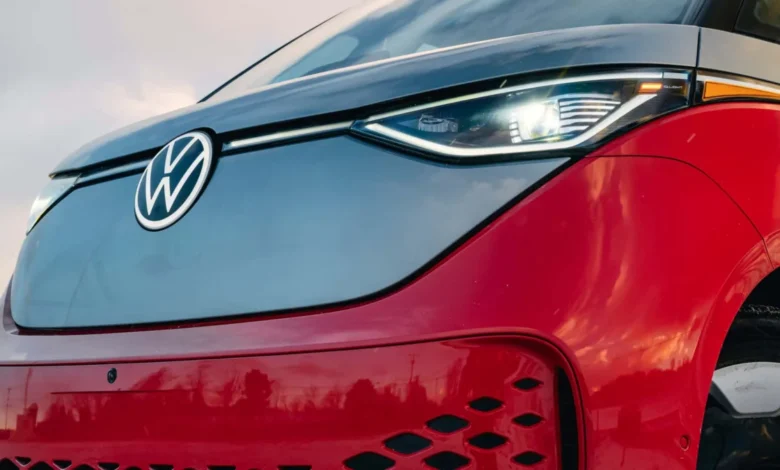
Volkswagen’s ambitious revival of its iconic Microbus, the ID. Buzz, has reached a critical juncture in its global rollout, characterized by soaring popularity in European markets and a simultaneous struggle to gain traction in the United States. Recent reports from within the company reveal that Volkswagen Commercial Vehicles explored the possibility of equipping the ID. Buzz with a range-extending internal combustion engine (EREV) to alleviate North American "range anxiety." However, technical limitations inherent in the vehicle’s dedicated electric architecture have ultimately forced the automaker to abandon the concept, at least for the current generation of the modular electric drive (MEB) platform.
Global Sales Performance and the American Contrast
The ID. Buzz has proven to be a significant volume contributor for the Volkswagen Group on a global scale. In 2025, the company delivered 60,700 units of the retro-styled minivan and its commercial "Cargo" counterpart. This figure represents a 100% increase in demand compared to the previous year, positioning the ID. Buzz as the eighth best-selling electric vehicle (EV) within the Group’s expansive portfolio. While these numbers signal a robust reception in regions like Europe, where the vehicle’s compact dimensions and heritage-driven design resonate with urban consumers, the story in the United States is markedly different.
During the same period, Volkswagen sold only 6,140 units of the ID. Buzz in the U.S. market. This underwhelming performance led to a strategic decision to cancel the 2026 model year (MY) for the American market entirely. Instead, Volkswagen will focus on liquidating remaining 2025MY inventory before reintroducing the nameplate for the 2027 model year. This one-year hiatus is officially described by the company as a "strategic decision" based on a "careful assessment of current EV market conditions," citing generally weak EV adoption rates in the U.S.
The Barriers to Adoption: Range and Pricing
Industry analysts point to two primary factors hindering the ID. Buzz’s success in North America: a restrictive driving range and a premium price point. The rear-wheel-drive (RWD) version of the ID. Buzz offers an EPA-estimated range of just 234 miles. In a market where competitors frequently offer 300 miles or more, and where long-distance highway travel is a staple of the minivan lifestyle, the 234-mile figure has proven to be a deterrent for many families.
Compounding the range issue is the vehicle’s MSRP. With a starting price of $61,545, the ID. Buzz sits at the high end of the minivan and three-row SUV segments. Unlike many of its competitors, the ID. Buzz is currently manufactured at Volkswagen’s plant in Hanover, Germany, which disqualifies it from the $7,500 federal EV tax credit for purchases in the U.S. (though it remains available for leases). The combination of a high entry price and modest range has left the ID. Buzz in a niche position, struggling to compete with both traditional internal combustion engine (ICE) minivans and more affordable, longer-range electric SUVs.
The Proposed Solution: The Range-Extender (EREV) Experiment
To address these concerns, Volkswagen engineers investigated the feasibility of a range-extending powertrain. Unlike a traditional plug-in hybrid (PHEV), where the engine can drive the wheels directly, an EREV uses a small gasoline engine strictly as a generator to replenish the battery while the vehicle is in motion. This technology has seen a massive resurgence in the Chinese market, where consumers value the smoothness of an electric drivetrain but require the flexibility of gasoline for long-range trips.
In a recent interview with the Australian automotive publication GoAuto, Stefan Mecha, the head of Volkswagen Commercial Vehicles, confirmed that the company had "looked into" an EREV version of the ID. Buzz. The goal was to provide a "safety net" for drivers concerned about charging infrastructure during cross-country travel. However, the proposal was ultimately vetoed due to the physical constraints of the vehicle’s design.
The ID. Buzz is built on the MEB platform, a dedicated battery-electric architecture. One of the defining characteristics of the ID. Buzz is its extremely short front overhang, a design choice made to maximize interior space and maintain the "flat-face" aesthetic of the original Type 2 Microbus. Because the MEB platform was never intended to house a combustion engine, there is simply no physical room in the front of the vehicle to install a generator and its associated cooling and exhaust systems. Modifying the platform to accommodate an engine would require a fundamental redesign of the vehicle’s front-end structure, which would be prohibitively expensive and would likely compromise the vehicle’s safety ratings and iconic silhouette.
Regional Divergence: EREVs in China and the Scout Brand
While the ID. Buzz will remain a battery-only vehicle for the foreseeable future, Volkswagen is not ignoring the EREV trend elsewhere. In China, Volkswagen recently unveiled the ID. Era 9X, a large six-seat SUV developed in partnership with SAIC. The Era 9X utilizes a 1.5-liter turbocharged engine as a generator, specifically designed to cater to Chinese buyers who are increasingly opting for EREVs over pure BEVs (Battery Electric Vehicles).

Furthermore, Volkswagen’s newly revived Scout brand is set to embrace range-extender technology in the United States. When the Scout Traveler SUV and Terra pickup truck enter production in 2027, they will be offered with an optional EREV system dubbed "Harvester." This move indicates that while the MEB platform is restricted, Volkswagen views range-extenders as a vital tool for capturing the American truck and SUV market, where towing and long-distance capabilities are non-negotiable.
The Next Generation: The SSP Platform and Future Flexibility
The long-term solution for Volkswagen’s powertrain flexibility lies in the upcoming Scalable Systems Platform (SSP). Intended to eventually replace the MEB and the high-performance PPE (Premium Platform Electric) architectures, the SSP is being engineered with a more modular approach to energy sources. Reports indicate that the SSP will be capable of accommodating combustion engines designed to function as generators from the outset.
The SSP is expected to debut around 2028, likely with an Audi-badged product, before trickling down to Porsche, Volkswagen, and Skoda models. This transition will allow Volkswagen to respond more dynamically to regional market shifts, offering pure electric, hybrid, or range-extended variants of the same model without the packaging "dead ends" currently faced by the ID. Buzz.
Looking Ahead: The 2027 ID. Buzz Refresh
Despite the cancellation of the 2026 model year, Volkswagen remains committed to the ID. Buzz in North America. The 2027 model year update is expected to introduce several quality-of-life improvements aimed at addressing early criticisms of the vehicle’s interior ergonomics. Notably, the touch-sensitive sliders on the steering wheel—a frequent point of contention for users—will be replaced with conventional physical buttons.
The 2027 lineup will also expand to include the "Tourer" version. This variant is designed for the "van life" enthusiast, featuring a fold-out mattress and platform, integrated window blinds, and ventilation panels for the front windows. It will also come equipped with an exterior table and chairs, leaning heavily into the vehicle’s identity as a lifestyle and camping icon.
However, one significant hurdle remains: the charging port. For the 2027 model year, Volkswagen will continue to ship the ID. Buzz with a North American Charging System (NACS) adapter rather than a native NACS port. As the industry moves toward the Tesla-originated standard, the reliance on an adapter may be viewed as a technical compromise by tech-forward buyers.
Strategic Implications for the Minivan Segment
The struggles of the ID. Buzz in the U.S. highlight a broader challenge for the electrification of the minivan segment. While SUVs have successfully transitioned to electric power by offering large battery packs and rugged styling, the minivan remains a utilitarian tool defined by efficiency and convenience.
The failure to implement an EREV powertrain in the ID. Buzz leaves a vacuum in the market for a long-range, electrified family hauler. Currently, the Chrysler Pacifica Hybrid (a PHEV) remains the primary electrified option in the segment, as the Toyota Sienna is a traditional hybrid and the Honda Odyssey remains strictly gasoline-powered. By failing to bridge the gap between pure EV and gasoline power, Volkswagen may find it difficult to move the ID. Buzz beyond its current status as a "halo car" for enthusiasts and into the mainstream family market.
As Volkswagen prepares for the 2027 relaunch, the success of the ID. Buzz will likely depend on more aggressive pricing strategies and perhaps the introduction of higher-density battery tech that can push the range closer to the 300-mile mark. Until then, the ID. Buzz stands as a testament to the challenges of balancing iconic design with the rigid engineering requirements of first-generation electric platforms.