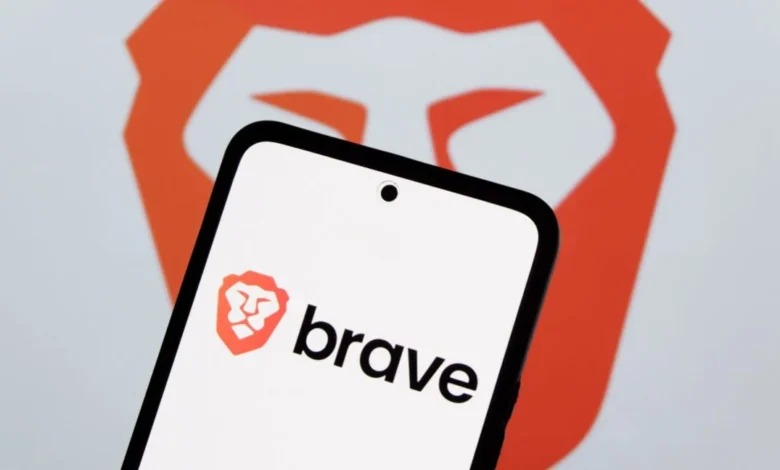
The legal action, initiated in the United States District Court for the Southern District of New York, represents a significant escalation in the ongoing friction between legacy media organizations and the technology sector. The plaintiffs, led by The New York Times, argue that Brave has transformed from a privacy-focused browser into an intermediary that commodifies journalism without compensating the entities responsible for its creation.
The Core Allegations and Legal Arguments
The complaint characterizes Brave as a "supplier, dealer, and distributor of stolen copyrighted content." Central to the litigation is the accusation that Brave’s search index and its associated API are not merely tools for information retrieval, but rather mechanisms for the unauthorized extraction and monetization of protected intellectual property.
According to the filing, Brave’s business model involves scraping articles to populate its own search index, which is subsequently accessed by high-profile generative AI entities including Anthropic, Perplexity, Mistral, xAI, and Cohere. The lawsuit alleges that Brave has generated more than $100 million in revenue by selling access to this index, effectively creating a secondary market for copyrighted journalism.
The legal strategy employed by the plaintiffs covers three distinct classifications of copyright infringement: direct, contributory, and vicarious. Direct infringement is alleged through the act of scraping and storing articles for the "Ask Brave" feature and the Brave Search API. Contributory and vicarious infringement claims are based on the assertion that Brave deliberately induces and facilitates the copying of content by its users and its GenAI corporate partners, all while maintaining control over the distribution channels and profiting from the resulting traffic.
Furthermore, the plaintiffs have invoked the Digital Millennium Copyright Act (DMCA). The lawsuit claims that Brave circumvents technological protection measures (TPMs)—specifically, the paywalls that news organizations use to sustain their subscription-based business models. By offering features that bypass these digital barriers, the lawsuit argues that Brave is not only violating copyright law but also undermining the economic foundation of the news industry.
Technological Friction: The Paywall Dispute
The dispute touches upon a long-standing tension between browser features and digital publishing. The lawsuit specifically identifies a default setting in the Brave Browser that allegedly allows users to bypass website paywalls. Beyond mere access, the plaintiffs argue that Brave’s integrated advertising model exacerbates the financial injury.
The complaint details how Brave’s browser blocks the original advertisements present on publisher websites, replacing them with its own ad ecosystem. By offering users a share of the revenue generated through this process, Brave is accused of actively siphoning off the digital advertising revenue that is essential for funding the operational costs of professional newsrooms. For The New York Times, this represents a double-edged sword: the loss of subscription revenue from bypassed paywalls and the loss of advertising revenue from displaced ad inventory.
Contextualizing the AI Data Scrape
This litigation arrives at a time when the legal status of web scraping for AI training remains a volatile frontier. Large Language Model (LLM) developers have historically relied on massive datasets scraped from the public web, often citing "fair use" doctrine to justify the ingestion of copyrighted text. However, publishers are increasingly challenging this interpretation.
The Brave case is distinct because it targets the intermediary—the entity providing the "plumbing" for the data flow. By selling an API that provides real-time access to news content, Brave is positioned by the plaintiffs not as a neutral search engine, but as an active vendor of proprietary data. The companies cited in the lawsuit, such as Perplexity and Cohere, rely on real-time web access to provide current information to users. The plaintiffs argue that this reliance creates a symbiotic relationship of infringement, where Brave provides the "stolen" source material and the AI companies integrate it into their outputs, often without attribution or compensation to the original authors.
Chronology of the Dispute
While this lawsuit marks a formal legal showdown, the background of the conflict dates back to the rise of privacy-centric browsers and the subsequent proliferation of LLMs.
- 2016: Brave Browser launches with a core promise of blocking third-party ads and trackers, setting the stage for future conflict with ad-supported media models.
- 2021: Brave launches its own search engine, positioning it as an alternative to Google and Bing, which rely on similar scraping techniques.
- 2023: Generative AI tools see a massive surge in usage, leading to a spike in demand for high-quality, real-time training data.
- 2024 (Early): Major media organizations begin formalizing their opposition to AI scraping, leading to high-profile litigation against AI developers like OpenAI.
- 2024 (Recent): The New York Times and partners file the current suit against Brave, focusing on the browser’s specific role as an API provider and paywall bypasser.
Industry Implications and Market Impact
The implications of this lawsuit are profound for both the tech industry and the publishing world. If the court rules in favor of the plaintiffs, it could necessitate a fundamental shift in how search engines and AI aggregators operate. A legal precedent confirming that scraping for API resale constitutes infringement could effectively shutter many data-as-a-service models that currently underpin the AI ecosystem.
For newspaper companies, this is an existential battle. Journalism is a high-cost enterprise, and the erosion of paywalls and ad revenue directly threatens the ability of news organizations to maintain editorial staff and investigative units. The publishers argue that they are essentially subsidizing the AI revolution, providing the high-quality, verified data that makes these tools useful while receiving nothing in return.
Conversely, proponents of the current web infrastructure argue that scraping is the backbone of the internet. They contend that search engines provide valuable traffic to publishers and that restricting this access could harm the discoverability of news content. Brave, in previous public statements regarding its search index, has defended its practices as consistent with standard web indexing protocols.
The Road Ahead
As the case proceeds in the Southern District of New York, legal analysts anticipate a rigorous examination of the DMCA’s "anti-circumvention" provisions. The court will likely have to decide whether a browser feature designed to "clean" a user’s reading experience constitutes the intentional breaking of a technological barrier, or if it falls under the purview of a user’s right to control how they view content on their own devices.
Additionally, the court’s determination on whether the Brave Search API constitutes a commercial redistribution of copyrighted material will be pivotal. If the judge finds that Brave is acting as a distributor rather than a mere indexer, the company could face significant statutory damages.
Neither Brave nor the mentioned AI companies have issued comprehensive rebuttals to the specific claims in the filing as of this writing, but the tech sector is closely watching the proceedings. The outcome will likely influence the future of "AI search," potentially forcing a transition toward a licensing-based economy where AI developers must negotiate directly with publishers for the right to crawl, index, and synthesize their content.
In the final analysis, this litigation underscores a shift in the digital age: content creators are no longer content to let their work be treated as a free public utility for the benefit of technology conglomerates. Whether the legal system will uphold the traditional protections of copyright or adapt them to the realities of the AI-driven information economy remains the central question of the trial. For now, the case stands as a landmark confrontation, signaling that the era of "scraping first, asking questions later" is under intense judicial scrutiny.
Related posts: