Porsche Mission S Supercar Concept Spotted at the Nürburgring Signaling New Era of Performance Design

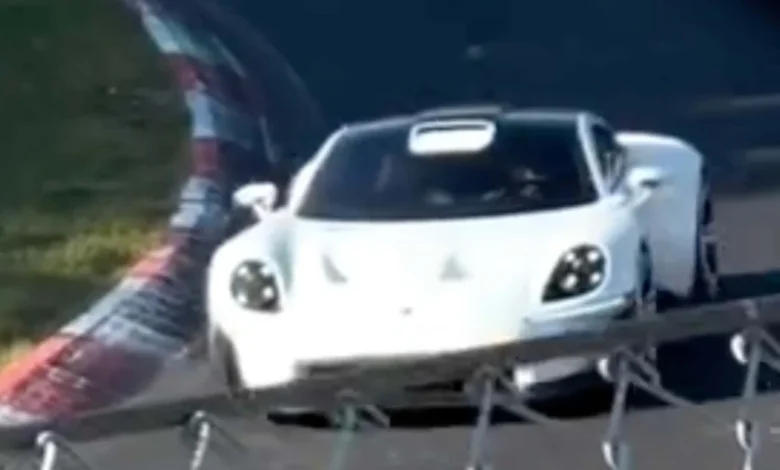
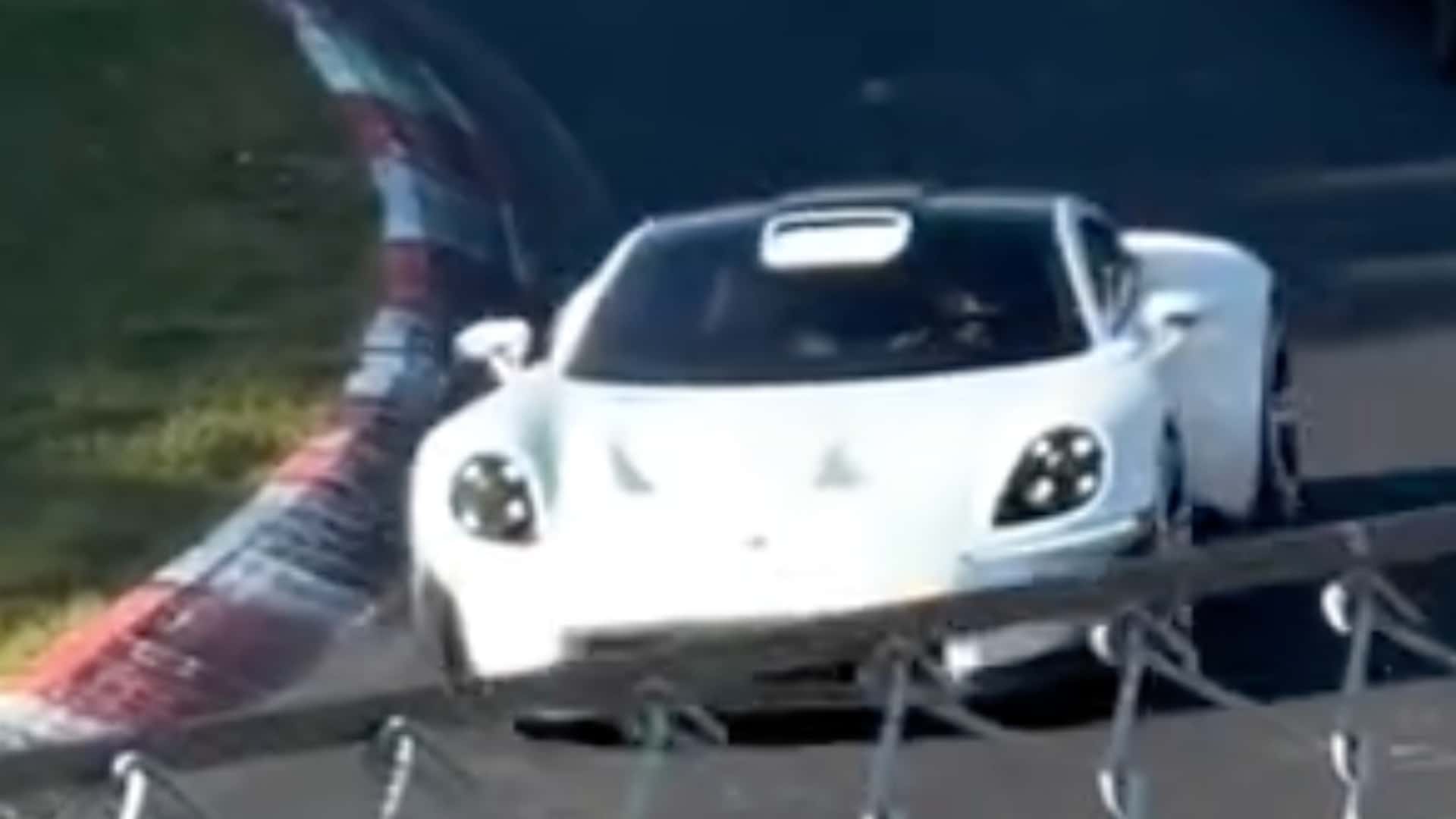
Less than a month after its high-profile global debut, the Porsche Mission S has been captured on camera at the legendary Nürburgring Nordschleife, signaling that the German automaker is wasting no time in evaluating the vehicle’s presence in a real-world, high-speed environment. While the supercar was not engaged in a high-intensity shakedown or record-setting lap attempt, its appearance at the "Green Hell" suggests that Porsche is moving forward with the next phases of its development cycle, utilizing the track as a backdrop for promotional imagery and likely initial data gathering.
The sighting was documented by automotive enthusiasts and confirmed via social media, with clips showing the mid-engine vehicle being followed closely by a support van equipped with professional film gear. The deliberate nature of the footage—which included open-door tracking shots—indicates that the visit was primarily a coordinated media production. Despite its presence on one of the most demanding racetracks in the world, the Mission S maintained a controlled pace, serving as a visceral demonstration of the design language that Porsche intends to carry into its next generation of performance machines.
A Legacy of Performance Engineering
The Mission S is widely positioned to sit above the current 911 lineup, occupying a space in the brand’s portfolio that echoes the legendary status of predecessors such as the 959, the 917, and the GT1 Strassenversion. By drawing inspiration from these historic titans, the Mission S acts as a bridge between Porsche’s storied motorsport heritage and its future technical capabilities.
The design philosophy, dubbed "Floating Volumes," represents a departure from the incremental aesthetic changes seen in recent years, opting instead for a more radical approach to aerodynamics and chassis packaging. Inside, the cabin eschews the modern trend of massive, dashboard-dominating touchscreens, opting instead for a driver-focused, minimalist environment that blends traditional analog instrumentation with essential digital feedback. This choice underscores Porsche’s commitment to the tactile, visceral experience of driving, even as the industry pivots toward complete digitization.
The Mystery of the Powertrain
While the visual identity of the Mission S is clear, the mechanical heart of the beast remains a closely guarded secret. Porsche has maintained a rigorous silence regarding the powertrain, though rumors circulating within the industry and close observation of recent revving clips suggest an eight-cylinder configuration.
Industry analysts posit that the engine is likely a high-revving, flat-eight unit, potentially integrated with a hybrid system. This would align with Porsche’s broader electrification strategy, which seeks to preserve the emotional appeal of internal combustion engines by augmenting them with high-performance electric motors to achieve power levels that define a new "hyper-GT" segment. The absence of traditional engine wailing in the Nürburgring footage—replaced by a low, distinct rumble—points to a highly sophisticated exhaust and propulsion management system that balances acoustic character with modern emission and efficiency mandates.
Strategic Implications for the Market
The emergence of the Mission S is not merely a design exercise; it represents a strategic pivot for Porsche. By showcasing this platform, the company is effectively polling its most loyal and affluent customer base. Porsche CEO Michael Leiters has explicitly stated that "customer demand will define what we build on this platform," a clear signal that the company is prepared to offer niche, high-performance variants if the market demonstrates sufficient appetite.
This approach is notable for its flexibility, particularly regarding the potential inclusion of a manual transmission. In an era where the dual-clutch transmission has become the standard for performance, the suggestion that a manual gearbox could be integrated into a next-generation supercar platform highlights Porsche’s unique position. The company understands that its core clientele values the mechanical connection between driver and machine, and they are willing to preserve that experience even in their most advanced vehicles.
Chronology of the Mission S Reveal
The trajectory of the Mission S has been remarkably swift. Following a period of intense industry speculation throughout early 2024, the concept was officially unveiled in a private setting before being presented to a wider, albeit curated, audience. The feedback from these early viewings has been described by company insiders as "overwhelming," with a high volume of inquiries regarding production viability and pricing.
- Pre-Debut Phase: Speculation surrounding a "successor to the 918 Spyder" began to mount in late 2023, with reports suggesting Porsche was testing new chassis architectures.
- Official Unveiling: The Mission S debuted last month as a "vision model," serving as a blueprint for the brand’s future design direction and a testbed for new materials and assembly techniques.
- Nürburgring Appearance: The current phase involves track-based aesthetic testing and media capture, allowing the brand to generate high-quality visual assets while subjecting the chassis to real-world ambient conditions.
- Future Outlook: Analysts expect that if the model proceeds to production, it will be manufactured in extremely limited numbers, likely serving as a "halo" car that sits above the 911 Turbo S and GT3 RS, potentially entering production within the next three to four years.
The Broader Economic Landscape
Porsche’s decision to develop the Mission S against the backdrop of an increasingly crowded electric supercar market is significant. While competitors such as Rimac and Tesla are pushing the boundaries of pure electric performance, Porsche is maintaining a more cautious, multi-path approach. By focusing on a "super sports car platform" that is inherently modular, Porsche is hedging its bets. This architecture could theoretically support a fully electric powertrain, a plug-in hybrid system, or even a combustion-heavy setup, depending on regional regulations and consumer preferences at the time of launch.
Furthermore, the brand’s refusal to build US-based factories—preferring to keep its high-end, complex manufacturing centralized in Germany—suggests that the Mission S will be a premium, low-volume, high-margin vehicle. This aligns with the company’s recent financial strategy, which prioritizes brand prestige and technological exclusivity over mass-market volume.
Industry Reaction and Analysis
Automotive experts have noted that the Mission S is an attempt to define what a "supercar" looks like in the 2030s. By avoiding the "screen-heavy" trend, Porsche is betting that the luxury market will eventually tire of tablet-like interfaces and return to a desire for mechanical authenticity. The use of the Nürburgring for the photo shoot is also a calculated PR move; it reinforces the brand’s identity as a manufacturer of track-ready, high-performance machines.
However, the lack of a confirmed production date remains a source of frustration for prospective buyers. The strategy of using a concept to gauge demand is a tried-and-true method, but it also creates a vacuum where speculation can thrive. For now, the Mission S exists as a promise—a vision of what is possible when a manufacturer with Porsche’s engineering depth decides to push the limits of its own legacy.
Future Developments
As the Mission S continues its development, observers will be looking for signs of a "production-intent" prototype. Such a vehicle would likely feature more conventional safety equipment, active aerodynamic elements, and a finalized interior. For now, the automotive community remains in a holding pattern, waiting to see if the roar of the flat-eight engine will eventually be heard on the road, or if the Mission S will remain a pinnacle of what could have been.
Porsche’s communication strategy continues to emphasize that the vehicle is a design study. Yet, the sheer amount of resources being poured into its visual presentation suggests that the project has gained significant internal momentum. Whether it eventually hits the assembly line or remains a landmark design, the Mission S has already succeeded in its primary goal: it has refocused the conversation on Porsche’s ability to define the future of the high-performance automobile. As the brand continues its survey of global market preferences, one thing remains clear: the desire for a pure, driver-centric supercar is far from diminished, and Porsche is the brand that many believe is best equipped to deliver it.
Related posts: