England’s ambulance services face unprecedented strain as record-breaking June heatwave drives demand to historic highs


The recent, record-breaking heatwave that swept across England in June has left an indelible mark on the nation’s healthcare infrastructure, pushing NHS ambulance services to their absolute breaking point. New data obtained through Freedom of Information (FOI) requests reveals that the five-day period between June 23 and June 27 witnessed some of the busiest days in the history of English ambulance trusts, with call volumes and life-threatening emergency responses far exceeding levels typically associated with the peak of the winter crisis or even the height of the Covid-19 pandemic. As temperatures soared beyond 37C in multiple regions, the resulting surge in medical emergencies has forced a re-evaluation of how the UK healthcare system prepares for an increasingly volatile climate.
A Chronology of the Crisis
The extreme heat event began in earnest in late June, triggering only the second “red” extreme heat warning ever issued by the Met Office. This alert served as a formal acknowledgment that the weather conditions posed a significant risk to life, even for the healthy population.
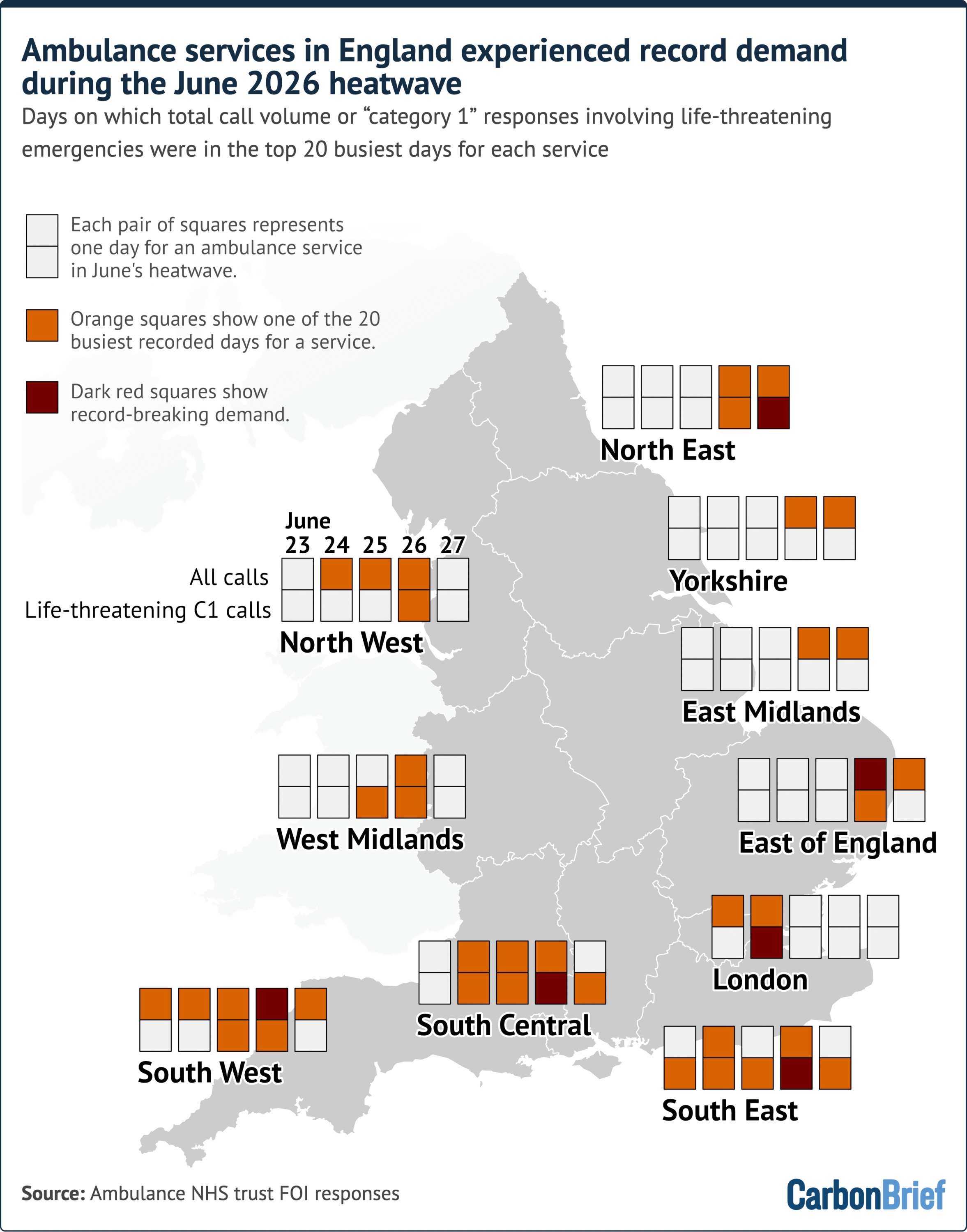
On June 23, ambulance services began to report a sharp uptick in emergency calls. By June 25, the strain had become systemic. In the south-east and south-central regions, the volume of “Category 1” responses—those involving immediate, life-threatening incidents such as cardiac arrests or severe respiratory failure—reached levels never before recorded. The escalation continued through June 26, which proved to be the focal point of the crisis. On this day alone, ambulances across the country were tasked with responding to 4,084 life-threatening emergencies. To put this in perspective, the average daily volume for such high-acuity calls during a typical summer month is approximately 2,500.
The surge in demand was geographically concentrated in the south and east of England, where the heat was most intense, with temperatures reaching as high as 38C in some localities. By June 27, while the heat began to subside in some areas, the residual impact on the NHS remained severe, as hospitals struggled to process the influx of patients delivered by emergency crews.
Supporting Data and Statistical Trends
The data provided by the 10 NHS ambulance trusts paints a stark picture of the shift in healthcare demand. For most trusts, the June heatwave resulted in days that ranked within their top 20 busiest since records began in the 2010s.
Several key metrics highlight the severity of the situation:
- Record-Breaking Volume: Four out of 10 ambulance services recorded their highest-ever volume of life-threatening emergency responses during the June window.
- Comparison to Winter Peaks: Traditionally, ambulance services prepare for their heaviest caseloads during the winter months, when seasonal influenza, respiratory syncytial virus (RSV), and other cold-weather illnesses spike. The June data confirms that extreme heat events are now creating "summer peaks" that rival or exceed these winter surges.
- Long-term Growth: It is essential to contextualize these findings within the broader, multi-year increase in ambulance demand. Factors such as an ageing population, the prevalence of complex comorbidities, and increasing mental health crises have placed a permanent, high-baseline strain on emergency services. The heatwave acted as a massive multiplier on an already stretched system.
The Mechanism of Heat-Related Strain
The physiological impact of extreme heat on the human body is multifaceted. As temperatures remain elevated for extended periods, the body struggles to regulate its internal climate. This leads to an acute rise in cases of dehydration, heat exhaustion, and heatstroke. However, the impact on emergency services is most keenly felt by the exacerbation of existing conditions.
Patients with pre-existing heart disease, chronic obstructive pulmonary disease (COPD), and asthma are particularly susceptible to the stresses of a heatwave. When the air quality is poor and the ambient temperature is stifling, the heart must work significantly harder to pump blood to the skin for cooling, while respiratory systems struggle to manage the physiological load.

Stu Holliday, head of emergency preparedness, resilience, and response at the North East Ambulance Service, noted that the impact is indiscriminate but disproportionately affects the most vulnerable. "During periods of hot weather, we see an increase in calls from people whose existing health conditions are made worse by prolonged high temperatures," Holliday explained. "Older people, young children, and pregnant individuals are especially at risk."
Operational Challenges and Staff Welfare
Beyond the volume of calls, the operational reality for ambulance crews during the heatwave was dire. The UNISON trade union reported that many crews were forced to operate in vehicles with faulty or non-existent air conditioning. The combination of intense physical labor—lifting patients, performing CPR, and moving between hot environments—and the lack of climate control in vehicles led to increased exhaustion among staff.
The phenomenon of "back-to-back callouts" meant that paramedics often had no respite between emergencies, further compromising their ability to perform at peak capacity. This physical and mental strain on the workforce is a growing concern for NHS administrators, who recognize that staff burnout is a primary threat to the sustainability of emergency services.

Broader Implications for the NHS
The 2026 June heatwave has served as a catalyst for a wider debate regarding the readiness of the UK’s healthcare infrastructure for climate change. As heatwaves become more frequent and more intense, the reliance on reactive measures is increasingly viewed as insufficient.
Several implications are now being debated within the health policy sector:
- Infrastructure Resilience: Hospitals and ambulance trusts are now under pressure to audit their cooling systems and vehicle fleets. The reliance on legacy buildings that lack effective ventilation or air conditioning has been identified as a critical failure point.
- Public Health Communication: The success of the "red" alert system in terms of communication is clear, but experts suggest that more granular, localized warnings are required to help the public take preventative action before the health system becomes overwhelmed.
- Preventative Healthcare: There is a growing call to integrate climate risk assessment into standard patient care. This includes identifying high-risk individuals—such as those with chronic respiratory conditions—and ensuring they have access to cooling centers or specialized support during heat alerts.
A Shifting Baseline
The data provided to Carbon Brief suggests that we are entering a new era of medical demand. While the 2020s have already seen a general increase in ambulance calls, the June 2026 event proves that climate-induced demand is no longer a peripheral issue but a central component of NHS operational planning.

The fact that the Welsh Ambulance Service and others in cooler regions did not experience the same level of record-breaking call volume highlights the direct correlation between the geographic intensity of the heat and the burden on emergency services. As global temperatures continue to climb, the threshold at which a heatwave becomes a "national emergency" for the NHS will likely be crossed more frequently.
Ultimately, the June heatwave was not merely an isolated weather event; it was a stress test for a system that is struggling to adapt to a changing climate. The record-breaking demand recorded by ambulance trusts is a clear signal that the status quo of emergency response is being outpaced by the environmental reality. Whether through capital investment in resilient infrastructure or a more robust public health strategy, the NHS faces a long-term challenge in protecting both its patients and its staff from the intensifying heat of the coming decades. The lessons learned from the late-June crisis will be instrumental in shaping the future of emergency healthcare, provided that policymakers treat these statistics as a mandate for systemic change rather than a temporary anomaly.