Alpitronic Invests Nearly $34 Million in South Carolina Facility to Manufacture Advanced EV and Heavy-Duty Truck Fast Chargers

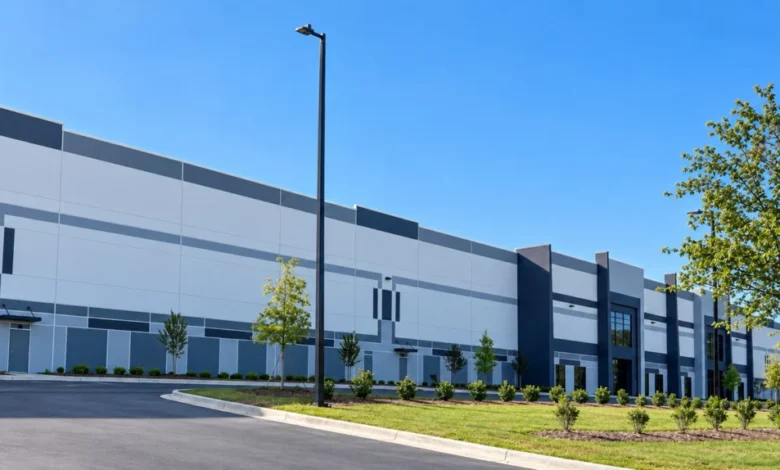
European EV charging pioneer Alpitronic is expanding its North American footprint with a substantial nearly $34 million investment to establish a state-of-the-art manufacturing facility in Fort Mill, South Carolina. Known globally for providing robust, high-performance fast-charging technology—including supplying hardware for the high-profile IONNA charging network—the Bolzano, Italy-headquartered company’s newest venture marks a critical milestone in regional manufacturing independence and supply chain localization.
The announcement, officially confirmed by the South Carolina Department of Commerce, outlines a $33.94 million capital expenditure dedicated to transforming a 173,315-square-foot site located at 3560 Stateview Boulevard. Beyond establishing domestic production control, the project is projected to create 70 skilled manufacturing, engineering, and logistics jobs in York County. This strategic positioning places Alpitronic’s production hub just across the state line from its existing North American headquarters in Charlotte, North Carolina, streamlining operational coordination and customer service delivery across the United States.
Manufacturing Focus: The HYC400 and the Next-Generation HYC1000
The Fort Mill facility will be tasked with producing some of the most advanced direct current (DC) fast-charging infrastructure available on the global market. Chief among these are the HYC400 and the highly anticipated HYC1000 systems.
The HYC400 model packs up to 400 kilowatts (kW) of power into a single, highly integrated unit. For modern electric vehicle (EV) drivers, this architecture is already becoming a familiar sight; motorists utilizing IONNA Rechargery locations across the country frequently plug into Alpitronic-manufactured hardware. The ability to deliver consistent ultra-fast charging speeds minimizes downtime for passenger vehicle drivers, directly addressing consumer range anxiety and accelerating overall EV adoption.

Meanwhile, the HYC1000 represents a technological leap forward by addressing both passenger cars and the nascent heavy-duty electric commercial transport sector. The system utilizes a distinct, modular power cabinet configuration capable of distributing up to 1 megawatt (MW) of power dynamically across as many as eight vehicles simultaneously. As the charging needs of individual vehicles fluctuate, the HYC1000 intelligently shifts power distribution to optimize efficiency. Furthermore, operators can configure the system with Combined Charging System (CCS) or North American Standard (NACS) plugs for conventional passenger EVs, as well as the specialized Megawatt Charging System (MCS) plug required by compatible heavy-duty commercial trucks.
Strategic Timeline and Regional Expansion Chronology
Alpitronic’s entry into South Carolina is the result of a carefully orchestrated expansion timeline designed to capture growing demand within the North American e-mobility sector. While the company previously utilized third-party contract manufacturing in Wisconsin to produce its 400 kW chargers for Mercedes-Benz High-Power Charging in 2024, the Fort Mill site represents the first manufacturing facility under Alpitronic’s direct operational control in the United States.
Preparation and retrofitting of the expansive 3560 Stateview Boulevard property are currently underway. State and local incentives have played a pivotal role in accelerating the project timeline; the South Carolina Coordinating Council for Economic Development approved job development credits, while York County received a targeted $200,000 grant specifically designated to offset the costs of necessary building improvements.
According to current corporate projections, the facility is on track to complete infrastructure preparations and officially commence active manufacturing operations by February 2027. Once fully operational, the site will function as a multifaceted regional hub, housing not only production lines but also a dedicated testing laboratory, comprehensive repair operations, a centralized warehouse, logistics management spaces, and corporate administrative offices.
Executive Perspectives and Domestic Control
The decision to transition toward direct, localized manufacturing is driven by a corporate imperative to reduce logistical friction and enhance responsiveness to North American clients.

Patrik Herrnegger, Chief Executive Officer of Alpitronic Americas, emphasized the strategic importance of the South Carolina facility during the announcement. Herrnegger noted that establishing direct control over United States production lines bridges the physical gap between European engineering and North American deployment sites. By bringing assembly, testing, and repair capabilities closer to major automotive and charging network operators, Alpitronic aims to eliminate supply chain vulnerabilities, shorten lead times, and deliver superior operational efficiencies.
This localization strategy mirrors a broader macroeconomic trend across the clean technology sector. As federal incentives under legislation such as the Inflation Reduction Act encourage domestic manufacturing of electric vehicle supply equipment (EVSE), foreign companies increasingly find it essential to establish stateside footprints to qualify for subsidies and meet stringent Buy America requirements.
Economic Impact and Local Labor Market Implications
The injection of $33.94 million into York County’s economy carries significant positive implications for the local workforce. While the initial creation of 70 jobs may appear modest compared to mega-factory automotive assembly plants, the positions generated at the Alpitronic facility are expected to be high-wage, specialized roles requiring technical expertise in electrical engineering, quality control, advanced manufacturing, and equipment maintenance.
Local economic development officials have expressed enthusiasm over securing a global clean tech leader. South Carolina has steadily cultivated a reputation as an emerging automotive and advanced manufacturing powerhouse, particularly within the evolving electric vehicle ecosystem. The arrival of Alpitronic further diversifies the region’s industrial base, anchoring critical infrastructure supply chains within the Carolinas.
Broader Industry Implications and Market Outlook
Alpitronic’s Fort Mill investment arrives at a pivotal juncture for the global transition toward sustainable transportation. The charging infrastructure landscape is undergoing rapid maturation, transitioning from early-stage pilot installations to heavy-duty commercial deployment and nationwide highway buildouts.

The integration of megawatt-scale charging capability via the HYC1000 is particularly significant for the logistics and freight transport sectors. Heavy-duty commercial trucks account for a disproportionate share of transportation-related emissions. However, electrifying semi-trucks has historically been hampered by the lack of ultra-fast, high-capacity charging solutions capable of replenishing massive battery packs within mandatory driver rest periods. By manufacturing MCS-compatible megawatt systems domestically, Alpitronic is positioning itself as an essential enabler of fleet electrification, potentially unlocking zero-emission freight corridors across North America.
Furthermore, the expansion underscores a growing maturation in the EV charging market, where reliability, modularity, and localized servicing have become paramount. Early network deployments faced widespread criticism regarding charger uptime and maintenance delays. By embedding repair operations, diagnostic laboratories, and spare parts warehousing directly into the South Carolina campus, Alpitronic is directly tackling the reliability crisis that has plagued public charging networks.
As the February 2027 operational launch date approaches, Alpitronic’s Fort Mill facility stands as a testament to the ongoing structural shift in American manufacturing. By combining European technological expertise with local American workforce talent and capital investment, the company is securing its role as a foundational pillar of the North American electric vehicle revolution, ensuring that the physical hardware driving the future of mobility is built closer to home.