Federal Agencies Issue New Guidelines to Combat School Swatting as K-12 Incidents Show Declining Trend

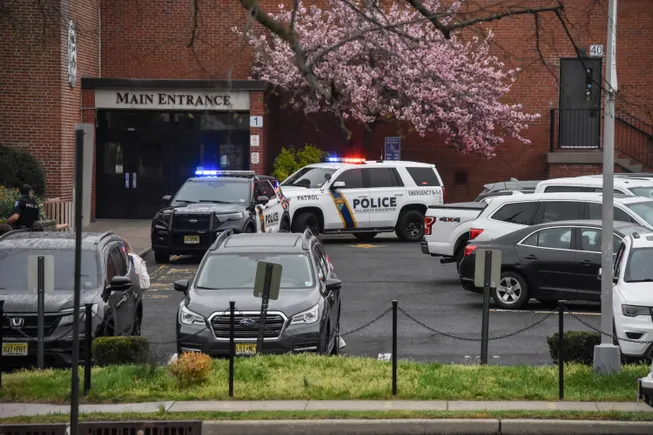
The United States Department of Education and the Department of Justice have jointly released comprehensive new guidance aimed at helping K-12 schools and institutions of higher education navigate, prevent, and respond to the dangerous phenomenon of school swatting.
Swatting, defined as the act of making a malicious and false report of a violent crime, active shooter situation, or hostage crisis at a specific location with the intent of provoking a massive, heavily armed law enforcement response, has long plagued communities across the country. When directed at educational facilities, these hoaxes typically trigger immediate shelter-in-place directives, school-wide lockdowns, and widespread panic among students, parents, and educators.
According to the newly issued federal advisory, such incidents invariably cause "chaos and other harmful consequences when campuses are not well-prepared." Federal officials emphasized that while statistical analysis points toward a promising nationwide decrease in these occurrences, every single threat received by a school must continue to be treated as entirely credible until law enforcement agencies can definitively verify otherwise.
Understanding the Phenomenon of Educational Swatting
The modern iteration of swatting extends far beyond traditional school prank calls. Perpetrators often use sophisticated spoofing technology to mask their phone numbers, making emergency dispatchers believe that a violent crime is actively unfolding inside a specific classroom or hallway. The ensuing police response is swift and severe, often involving tactical units, heavily armed patrol officers, perimeter lock-downs, and the evacuation of terrified children into the hands of anxious parents waiting behind police tape.
Beyond the immediate psychological trauma inflicted on young learners and school personnel, swatting disrupts the educational environment, diverts critical emergency resources away from genuine public safety crises, and places both students and responding officers at unnecessary physical risk. Accidental injuries, panic-induced accidents, and severe emotional distress are documented byproducts of these malicious pranks.
In response to the multifaceted nature of these threats, the Education Department and the DOJ have collaborated to provide educational institutions with a roadmap for readiness. While adherence to the newly published guidance remains strictly voluntary for schools and colleges, the recommendations carry the weight of federal law enforcement expertise, drawing heavily on resources and intelligence provided by the Federal Bureau of Investigation.
Statistical Trends: A Significant Downward Trajectory
Despite the persistent anxiety surrounding school safety, recent data indicates that educational swatting incidents have experienced a sharp and consistent decline over the past several academic cycles.
Data compiled by the Educator’s School Safety Network reveals that during the 2022-23 academic year, an alarming 446 swatting incidents were recorded across American schools. This peak represented a dark period for school administrators, emergency services, and communities nationwide, as copycat threats rippled through school districts with unsettling frequency.
However, subsequent academic years demonstrated a marked reversal. By the 2023-24 school year, recorded incidents dropped down to 158. The downward trend continued into the 2024-25 school year, which saw a further reduction to 124 K-12 school swatting incidents. Comparing the 2024-25 figures to the peak seen in 2022-23 reveals a dramatic 72% decrease over a two-year span, alongside a 22% drop from the previous academic year alone.
Analysts and safety experts examining the 2024-25 school year data have noted that pinpointing a single, definitive cause for the sudden drop-off remains complex. Nevertheless, researchers point to several contributing variables, most notably an increase in federal, state, and local investigative efforts leading to the successful identification, arrest, and prosecution of offenders. As law enforcement agencies increasingly demonstrate that swatting is a serious felony carrying severe legal consequences rather than a harmless prank, the deterrent effect appears to be taking hold.
The Legal Framework and Federal Penalties
A central focus of the joint guidance issued by the Education Department and the Department of Justice is clarifying the severe legal ramifications awaiting individuals who perpetrate swatting hoaxes.
The advisory underscores that perpetrators of school swatting do not merely commit local offenses; their actions frequently violate multiple federal criminal statutes in addition to state-level laws. Depending on the specifics of the case, federal prosecutors can pursue charges related to the transmission of false information regarding explosives or violent crimes, cyberstalking, conspiracy, and interfering with commerce or public safety operations.
Federal officials hope that emphasizing these multi-layered legal consequences will serve as a powerful deterrent, particularly for younger individuals who may mistakenly believe that online anonymity shields them from the long arm of the law. Recent high-profile prosecutions—where defendants have faced substantial prison time, mandatory restitution for the costs of emergency response, and permanent federal felony records—have signaled a zero-tolerance approach from the judicial system.
Key Recommendations for Schools and Campuses
Preparedness and rapid verification are the cornerstones of the new federal guidance. Rather than focusing solely on tactical responses after a threat is received, the Department of Education and the DOJ emphasize proactive measures designed to empower frontline staff and streamline communication between educational facilities and local law enforcement agencies.
Among the primary recommendations outlined in the document, educational institutions are urged to implement specialized training programs specifically tailored for employees who are in a position to receive, answer, or process incoming communications, such as front-office personnel, receptionists, and campus security dispatchers.
"Staff preparation is key and should be the foremost priority in front-line awareness of and development of appropriate responses to swatting incidents," the guidance states. Training initiatives are designed to help staff members recognize potential red flags, ask probing questions safely, and extract critical details that can help emergency dispatchers quickly determine the veracity of a call before deploying a heavy tactical footprint.
Furthermore, the guidance encourages schools and colleges to establish formal, pre-planned communication channels with local police departments and sheriff’s offices. Having established protocols in place long before a crisis occurs allows law enforcement to cross-reference threats against school intelligence systems, potentially identifying a call as a hoax before units are dispatched or minimizing the disruption if an emergency response is deemed necessary.
Official Reactions and Commitment to Student Safety
The release of the joint guidance reflects an ongoing federal commitment to safeguarding learning environments across the country. Key administration officials underscored the gravity of the issue and expressed a desire to work hand-in-hand with local educational leaders to eradicate the practice.
Nicholas Kent, under secretary at the Education Department, and Stanley Woodward Jr., associate attorney general at the Department of Justice, issued a joint statement highlighting the administration’s resolve.
"We are committed to the safety of students, teachers, and staff across the country and take all incidents of swatting and violence seriously," Kent and Woodward said in the guidance document. "We welcome further conversations with educational institutions to determine how best to solve this crisis, which increasingly affects people and organizations across the country."
The officials also indicated that both the Department of Education and the DOJ will continue to monitor the evolving landscape of school threats and plan to release additional guidance, updates, and resource toolkits as new technological or operational challenges emerge.
Broader Implications and Future Outlook
The publication of this guidance arrives at a pivotal juncture for educational safety infrastructure. While the statistical decline in swatting incidents is a welcome relief for school administrators and parents, the threat has by no means been entirely eliminated. The emotional and financial toll of past incidents continues to influence how school districts budget for security, mental health support, and crisis communications.
Security experts note that the psychological aftermath of a swatting incident often lingers long after students return to their classrooms. School districts are increasingly recognizing the necessity of providing robust mental health counseling services following false alarms, ensuring that students and staff members have access to professionals who can help them process the fear and confusion generated by a lockdown.
Looking ahead, federal agencies and educational advocates agree that mitigating the threat of swatting requires a holistic, community-wide approach. This strategy relies heavily on robust digital forensics by law enforcement to unmask perpetrators, proactive education in middle and high schools regarding the severe legal consequences of making false reports, and rigorous operational preparedness on the part of school administrators.
As schools continue to implement the best practices outlined by the Department of Education and the Department of Justice, the collective hope is that the downward trend in swatting statistics will accelerate, ultimately restoring a greater sense of security, stability, and uninterrupted learning to classrooms nationwide.