The landscape of American higher education continues to undergo a profound structural transformation, characterized by shifting demographic trends, evolving student expectations, and rigorous financial scrutiny. In this week’s higher education news cycle, institutional strategies for economic stabilization and major corporate consolidation within the for-profit sector have captured national attention. As colleges and universities navigate post-pandemic realities, leadership teams are forced to make deliberate choices regarding institutional identity, operational efficiency, and market positioning.
Among the most discussed developments this week is the strategic turnaround at La Salle University, a private Roman Catholic institution in Philadelphia, Pennsylvania. La Salle has successfully navigated a turbulent period of enrollment declines, reversing multi-year downward trends and stabilizing its financial foundation. Meanwhile, in the corporate higher education sector, Perdoceo Education Corporation has made significant waves by announcing a definitive agreement to acquire South University for $140 million. These contrasting developments highlight the dual pathways defining modern higher education: mission-driven operational recalibration at traditional private institutions and continued consolidation among for-profit university operators.
La Salle University Shifts Focus to Classroom Success and Financial Stability
La Salle University President Daniel Allen recently offered deep insights into the institution’s ongoing recovery from severe enrollment losses that previously threatened its long-term financial viability. In an extensive interview with higher education industry analysts, Allen detailed the strategic pivot that allowed the university to rebound without compromising its core educational mission. Rather than pursuing expensive research metrics or attempting to scale into a doctoral-heavy research institution—designations commonly known as R1 or R2 status under the Carnegie Classification of Institutions of Higher Education—La Salle chose to double down on its historic identity as a student-centered teaching institution.
"We’re not trying to chase R1 or R2 status," Allen remarked during the discussion. "We’re really focused on students, student success, and what happens in the classroom."
This deliberate philosophy represents a significant departure from the strategic blueprints adopted by many mid-tier and regional institutions over the past two decades. Historically, numerous universities have invested heavily in constructing costly research facilities, expanding doctoral programs, and aggressively recruiting graduate research faculty in an effort to elevate their prestige and capture lucrative federal grant funding. However, for institutions with tuition-dependent revenue models, the pursuit of R1 or R2 status can frequently lead to unsustainable financial burdens, particularly during periods of demographic decline.
By prioritizing undergraduate teaching quality, comprehensive academic support services, and career-aligned curriculum development, La Salle has managed to realign its operational expenditures with its actual revenue streams. The university’s turnaround strategy involved a comprehensive review of academic program offerings, enhanced retention initiatives designed to keep enrolled students on track for graduation, and more targeted, cost-effective recruitment marketing. These measures have begun to yield measurable results, stabilizing the institution’s enrollment pipeline and easing the acute budget pressures that have forced dozens of small and mid-sized private colleges across the United States to merge, sell, or close entirely in recent years.
Chronology of La Salle’s Enrollment and Financial Challenges
To fully understand the significance of La Salle University’s recent stabilization, it is necessary to examine the timeline of economic and demographic pressures that have impacted private higher education in the Mid-Atlantic region over the last decade.
The primary catalyst for these challenges has been the well-documented "enrollment cliff," a nationwide decline in the college-aged demographic resulting from lower birth rates during the 2008 Great Recession. For regional private institutions like La Salle, which traditionally draw a significant portion of their student body from local and regional high schools, this demographic squeeze intensified competition for incoming freshmen.
In the years leading up to the COVID-19 pandemic, La Salle—like many of its peer institutions—experienced consecutive cycles of declining freshman enrollment. These volume drops exposed structural budget deficits, forcing the university to implement difficult cost-saving measures, including administrative restructuring, voluntary separation incentives, and selective academic program reviews.
The onset of the COVID-19 pandemic in early 2020 exacerbated these financial strains, introducing additional operational costs related to remote learning transitions, health and safety protocols, and auxiliary revenue losses from campus housing and dining closures. By 2021 and 2022, leadership faced critical decisions regarding the long-term sustainability of the institution’s cost structure.
Under the leadership of President Allen, who assumed the presidency in 2022, the university initiated a comprehensive strategic planning process focused on fiscal discipline paired with academic reinvestment. Rather than implementing across-the-board cuts that could degrade educational quality, the administration targeted administrative redundancies while protecting investments in student-facing areas, such as academic advising, mental health resources, and career services. By fiscal year 2023 and into 2024, these calculated interventions began to halt the multi-year enrollment slide, culminating in the stabilized operational outlook celebrated by university leadership today.
Perdoceo Education Corporation Agrees to Acquire South University for $140 Million
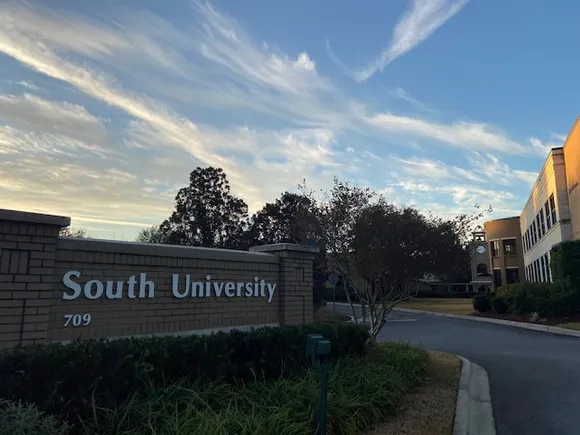
While traditional non-profit and private institutions like La Salle are refining their mission focus to survive economic headwinds, the for-profit higher education sector continues to rely on strategic mergers and acquisitions to achieve scale and operational efficiency. In one of the most notable industry transactions of the season, Perdoceo Education Corporation has entered into an agreement to acquire South University for a purchase price of $140 million in cash.
Perdoceo, a prominent operator of academic institutions that offers online and campus-based educational programs, views the acquisition of South University as a complementary expansion of its existing educational portfolio. South University, which operates multiple physical campuses as well as robust online degree programs, offers a diverse array of undergraduate and graduate programs primarily focused on nursing, healthcare professions, business, and legal studies.
The proposed transaction, valued at $140 million, is subject to customary closing conditions, including the receipt of required regulatory approvals from the U.S. Department of Education, state higher education regulatory agencies, and the institution’s independent accrediting bodies. Industry analysts project that, provided these regulatory reviews proceed without significant delays or complications, the acquisition could be finalized as early as April of the upcoming year.
Background and Regulatory Context of For-Profit Sector Consolidation
The acquisition of South University by Perdoceo Education Corporation reflects broader consolidation trends within the for-profit higher education sector over the past decade. For-profit college operators have faced heightened regulatory scrutiny from federal agencies, shifting presidential administrations, and increased accountability standards regarding student loan default rates, job placement claims, and marketing practices.
South University itself has navigated a complex corporate history. Founded originally in 1899 as Draughon’s Practical Business College in Savannah, Georgia, the institution grew over the decades into a multi-campus university offering degree programs across several states. In 2018, the university, along with several sister institutions previously owned by Education Corporation of America (ECA), experienced severe financial distress following the sudden closure of ECA. This crisis prompted emergency receivership proceedings and subsequent restructuring under new non-profit and for-profit operating arrangements designed to protect enrolled students and maintain institutional accreditation.
The prospective acquisition by Perdoceo represents the latest chapter in South University’s organizational evolution. Perdoceo, which operates established institution brands such as Colorado Technical University and American InterContinental University, possesses significant experience in navigating the complex regulatory compliance frameworks governing Title IV federal student financial aid programs. Corporate leaders at Perdoceo have indicated that integrating South University into their existing operating platform will yield administrative synergies, enhance student support technologies, and expand academic program delivery capabilities.
Broader Implications and Market Analysis
The juxtaposition of La Salle University’s mission-driven stabilization and Perdoceo Education’s capital-driven acquisition of South University underscores the multifaceted nature of the contemporary American higher education market. These two stories illustrate the distinct strategic playbooks utilized by non-profit and for-profit institutions respectively as they confront parallel challenges of rising operational costs, shifting student demographics, and increased demand for demonstrated return on educational investment.
For traditional private universities, La Salle’s approach offers a potential template for survival in an era characterized by skepticism regarding the value proposition of expensive undergraduate degrees. By publicly disavowing the costly pursuit of research prestige in favor of an unyielding commitment to classroom excellence and student success, La Salle is positioning itself as a reliable, career-oriented educational anchor for regional students. Higher education economists note that this hyper-local, student-centric focus may become a prerequisite for the survival of tuition-dependent liberal arts and comprehensive private universities that lack multi-billion-dollar endowment funds.
Conversely, the $140 million valuation of South University highlights the ongoing viability and market capitalization of well-managed for-profit education groups that successfully cater to non-traditional, adult, and working-learner demographics. As the workforce demands continuous reskilling and credentialing in high-demand fields like healthcare and information technology, for-profit operators with sophisticated online delivery models continue to attract substantial corporate investment.
Ultimately, both developments signal an industry-wide maturation. Whether through La Salle’s rigorous internal alignment around teaching and student retention or through Perdoceo’s strategic deployment of capital to acquire accredited academic infrastructure, institutions are increasingly shedding unsustainable growth models in favor of operational models tailored to the economic and demographic realities of the 2020s. As regulatory frameworks continue to evolve and student populations fluctuate, the success of these distinct strategies will provide critical lessons for the future governance and financial architecture of higher education in the United States.